Rakshasa, Demon of the Hindu Tradition
By Ralf Ittermann · last reviewed on
Flesh-eating nocturnal demons of the Indian epics.
Rakshasa
Rakshasa is a demon of the Hindu tradition.
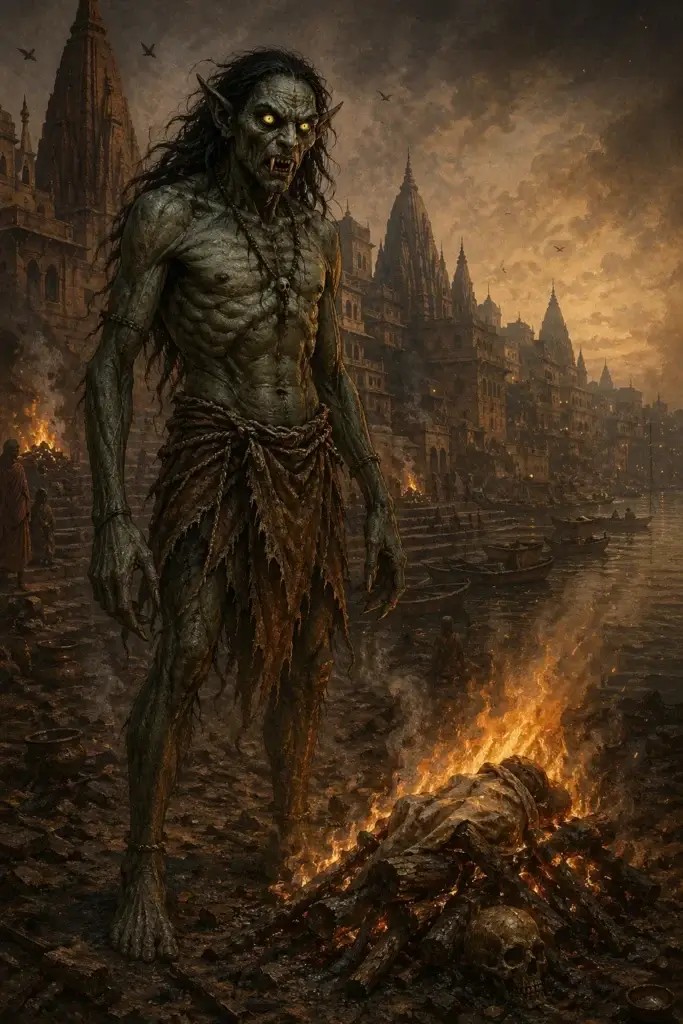
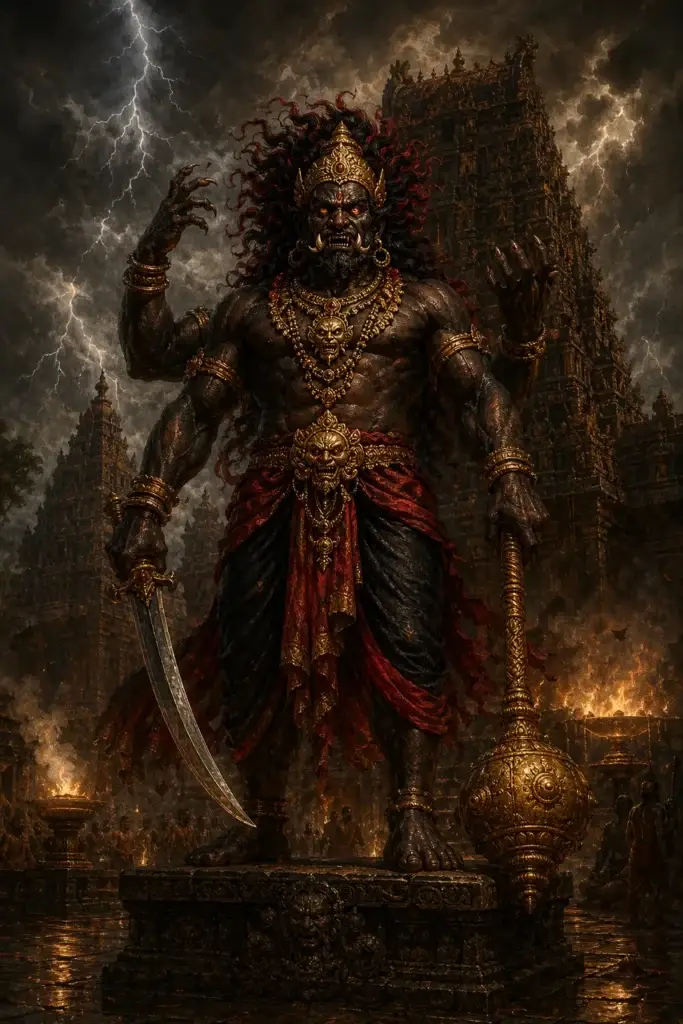
Rakshasas are the classical demon figures of the Indian epics: flesh-eating, nocturnal, shape-shifting, often gigantic and possessed of supernatural strength. They disrupt Vedic rituals, attack ascetics, and inhabit forests and cremation grounds.
Their most prominent representative is Ravana, the ten-headed king of Lanka, whom Rama fights in the Ramayana. Rakshasas are not simply evil: many acquire divine power and boons through intense asceticism, some are converted, and a few even fight on the side of dharma.
The boundary between Rakshasas and the asura class is fluid. Female Rakshasis (Shurpanakha in the Ramayana, Hidimba in the Mahabharata) are independent figures with their own dramatic arcs.
In later Puranic and Tantric tradition they become a fixed component of the cosmic hierarchies. Their reception extends into modern literature (Amish Tripathi), film (Bollywood adaptations), fantasy role-playing games (Dungeons & Dragons), and video games.
Ravana and the heroic demonology of the Ramayana
The Ramayana (edited approximately 500 BCE to 100 CE) established the Rakshasa as a central supernatural class through the figure of Ravana, the Rakshasa king and antagonist.
Ravana is portrayed not as a monstrous beast but as an intellectual, powerful ruler with complex inner motivation. The Ramayana presents Ravana as a devotee of Shiva and as a practitioner of ascetic disciplines who acquired supernatural powers through tapas (austerity).
This depiction establishes the Rakshasa class not as morally demonic but as existentially alternative: Ravana is evil through his actions (the abduction of Sita), not through his ontological nature.
The Ramayana narrative features multiple Rakshasa characters with differing moralities: some are morally ambivalent, some loyal, some rebellious against Ravana’s rule. This differentiation shapes all subsequent interpretations of the Rakshasa.
Rakshasa at a Glance
Type: Flesh-eating nocturnal demon, disruptor of rituals
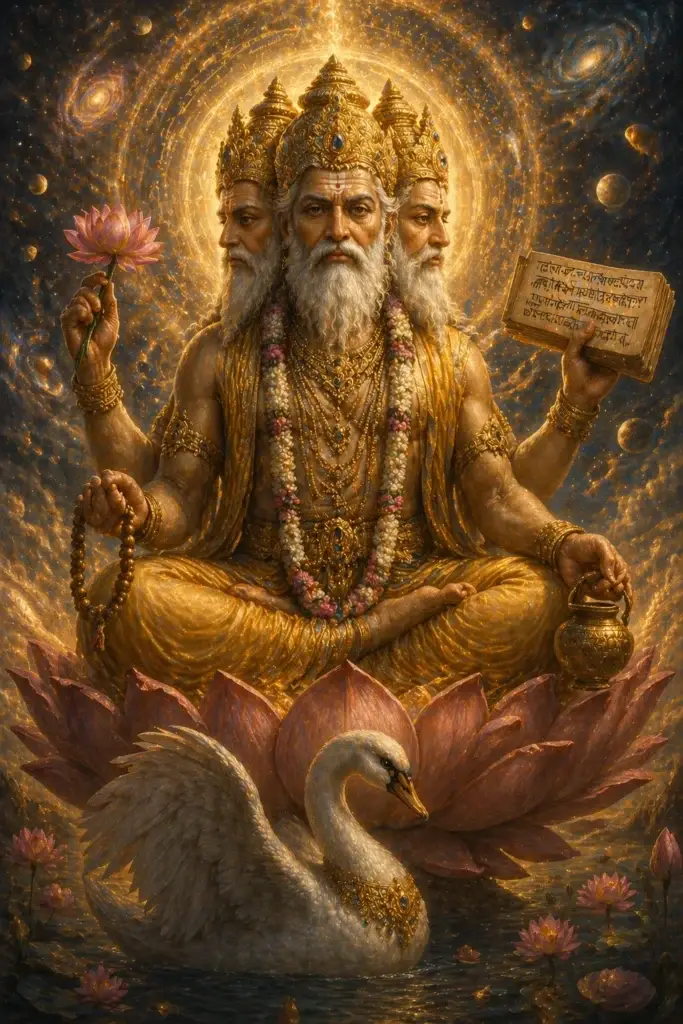
Origin: According to the Vishnu Purana, born from Brahma’s feet
Texts: Atharvaveda, Ramayana, Mahabharata, Puranas
Period: Vedic era to the present
Notable figures: Ravana, Kumbhakarna, Shurpanakha, Hidimba, Bakasura
Classification
First mentions in the Rigveda (2nd millennium BCE) as nocturnal beings that disrupt rituals. Extensive elaboration in the epics Ramayana and Mahabharata (approximately 400 BCE to 400 CE). Puranas (from approximately the 4th century CE onward) systematize the Rakshasa and link them with the Daitya and Danava classes. Modern reception remains unbroken.
The Indian subcontinent as the region of origin. Spread to Southeast Asia through Hindu-Buddhist missions (Cambodia, Java, Bali, where the Ramayana serves as a state epic). The Japanese variant Rasetsu and the Thai Yak illustrate regional adaptations.
Atharvaveda; Ramayana (primary source, with Ravana as the central figure); Mahabharata (Bakasura episode, Hidimba); Puranas (Vishnu Purana, Bhagavata Purana); Tantric demonological traditions; regional Ramayana versions (Tulsidas, Tamil Kamba Ramayana).
Name
Sanskrit: rakṣasa (masculine), rakṣasī (feminine); plural rakṣasāḥ.
Etymology: Root rakṣ, meaning “to guard, to preserve” (used ironically), or related to a root meaning “to harm”.
Related terms: Nairrita, Nishachara (“night-wanderer”), Yatudhana.
Southeast Asian variants: Thai Yak (Yaksha), Cambodian Yeak, Javanese Raksasa.
The ambivalence is built into the language: “rakṣ” can mean “to protect” or “to harm”. Many Rakshasas attain such power through asceticism (tapas) that they can even challenge the gods; Ravana is the prime example.
Characteristics
Appearance
Gigantic, capable of multiple heads (Ravana has ten), with sharp teeth, red eyes, flaming hair, and long arms. Shape-shifting: able to appear as beautiful humans in order to seduce. Female Rakshasis often appear beautiful at first and reveal their true form at the moment of attack.
Behavior
Nocturnal; they disrupt fire sacrifices, devour ascetics, and abduct women. Through intensive tapas practices they can acquire enormous powers: the ability to fly, invisibility, shape-shifting, and mastery of weapons.
Domain
Forests, cremation grounds (shmashana), ruins, and isolated sacrificial sites. Particularly active at night; they lose their power at sunrise. Border regions and remote ashrams are their preferred hunting grounds.
Mythological Origin
According to the Vishnu Purana, born from Brahma’s feet. Lanka (Ceylon / Sri Lanka) as the mythic realm of the Rakshasas under Ravana. Dynastically intertwined with the asuras; Ravana’s dynasty descends paternally from a brahmin (Vishrava) and maternally from Rakshasis.
Mahabharata Rakshasa and the cosmic classification
The Mahabharata elaborates the Rakshasa classification further and integrates it into broader supernatural hierarchies. In the Mahabharata, Rakshasas appear not as independent antagonists but as integral actors within a complex supernatural ecosystem alongside deva, asura, gandharva, and other classes.
The Mahabharata documents Rakshasa kings and Rakshasa communities with independent political formations, especially in the southern regions of the mythological-cosmological universe.
The texts describe Rakshasa capabilities in detail: maya (illusory art), shape-shifting, supernatural weapons, and the power of flight. The Mahabharata also mentions friendly or neutral Rakshasas who interact with the Pandavas.
This establishes that being a Rakshasa is not morally determined but situational: a Rakshasa may act ethically or wickedly, depending on choice and context. This moral flexibility distinguishes Hindu Rakshasas from later Western demonic archetypes.
Profile: Rakshasa
The most important aspects of the Rakshasa at a glance.
Born from Brahma’s feet (Vishnu Purana). Dynastically intertwined with the asuras. Numerous individual figures with their own biographies (Ravana, Kumbhakarna, Shurpanakha).
Ascetics in hermitages, ritual priests at the fire altar, kings and heroes in forests. Women as abduction victims, children as prey.
Gigantic, capable of multiple heads, with sharp teeth, red eyes, and flaming hair. Shape-shifting; can appear beautiful in order to seduce.
Disrupts rituals, devours ascetics and humans, abducts women. Through tapas acquires divine weapons, the power of flight, and invisibility.
Rakshoghna mantras (specific Rakshasa-repelling formulae in the Atharvaveda); recitation of the Ramayana (Sundara Kanda). The fire of Agni at night; the Gayatri mantra. In Southeast Asian traditions: protective figures placed above house doors.
Protective Practice
Rituals for warding off
The Atharvaveda contains explicit Rakshoghna mantras, specific invocations against Rakshasa attacks on rituals and people. Fire (Agni) is classically effective: a burning sacrificial fire keeps Rakshasas at a distance. Ashram rituals against disruptions trace back to the Ramayana episodes in which Vishvamitra asks Rama for protection.
Mantras and protective texts
The Gayatri mantra as basic protection. The Mahamrityunjaya mantra for the sick. The Sundara Kanda (5th book of the Ramayana) is considered particularly effective against Rakshasa influence and is recited in times of difficulty or fear. The Hanuman Chalisa (a 40-verse hymn to Hanuman) as a daily practice.
Amulets and protective symbols
Rudraksha beads; yantras associated with Durga or Hanuman. In Southeast Asian temples, Rakshasa guardian figures at entrances operate on apotropaic logic: the fearsome image repels evil. Amulets bearing images of Durga or Kali as conquerors of Rakshasis.
Parallels and Reception
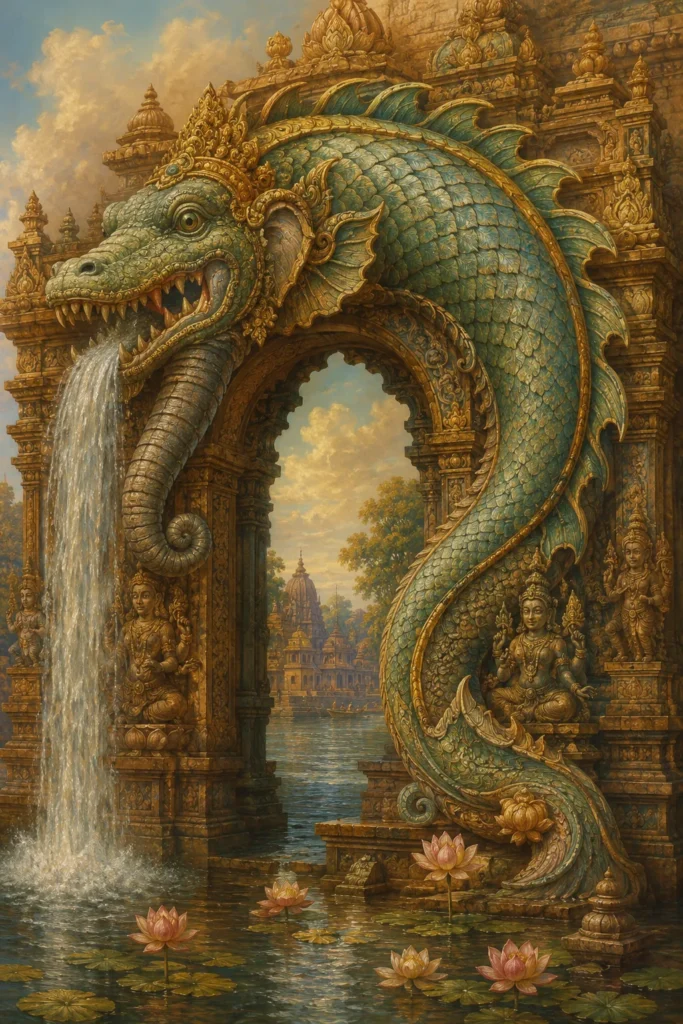
Southeast Asian reception: The Ramayana serves as a state epic in Indonesia (Hindu-influenced Bali), Cambodia (Reamker), and Thailand (Ramakien). Rakshasa figures appear prominently in temple reliefs at Angkor Wat and Prambanan. Thai wat temples feature Yak guardians in the form of Rakshasas.
Buddhist adoption: Buddhist traditions incorporate Rakshasa figures, often as converted protectors of the dharma. The Kubera tradition in Tibetan Buddhism and Rasetsu figures in Japan reflect this. The “taming of the Rakshasas” is an important motif in Buddhist missionary narratives.
Modern reception: Amish Tripathi’s Shiva Trilogy and Ram Chandra Series rehabilitate Rakshasa figures in literary form. Bollywood films revisit Ramayana themes repeatedly. In Western role-playing games (Dungeons & Dragons), the Rakshasa is one of the most prominent “Asian” monster figures.
Buddhist Raksasa in the Lankavatara Sutra
Buddhism adapted the Hindu Rakshasa category into its own cosmological structure, particularly in the Lankavatara Sutra (probably 4th to 5th century CE).
In the Buddhist context, Raksasas were conceptualized as beings compelled into their form of existence by karma, analogous to other supernatural classes. The Lankavatara Sutra treats Raksasas not as eternal demons but as karmically bound beings capable of attaining liberation through spiritual practice.
In the Buddhist adaptation, Raksasas become learners and potential bodhisattvas. The Sutra documents Raksasas who receive the Buddha’s teachings and aspire to enlightenment. This soteriological transformation was fundamental: it made even hostile supernatural powers participants in the universal process of liberation.
In Mahayana traditions, especially in East Asian Buddhism (Chinese, Japanese, Korean), Raksasas were increasingly reformulated as protective deities defending the Buddhist teaching against obstacles.
Ravana: the Rakshasa King of the Ramayana
The most influential figure among the Rakshasas is Ravana, the king of Lanka and principal antagonist in the epic Ramayana. He is not the simple demon of popular imagination but a complex figure.
The tradition attributes to him ten heads and twenty arms, great learning, mastery of the Vedas, and extraordinary ascetic achievements through which he obtained boons of invulnerability from Brahma.
This very ambivalence makes Ravana interesting from a history-of-religions perspective. According to the epic genealogy he belongs to a brahminic lineage: his father is the sage Vishrava and his half-brother is Kubera, the god of wealth.
His downfall stems not from lack of learning or weakness but from hubris and from the abduction of Sita, the wife of Rama. In this he embodies the pride that leads to ruin even in the presence of great power and great knowledge.
In parts of South India and Sri Lanka there exist traditions that evaluate Ravana more positively, presenting him as a just or learned ruler. These counter-narratives show that the assessment of the Rakshasas varies by region and perspective.
The annual festival of Dussehra marks the victory of good in northern India with the burning of giant effigies of Ravana, while elsewhere the picture is more nuanced. Whoever wishes to understand the Rakshasa must see in Ravana less the simple villain than the figure through whom the epic explores the dangers of unchecked power.
Rakshasas in Buddhism and Their Transformation into Protective Beings
The Rakshasas were not confined to the Hindu context. As Buddhism spread, they entered its texts and visual culture, and in the process a partial reinterpretation took place.
In Buddhist narratives they often appear as dangerous, man-eating beings, for example in the Jataka stories of the Buddha’s former lives. The rakshasi, the feminine form, is a common danger type in this context.
At the same time, Buddhism knows the motif of conversion. Beings that originally belong to the sphere of threat are bound through encounter with the teaching or with a Buddha and placed in the service of the dharma.
In this way Rakshasas could become protective figures. In the tradition of Sri Lanka and Southeast Asia, Rakshasa figures are found serving as temple guardians or as protectors of the teaching.
A well-known example of reinterpretation is the narrative in which Sri Lanka, still the realm of the Rakshasas in the Ramayana, becomes the consecrated island of the teaching in Buddhist tradition.
Scholars see in such processes a general pattern: religions expanding into new territories do not simply let the spirit beings already present disappear but instead assign them a place within their own cosmology, often at a lower but no longer hostile rank.
The Rakshasas are a well-documented example of this, because their status shifts markedly across different texts and regions.
Etymology and Cosmological Classification
The Sanskrit word rakshasa is traditionally connected with the verbal root raksh, meaning “to protect” or “to preserve”. This derivation initially seems contradictory, since Rakshasas are known above all as threatening beings.
The Indian tradition itself offers an explanatory narrative: in some versions of the creation story, beings emerge from Brahma, of whom some call out “let us protect him” (raksama) and others “let us eat him” (yaksama), giving rise to the Rakshasas and the Yakshas respectively.
Linguistically the derivation is plausible, but the original semantic connection remains uncertain.
Cosmologically, the Rakshasas occupy an intermediate level in the Hindu classification of beings. They belong neither to the gods (deva) nor to humans but to a group of beings that possess greater power than humans yet lack the status of gods.
Closely related, and often mentioned in the same breath, are the asuras, yakshas, pishachas, and nagas. The boundaries between these classes are not drawn sharply in the texts.
Characteristic of the Rakshasas are their capacity for shape-shifting, their association with the night and with cremation grounds, and their tendency to disrupt sacrificial rites. The last of these is instructive from a history-of-religions perspective: it makes them opponents of the ritual order.
In the Vedic and epic conception, the Rakshasa threatens not only individual humans but the ordered relationship between humans and gods sustained through sacrifice. In this sense the Rakshasa is less an individual villain than the personified threat to the cosmic order itself.
Further Links
Sources and Literature
Further standard works in the literature index.
The protective practice described here represents a scholarly classification of historical traditions. iWell Guard draws on this cultural-historical lineage of wearable protective objects and presents a contemporary form of it. More about iWell Guard
Frequently Asked Questions about the Rakshasa
What are Rakshasas in Indian mythology?
Rakshasas (Sanskrit rakshasa) are a class of powerful and predominantly malevolent demon beings in Hindu and Buddhist mythology. They are nocturnal, shape-shifting, and capable of appearing in any form: animal, human, beautiful seducer, or fearsome monster.
They devour humans, disrupt sacrificial ceremonies, and serve as the typical antagonists of the Vedic gods. The most famous Rakshasa is Ravana, the king of Lanka, who abducts Sita in the Ramayana and is defeated by Rama.
What is the difference between Rakshasas, Asuras, and Yakshas?
Hindu mythology distinguishes several classes of demonic beings. Asuras are the cosmic adversaries of the devas (gods): powerful, often noble, in conflict with the divine order. Rakshasas represent a lower stratum: animalistic, bloodthirsty, frequently violent.
Yakshas are ambivalent nature spirits, sometimes helpful and sometimes dangerous, often guardians of treasures. The dividing lines are not always clear-cut; Kubera is a Yaksha king and at the same time the brother of Ravana (a Rakshasa).