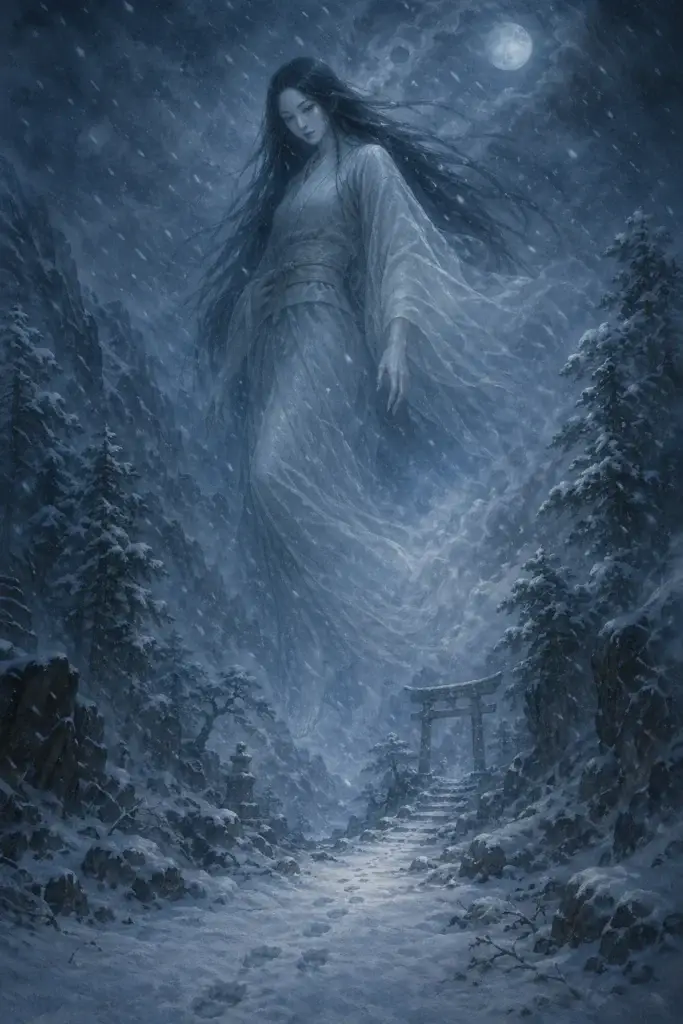
Onibi, the cold fire of grudge
By Ralf Ittermann · last reviewed on
Onibi is a spirit of the Japanese tradition.
Cold flames born of grudge, said to steal life force.
Onibi, the demon fire, are small, eerie floating flames in Japanese folk belief, usually bluish or greenish, appearing in lonely places associated with the dead. They are said to arise from the grudge or the remains of deceased people and animals, and can lure wanderers, drawing away their life force.
The belief belongs to the rich body of Japanese fire phenomena and was depicted during the Edo period in encyclopaedias and pictorial works on the yokai. Among the fire lights of Japan, the Onibi is the most ominous: considered clearly more dangerous than the rather neutral soul flame, the Hitodama.
Type: Demon fire, ominous light phenomenon
Origin: Japanese folk belief surrounding grudge, death and eerie places
Texts: Edo-period encyclopaedias and pictorial works on the yokai
Period: classical to modern
Appearance: small bluish or greenish floating flames, often in groups

Historical Background
Period of the Texts
Classical to modern: the widespread Edo-period folk belief recorded the demon fire in encyclopaedias and pictorial works on the yokai.
Area of Diffusion
All of Japan. Preferred places are lonely areas, forests, bodies of water and sites associated with death.
Sources
Good: a rich body of folk and pictorial tradition, alongside the overview works of Foster and Komatsu.
Name and variants
Japanese: oni means demon, bi or hi means fire: Onibi is the demon or devil fire. The name alone places these lights on the dark side of the Japanese spirit world.
Appearance
Appearance
Onibi appears as a small, coldly glowing flame in blue, green or blue white, often in groups, floating low over the ground. It occurs in lonely places, in forests, over water and at sites associated with death.
Effect
Onibi is regarded as an expression of lingering grudge and restless life force. It drifts about and lures curious or lost people; in many traditions it draws away the life force of those who come too close, or leads them into danger, for instance into water or astray.
Profile: Onibi
The key aspects of the demon fire at a glance.
A fixed part of Japanese fire phenomena, recorded during the Edo period in encyclopaedias and pictorial works on the yokai.
The curious and the lost at night; linked to grudge, violent death and the bones of humans and animals.
Small, coldly glowing flames in blue, green or blue white, usually floating in groups low over the ground.
Luring, leading astray and draining life force; considered more dangerous than the other fire lights of Japan.
Salt, Buddhist prayers and protective formulas; people avoided lonely places associated with death at night and did not approach the lights.
From grudge and bone: the origin of the Onibi
Onibi is often linked to grudge, violent death or the bones of humans and animals: wherever something remained unresolved, folk belief held that a cold fire could rise. This clearly distinguishes the demon fire from the other lights of the Japanese night, which were interpreted as souls or fox trickery.
During the Edo period, the Onibi found its fixed place in the encyclopaedias and pictorial works on the yokai, which organised and illustrated the rich body of Japanese fire phenomena. There it appears as the ominous light of the sites of death.
The demon fire in art and interpretation
Onibi is widespread in Edo-period yokai art, in folk belief and in modern popular culture, for instance in anime, manga and video games. It counts among the best known eerie fires of Japan.
From the perspective of religious studies, the Onibi is a prime example of the interpretation of nocturnal lights as a malevolent spirit phenomenon. It links the worldwide belief in will-o’-the-wisps with the Japanese notion of grudge, restless soul and the danger emanating from sites of death.
Avoidance, salt and prayer
The Onibi is a phenomenon of appearance and danger, not a cult being. Dealing with it belongs to spirit belief: people avoided lonely places associated with death at night and did not approach the lights. Against eerie spirits and fires, folk belief made use of salt, Buddhist prayers and protective formulas, along with quickly leaving the place.
Three fires of the night: Onibi, Hitodama, Kitsunebi
The Onibi corresponds to the European will-o’-the-wisp and the malevolent night lights of other cultures that lure wanderers to their doom. Within Japan it stands alongside Hitodama, the soul flame, and Kitsunebi, the fox fire, but is clearly regarded as more dangerous: it does not merely herald death or deceive, it reaches for the life force.
Frequently asked questions about the Onibi
What is Onibi?
The demon fire: eerie floating flames of Japanese folk belief, said to arise from grudge and the remains of deceased people and animals.
How does it differ from the Hitodama?
The Hitodama is regarded as a rather neutral soul flame, while the Onibi is considered clearly more ominous and dangerous.
What does Onibi do?
It lures wanderers and is said to draw away their life force or lead them into danger, for instance into water or astray.
Further links
Literature (selection)
Further standard works in the bibliography.
As a Japanese demon fire, the Onibi is regarded as a devilish will-o’-the-wisp in the fullest sense of the word: a light that not only deceives, but harms those who follow it.