Yaoguai, Spirit of the Chinese Tradition
By Ralf Ittermann · last reviewed on
Yaoguai is a spirit of the Chinese tradition.
Metamorphic beings, animals, and objects that become spirits.
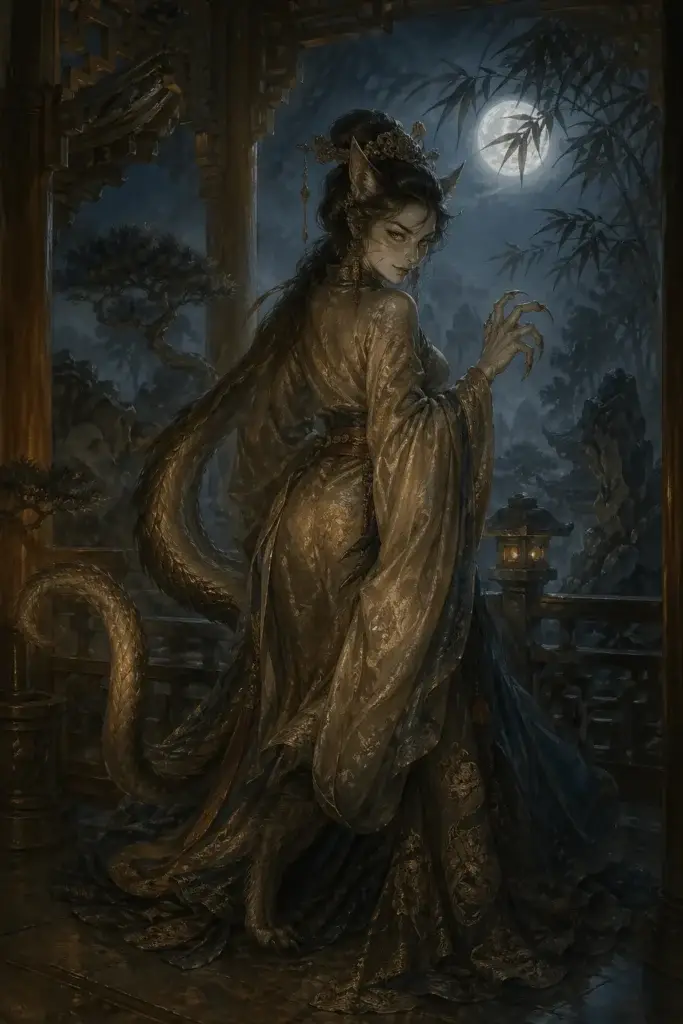
Yaoguai
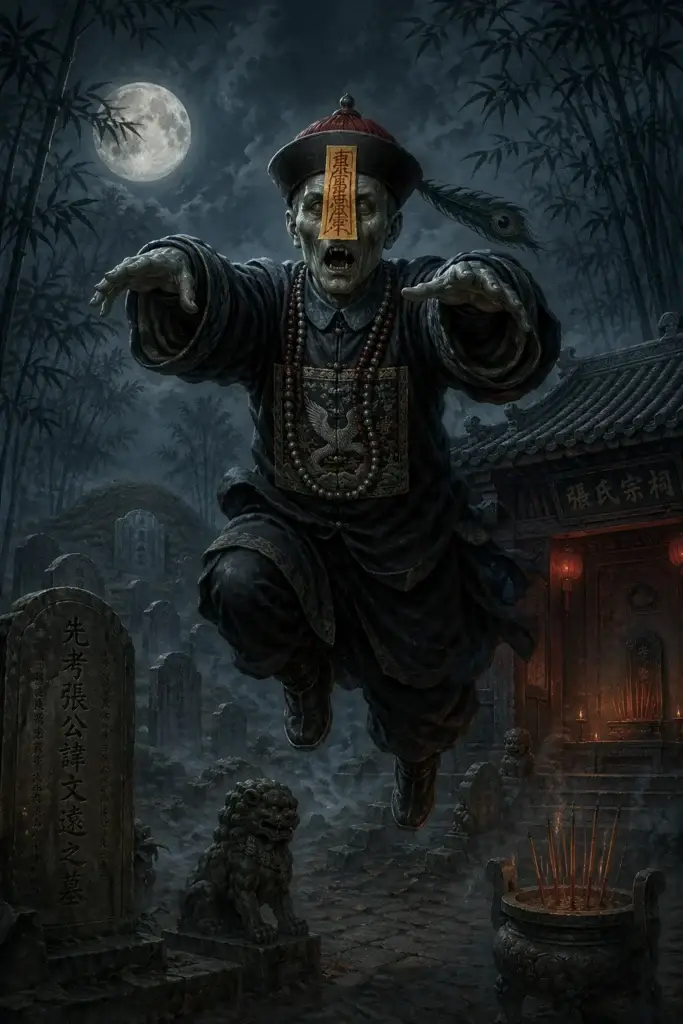
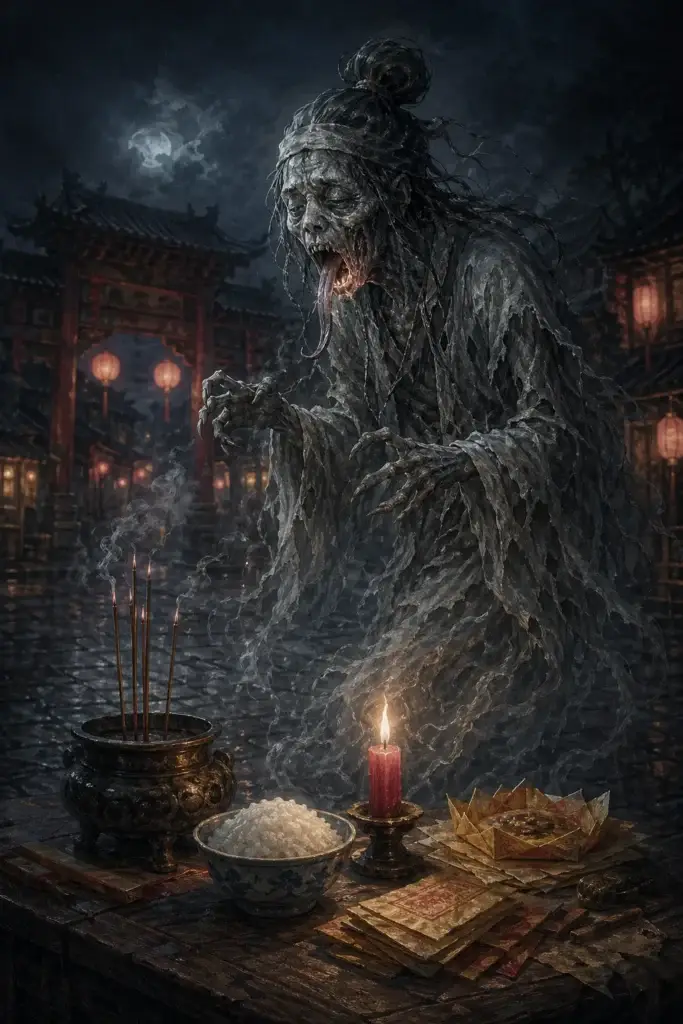
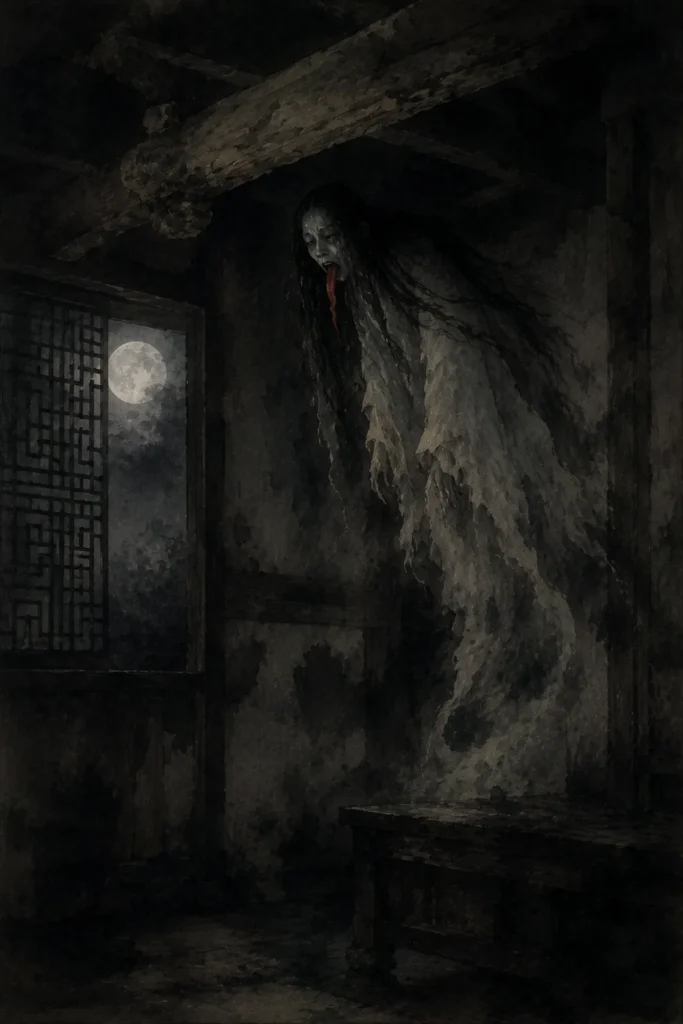
Yaoguai (妖怪) is the Chinese umbrella term for metamorphic beings, animals, plants, or even objects that become spirits through long existence, spiritual cultivation, or particular circumstances.
The concept is central to Chinese cosmology: everything that exists long enough or cultivates itself sufficiently can accumulate “essence” (jing) and become a conscious spirit being. The fox spirit (Huli Jing) is the most prominent example, but Yaoguai exist in countless forms.
Classical literature, especially Pu Songling’s Liaozhai Zhiyi and the Ming dynasty novels Xi You Ji (“Journey to the West”) and Fengshen Yanyi (“Investiture of the Gods”), presents hundreds of Yaoguai, each with its own story.
A characteristic ambivalence runs through the Yaoguai class: many are dangerous, some help humans, and a few even aspire to the rank of Buddha or immortal. The boundary between Yaoguai, Xian (immortal), and Shen (god) is fluid.
Short Profile: Yaoguai
Type: Metamorphic being
Origin: Animals, plants, objects through long existence or cultivation
Texts: Shanhaijing, Sou Shen Ji, Liaozhai Zhiyi, Xi You Ji, Fengshen Yanyi
Period: Pre-imperial to the present
Notable individual figures: Sun Wukong (Monkey King), Bai Gu Jing (White Bone Demoness), Niu Mo Wang (Bull Demon King)
Historical Context
Early attestations in the Shanhaijing (compiled in the Han period, though based on older traditions). Tang dynasty narrative art with dense Yaoguai motifs. Ming dynasty (14th to 17th century) with the major novels. Qing dynasty with Liaozhai and Zi Bu Yu. Modern literature, film, and games have continued the tradition.
The entire Chinese-speaking world. The Japanese Yokai tradition uses its own vocabulary but is structurally directly related. Korean Dokkaebi occupies a similar position. Vietnamese and Southeast Asian variants also exist. Modern Chinese popular culture has spread these figures worldwide.
Shanhaijing, Gan Bao’s Sou Shen Ji (4th century), Tang Chuanqi narratives, Xi You Ji (Wu Chengen, 16th century), Fengshen Yanyi (Xu Zhonglin, 16th century), Liaozhai Zhiyi, modern adaptations in comics, manga, and anime.
Designation and Spellings
Chinese: 妖怪 (yāoguài); related forms: 妖精 (yāojīng, “spirit-essence”), 精怪 (jīngguài).
Japanese: 妖怪 (yōkai), adopting the Chinese characters with its own distinct tradition.
Korean: Dokkaebi as a local parallel.
Subcategories: animal Yaoguai (fox, snake, monkey, tiger), plant Yaoguai (tree, bamboo, lotus), object Yaoguai (mirror, broom, pot, known in Japan as tsukumogami).
The logic of metamorphosis is the core concept: a living being or object accumulates “essence” over centuries. After 100 years it can assume human form; after 1,000 years it possesses divine power.
Cultivation through meditative practice accelerates the process. Daoist narratives often revolve around Yaoguai that seek to attain immortality (the rank of Xian) through proper cultivation.
Description
Appearance
Depending on origin: animal form with human features, human form with animal aspects (animal tail, animal ears, gleaming eyes), or entirely human. Upon unmasking, the original form is revealed, an important literary motif.
Behavior
Ambivalent. Many assume human form to live among people, as merchants, travelers, or spouses. Some are benevolent; others deceive and steal jing (life essence). A few actively strive for enlightenment or immortality.
Sphere of Influence
Wherever animals or old objects have existed for a long time: forests, old houses, temples, mountains. Mountain regions of southern and western China in particular have many local Yaoguai traditions. The journey in Xi You Ji passes through 81 trials, some involving Yaoguai encounters.
Mythological Classification
Not a divine creation, but the natural result of long existence. Within the Daoist system, Yaoguai fit into hierarchies: below Xian and Shen, but above ordinary animals. Buddhist interpretation: ambivalent beings in certain rebirths.
Profile: Yaoguai
The most important aspects of Yaoguai at a glance.
Arising from long-lived animals, plants, and objects through the accumulation of essence. Daoist and Buddhist interpretations complement each other.
Travelers, mountain hikers, residents of old houses, those seeking cultivation. Not confined to interactions with humans alone: Yaoguai also encounter one another.
Animal form, human form with animal aspects, or purely human. Upon unmasking, retreating to the original shape.
Ambivalent. They can deceive humans and steal jing, but can also help them and even strive for enlightenment. Sun Wukong is the classic example of Yaoguai awakening.
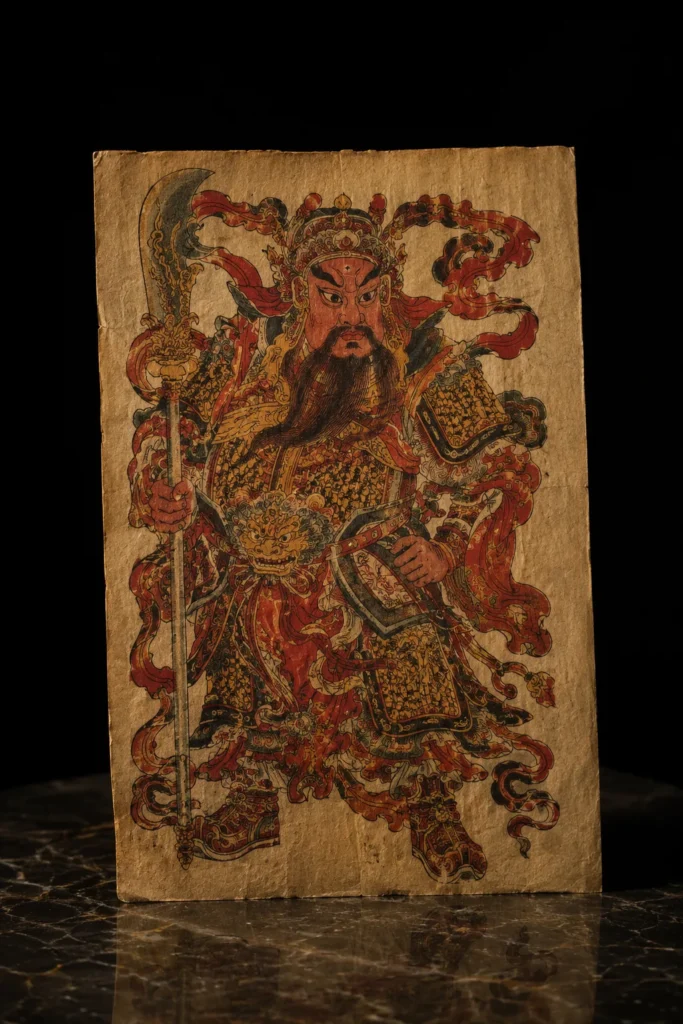
Daoist fu talismans, bagua mirrors, peachwood. For animal Yaoguai, specific materials apply (rooster blood against certain fox spirits). Respectful treatment of ancient nature.
Japanese Yokai (identical characters), Korean Dokkaebi, Japanese Tsukumogami (object Yaoguai), Indonesian Siluman.
Yaoguai in Literature and Practice
Xi You Ji (“Journey to the West”)
The classic novel (attributed to Wu Chengen, 16th century) tells the journey of the monk Xuanzang to India, accompanied by the Monkey King Sun Wukong, the pig-being Zhu Bajie, and the Sand Monk Sha Wujing, all three Yaoguai who protect the monk.
Along the way they pass 81 trials (nan), in part encounters with Yaoguai, in part natural events. The novel is a key work of world literature and the source of countless adaptations.
Daoist Cultivation
Daoist tradition describes the ascent from animal to Xian (immortal) through the intermediate state of Yaoguai. Certain animals, fox, crane, deer, and tortoise, are considered particularly suited to this path. Spiritual practice follows prescribed stages.
Modern Reception
Japanese animation (Natsume Yuujinchou, GeGeGe no Kitaro) builds on the Yokai tradition. Chinese films and series (Liaozhai adaptations, The Monkey King films) keep the tradition alive. Video games (Black Myth Wukong, 2024) have brought Yaoguai to an international audience.
Parallels and Reception
East Asian tradition: Japanese Yokai and Chinese Yaoguai are two branches of the same underlying concept. The Japanese systematized the categories (Yokai in hierarchies), while the Chinese developed them more through literature. Korean Dokkaebi and Vietnamese variants exist within a regional exchange.
Daoist cosmology
The core idea of essence accumulation (jing) through long existence is deeply rooted in Daoist natural philosophy. Yaoguai are not “supernatural” but rather the natural consequence of cosmic laws, a philosophically independent position.
International popular culture: Yaoguai and Yokai are present in global fantasy culture. The Pokemon franchise, Studio Ghibli, and anime series carry them into Western children’s rooms. In Western fantasy literature they are gaining their own profiles as “Eastern monsters.”
The Term Yaoguai and Its Place in Chinese Spirit Belief
The term yaoguai is composed of two characters: the first, yao, denotes an ominous, deviant, or demonic phenomenon; the second, guai, denotes the strange or uncanny. Together, yaoguai refers to a broad class of supernatural beings that arise through transformation and most often harm humans.
Unlike the gui, the spirit of a deceased person, the yaoguai is typically not a dead person but a living being or object that has acquired a spiritual nature and the capacity for transformation through long existence, the absorption of life energy, or favorable circumstances.
This conception is rooted in Chinese natural philosophy. Everything that exists carries life force (qi) within it, and where this force accumulates and condenses over a long period, a thing can become a being with consciousness and power.
A fox, a tree, an old pot, an abandoned tool: all can become yaoguai after sufficient time. It follows that the age of an animal or object determines its potential dangerousness.
Related terms further delimit the field. Jing denotes the spirit or essence active within such a transformed being, which is why a fox spirit is often called huli jing.
Mo refers more specifically to the devilish, tempting demon. The boundaries between these categories are fluid in the sources, and a single being may be classified differently across different texts.
For the study of religion, what is important is that yaoguai is not a uniform figure but a functional category. It stands for the idea that the boundary between human, animal, object, and spirit is permeable, and that the world can be populated by transformed beings concealing their true nature.
The Literary High Point in the Classic Journey to the West
No work has shaped the image of the yaoguai more profoundly than the novel Xiyou ji, “Journey to the West,” which took its familiar form in the sixteenth century during the Ming dynasty and is traditionally attributed to Wu Cheng’en. The novel narrates the pilgrimage of the monk Xuanzang, who travels together with the Monkey King Sun Wukong and other companions to retrieve sacred scriptures from India.
Along the way they encounter a long series of yaoguai intent on devouring the monk or thwarting his journey.
The novel unfolds an entire system of these beings. Many of the demons are transformed animals: a scorpion, a buffalo, a spider, a leopard. Others are former servants of gods or Buddhas who have descended to earth and cause harm.
Characteristically, yaoguai often inhabit a mountain fortress or cave, a fixed sphere of activity, and possess magical powers, enchanted weapons, and the ability to change shape.
A recurring narrative pattern is the unmasking. The yaoguai initially appears in human form, often as a beautiful woman, a helpless old man, or a needy child, in order to deceive the pilgrims.
Sun Wukong sees through the disguise with his fiery gaze and forces the being to reveal its true form. Frequently the episode ends not with killing but with a deity appearing to reclaim its escaped animal or servant.
This structure makes the novel an encyclopedia of yaoguai belief and at the same time a religious allegory.
The demons embody obstacles on the path to enlightenment; their defeat represents the disciplining of one’s own desires. “Journey to the West” is thus the definitive text through which most people, in China and in the West alike, encounter the yaoguai.
The Shorter Collections of Strange Tales and Their Narrative Tradition
Alongside the major novel there exists a rich tradition of shorter narrative collections that record supernatural events. This genre, called zhiguai, meaning the recording of the strange, reaches back to early medieval times.
An early representative is the Soushen ji, “In Search of the Supernatural,” attributed in the fourth century to Gan Bao, which contains numerous encounters with transformed animals and spirits.
The literary high point of this tradition is Liaozhai zhiyi, “Strange Tales from a Chinese Studio,” by Pu Songling, composed around 1700 during the early Qing dynasty. Pu Songling collected and refined hundreds of narratives in which fox spirits, plant spirits, ghosts of the deceased, and other yaoguai play a central role.
Characteristic of his work is the ambivalence of the beings. His fox spirits are not merely dangerous seductresses but often clever, loyal, and morally superior figures through whom the failings of human society become visible.
These collections differ from the novel in narrative stance. They frequently adopt the appearance of a report, citing places, names, and dates, and claim to recount actual events. They thus stand between entertainment, moral instruction, and a kind of folkloric documentation.
For scholarship, these texts are of great value because they show how the yaoguai belief remained alive and evolved over centuries. They also attest to the close connection between spirit belief and social criticism.
By crossing the boundaries between established orders, the beings make visible what has gone awry in the human world. The Liaozhai zhiyi has been translated many times and belongs among the most widely read works of classical Chinese narrative literature.
Transformation, Cultivation, and the Path from Demon to Immortal
A central idea of yaoguai belief is that these beings are engaged in a process of development. An animal that awakens to a spiritual nature has not thereby reached its final state.
Many narratives describe how a transformed being can continue to ascend through self-cultivation, through the accumulation of life energy, and through moral probation, in the most favorable case reaching the status of an immortal or a minor deity.
This logic of ascent connects spirit belief with the Daoist concept of inner alchemy. Just as a human can strive for immortality through practice, breathing techniques, and virtue, so too can an animal follow this path. The fox is the most famous example.
In many texts it passes through stages: a fox of a few decades can transform into a woman; a fox of great age acquires far-reaching powers; and the celestial fox with nine tails stands at the threshold of divinity.
This gives rise to a moral tension. Some yaoguai accumulate life energy through violent means, draining humans, which makes them dangerous predators. Others choose the slow, virtuous path and then appear as helpful or at least harmless beings. The difference lies not in the nature of the being but in its choice.
This conception explains why the yaoguai is rarely purely evil in the Chinese tradition. It is a being in motion, capable of falling or ascending.
It also connects folk belief with the major religious systems: both Daoism with its striving for immortality and Buddhism with its teaching of karmic ascent and descent provide the framework within which the metamorphic beings are situated. The yaoguai thus stands not outside the religious order but as a part of its permeable cosmos.
Further Links
Further reading:
Selected Bibliography
The protective practice described here represents a scholarly classification of historical traditions. iWell Guard connects with this cultural-historical lineage of wearable protective objects and constitutes a contemporary form thereof. More about iWell Guard.
Frequently Asked Questions about Yaoguai
What are Yaoguai in Chinese mythology?
Yaoguai (Chinese 妖怪, yāoguài, demonic being) is the collective term for supernatural, often animal-derived beings of Chinese mythology and folk religion, a class that in Western terms lies between spirit, demon, and nature spirit.
Most Yaoguai were originally ordinary animals (fox, snake, spider, bamboo, stone) that assumed a supernatural form through great longevity or magical power. They are often shapeshifters that can seduce, harm, or assist humans.
Which well-known Yaoguai beings exist?
Notable Yaoguai classes: Huli Jing (fox spirit, often appearing as a beautiful woman, capable of draining men’s energy), related to the Japanese Kitsune and the Korean Gumiho. The monkey Yaoguai of the classic Journey to the West (16th century), with the Monkey King Sun Wukong as the most famous example.
Ghost mice and ghost snakes of folk tales. The Bao Shu (tree spirits) and Shi Gu (stone spirits). Yaoguai are a central theme of Tang to Qing narrative literature (e.g., Liaozhai Zhiyi by Pu Songling).