iWell Guard

Wiedergänger, the umbrella term for the returning dead

Wiedergänger is a spirit of Germanic tradition.

The physically returning dead, to whom revenge or duty allows no rest.

SpiritGermanic

Table of Contents

Wiedergänger, spirit of the Germanic tradition
Wiedergänger

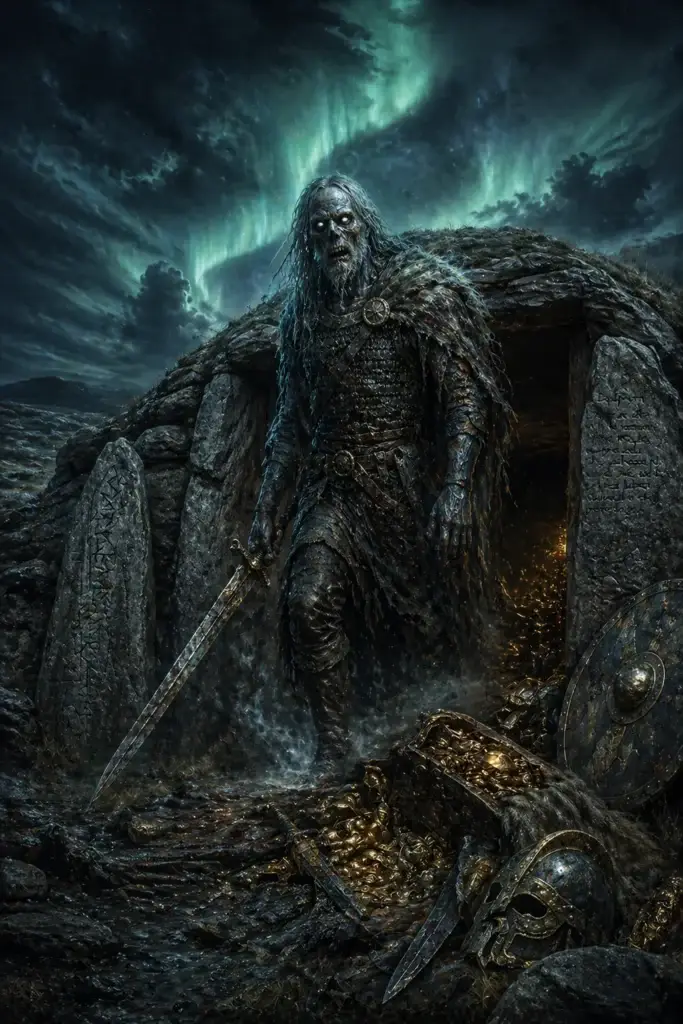
The Wiedergänger is the restless dead of Germanic tradition, who returns physically to the world of the living. Peace is denied to him, whether through suffered injustice, violent death, or unfinished tasks.

As the Germanic umbrella term for the physically returning dead, the Wiedergänger encompasses more specific types: the bloodless Nachzehrer, its childlike special form, the Doppelsauger, as well as the Nordic Draugr. As an umbrella term, it is also considered a precursor of the vampire.

At a glance: Wiedergänger

Type: Physically returning restless dead, Germanic umbrella term for the Wiedergänger belief
Origin: Germanic folk belief concerning denied peace and fear of the dead, systematised by Grimm
Texts: good, through Deutsche Mythologie and archaeological findings
Period: medieval to modern
Appearance: physically corporeal, returning dead

Area of origin and sources

Period of the Texts

Medieval to modern: Jacob Grimm systematised the Wiedergänger belief in 1835 in Deutsche Mythologie.

Area of Diffusion

The entire German and Germanic linguistic area; related are the Scandinavian word Gjenganger and the Icelandic Afturganga.

Sources

Good: Textual evidence such as Grimm’s Deutsche Mythologie and archaeological findings of revenant burials attest to this belief.

Name and variants

German: The name means one who walks again, and is related to the Scandinavian gjenganger and the Icelandic afturganga.

Form and effect

Appearance

The Wiedergänger is usually physically embodied, not purely spectral. It symbolises the incompleteness of death and burial and the fear of the restless dead, who breaches the order between the living and the dead.

Effect

The Wiedergänger threatens and haunts the living, sometimes for revenge, sometimes to complete unfinished tasks. Its effect ranges from mere disturbance to deadly threat, depending on the type and the tale.

Profile: Wiedergänger

The most important aspects of the restless dead at a glance.

Tradition

A core concept of Germanic belief about the dead, systematised by Jacob Grimm in the Deutsche Mythologie.

Object of Influence

Houses, fields and the returned dead’s own bereaved family, whom it haunts.

Depiction

A physically embodied dead person, barely distinguishable from a living one.

Function

Revenge for suffered wrong or the completion of unfinished tasks, with varying degrees of danger.

Approach

Staking and beheading, along with binding, weighing down and mutilating the corpse in the grave.

Distinctions

The Nachzehrer and the Doppelsauger as bloodless types, the Gjenganger as the Nordic counterpart.

Denied peace and the physical return

The name Wiedergänger means one who walks again, and is related to the Scandinavian Gjenganger and the Icelandic Afturganga. Jacob Grimm treats Wiedergänger in the Deutsche Mythologie as souls denied peace who manifest physically to haunt houses and fields. Reasons for returning include suffered wrong and revenge, violent death, a sinful life, or unfinished tasks.

Archaeologically, revenant burials are attested in which corpses were bound, weighed down or mutilated to prevent their return. As the Germanic umbrella term, the Wiedergänger encompasses specific types such as the Nachzehrer and its child-related special form, the Doppelsauger, as well as the Nordic relatives Gjenganger and Haugbui.

From basic concept to modern horror culture

The Wiedergänger is a fundamental concept in the modern reception of the undead and horror. Claude Lecouteux treats it as the original type from which the vampire myth branches off; the word remains in use in German today for the restless dead. In international, often French-language research, the term Revenant is also common for it.

The Wiedergänger forms the core of the belief in revenants, rooted in fear of the dead and the notion of the unredeemed dead. Claude Lecouteux stresses that it should not be equated with the vampire; folk belief was locally shaped and in flux, so the types overlapped. The Wiedergänger is regarded as the umbrella category and precursor of the vampire.

Staking, binding and the rest of the dead

Staking, driving a stake through the heart, was considered especially effective, as was posthumous beheading. Other rites are archaeologically attested: binding the corpse, severing the tendons, cutting off or crushing limbs, and weighing it down with stones, all intended to prevent its return. Against the dead already walking, cold iron also helped, along with a threshold protection at door and yard against the haunting of house and field, and later consecrated holy water as a Christian sign against the dead’s return.

Wiedergänger as the umbrella term for returners

Nordic counterparts include the Draugr as well as the Haugbui and the Gjenganger. As a specialised, blood-sucking form, the Strigoi is also closely related to the Wiedergänger, as is the bloodless Nachzehrer and its child-related special form, the Doppelsauger. The Scandinavian child spirit Myling also belongs to this family, as a special form of the unredeemed Wiedergänger.

Frequently asked questions about the Wiedergänger

Is a Wiedergänger a spirit?

It is usually physically embodied, not purely ethereal, and returns as a tangible, restless dead person.

Is the Wiedergänger the same as a vampire?

No: the vampire is a specialised, blood-sucking subgroup; the Wiedergänger is the umbrella term.

Why staking?

It fixes the corpse in the grave and is meant to prevent it from walking again.

Further links

Recommended internal links:

Literature (selection)

A selection of key sources and studies:
  • Grimm, Jacob: Deutsche Mythologie. Göttingen 1835.
  • Lecouteux, Claude: Geschichte der Gespenster und Wiedergänger im Mittelalter. Köln 1987.
  • Lecouteux, Claude: Die Geschichte der Vampire. Metamorphose eines Mythos. Düsseldorf 2001.
  • Bächtold-Stäubli, Hanns (Hg.): Handwörterbuch des deutschen Aberglaubens. Berlin 1927 bis 1942.

Further standard works in the bibliography.

As the Germanic umbrella term, the Wiedergänger remains the root from which more specific types develop: internationally also known as Revenant, it returns as the restless dead, lacking only complete rest in the grave.

Classification & Protection

IIILEVEL
The Protection Compass assigns this being to influence level III, Burdensome influence.

Against its influence, cross-cultural tradition names these protective means:

Compare in the Protection Compass →

Recommended protective means

iWell Guard

The simplest protective means in this collection: 41 layers of fine gold 999, platinum, silver and silicon, manufactured in Ruhla, Thuringia. It requires no activation, is bound to no person, and is effective within a radius of around 50 meters, even without being worn.

All protective means at a glance →