iWell Guard

Salkantay: the untamed one of the Cordillera Vilcabamba

Apu Salkantay is a mountain god of the Quechua tradition.

The wild guardian and giver of water of the Cusco region.

GodQuechua

Table of Contents

Apu Salkantay, the wild mountain god of Cusco
Apu Salkantay

Apu Salkantay is a mountain roughly 6271 metres high in the Cordillera Vilcabamba near Machu Picchu and one of the most significant Apus of the Cusco region. His name means the wild one or the untamed one; he is regarded as guardian of the region and as a giver of water.

His veneration reaches from Inca times to the present. In modern Andean rituals, Salkantay is often named among the most important Apus, according to local tradition frequently ranking behind Ausangate, and is honoured with despacho ceremonies.

At a glance: Apu Salkantay

Type: protective Apu, weather and water regulator
Origin: Cordillera Vilcabamba, Cusco region
Texts: well documented ethnographically, hardly any summit finds
Period: Inca times to today, living veneration
Appearance: striking glaciated double peak

Context of tradition

Period of the Texts

The veneration of Salkantay is rooted in Inca times and remains alive to this day; it belongs among the actively maintained mountain cults of the Andes.

Area of Diffusion

The Cordillera Vilcabamba in the Cusco region: the mountain rises near Machu Picchu above the valleys of the surrounding communities.

Sources

Well documented ethnographically; concrete Inca-era summit finds, however, are largely lacking, which splits the source material into two.

Name and variants

Quechua: sallqa, wild, untamed or shy; Salkantay is therefore interpreted as the wild one. The popular connection to an avalanche element is secondary and uncertain.

Form and effect

Appearance

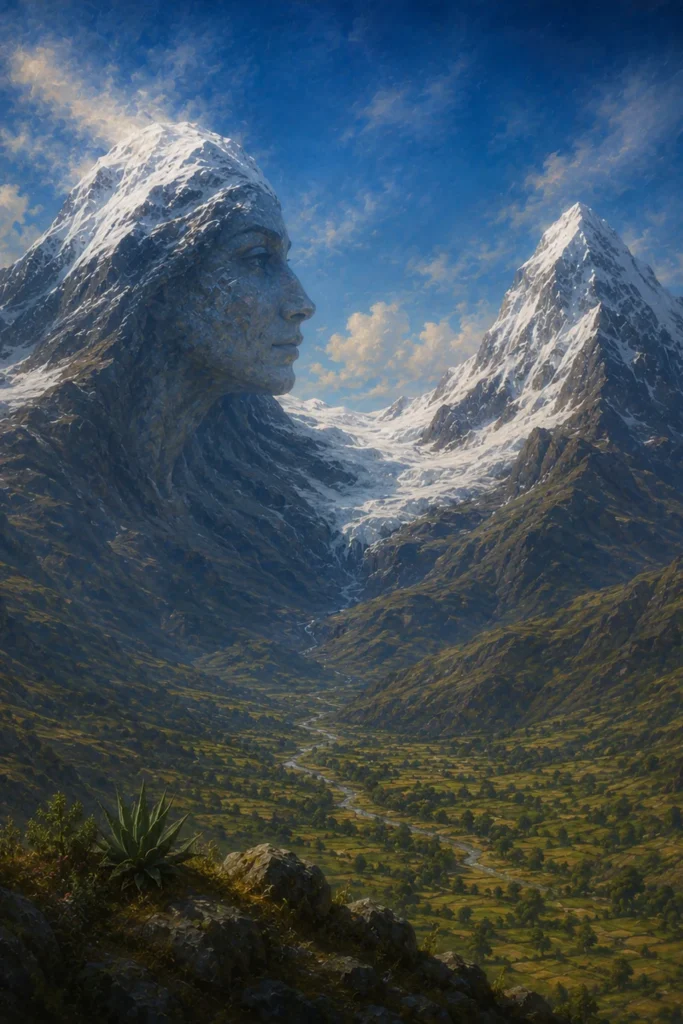
Salkantay is a striking, glaciated double peak. He is regarded as guardian of the region and, in modern Andean spirituality, is read as a male, wild counterpart to gentler Apus.

Effect

As an Apu, Salkantay is the protective lord as well as weather and water regulator of the surrounding communities. Fields and pastures depend on his glacier; the farmers’ cult is directed towards him accordingly.

Profile: Apu Salkantay

The key facts about the wild Apu of the Cusco region.

Cultural Context

One of the most significant Apus of the Cusco region; in modern Andean rituals often named right at the front, according to local tradition frequently behind Ausangate.

Domain

The farmers and communities of the Cusco region, whose weather and water the mountain is understood, in Andean belief, to govern.

Depiction

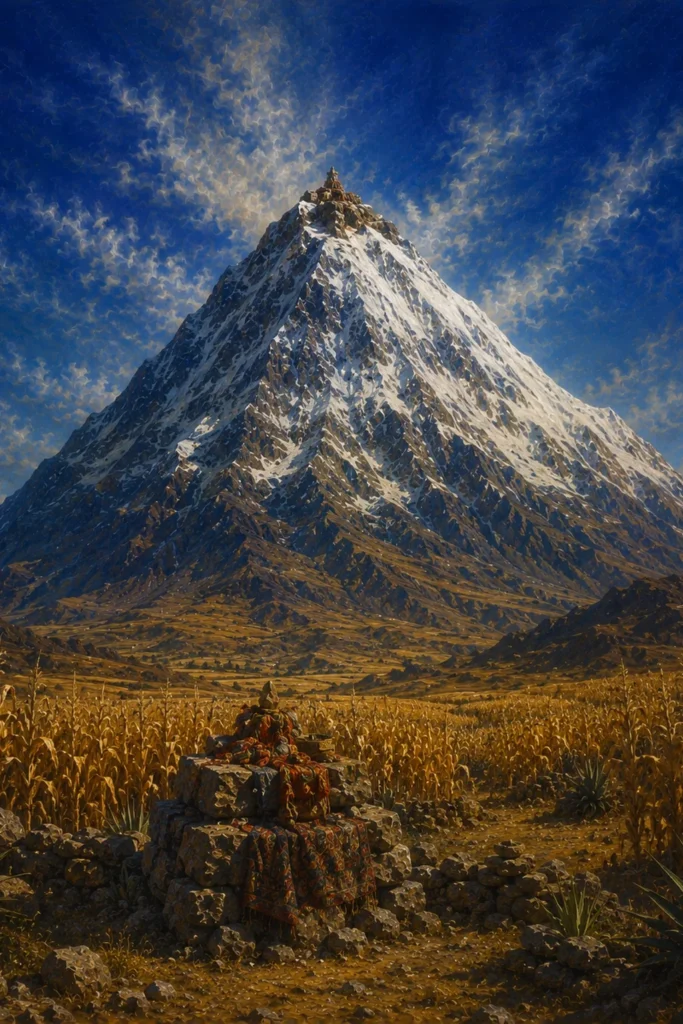
Glaciated double peak of about 6271 metres in the Cordillera Vilcabamba, within sight of Machu Picchu.

Sphere of Influence

Protection of the region, regulation of weather and water; the mountain’s wild character is regarded here as a force, not as malice.

Cult

Despacho and pago ceremonies with coca leaves, llama fat and chicha; Inca-era summit offerings are not securely documented for this mountain.

Related

Apu Verónica and Apu Ausangate as neighbours in the Cusco area; in Aymara territory, the Apu corresponds to the Achachila.

Sallqa: what the wild one's name tells us

Quechua sallqa means wild, untamed or shy, which is why Salkantay is interpreted as the wild one. The popular connection to an avalanche element, by contrast, is secondary and uncertain; the interpretation as avalanche mountain circulates but is not linguistically secure.

In modern Andean rituals, Salkantay is often named as one of the most important Apus. His rank, however, is shaped regionally: according to local tradition he frequently ranks behind Ausangate, who in Cusco is usually regarded as the highest-ranking Apu. The mountain is nonetheless important far beyond its immediate surroundings.

From mountain trail to trekking name

Salkantay gives its name to the popular Salkantay trek to Machu Picchu and is today heavily charged with tourism and spirituality.

From a religious-studies perspective, Apu Salkantay is a living, wild-connoted protective Apu. Important clarifications: his ranking as the most important Apu is regional and context-dependent, with Ausangate often regarded as highest-ranking in Cusco; and the etymology avalanche mountain is popular but not linguistically secure.

Despacho and pago on the wild mountain

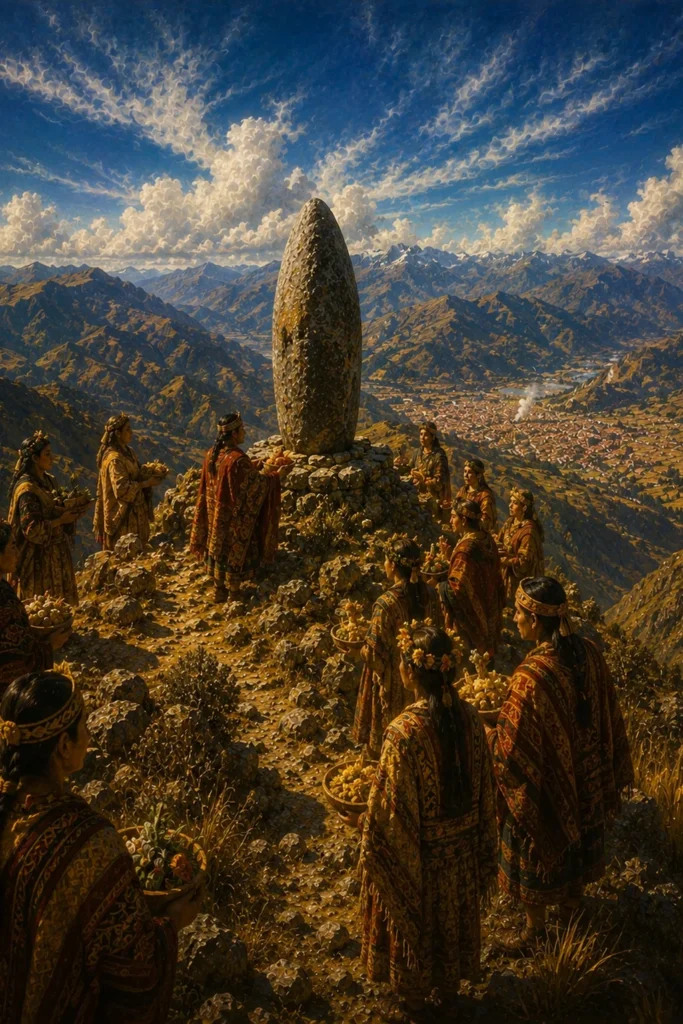
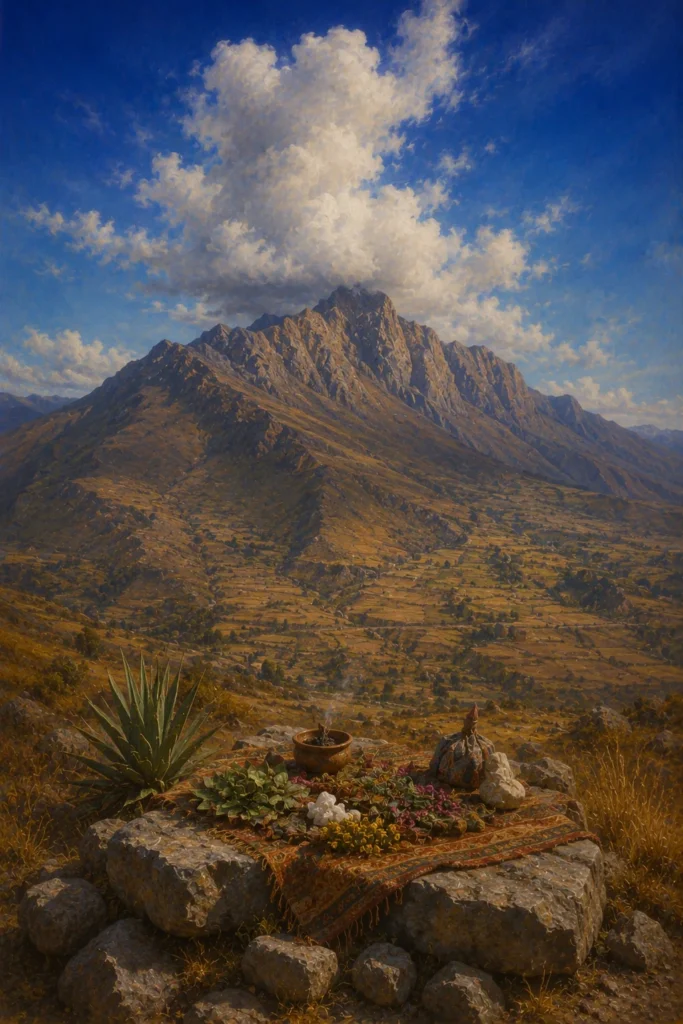
Today despacho and pago ceremonies take place, in which coca leaves, llama fat and chicha are offered as gifts to the Apu. Concrete Inca-era summit offerings, however, are not securely documented for this mountain; this gap should honestly be noted as open. Here, the living cult carries the tradition forward far more than archaeology does.

Salkantay among the mountain powers of the Andes

Apu Salkantay stands alongside Apu Ausangate and Apu Verónica as a significant Apu of the Cusco region. As an Apu, he corresponds to the Achachila of the Aymara and is connected to the earth mother Pachamama, to whom the despacho offerings are likewise directed.

Frequently asked questions about Apu Salkantay

What does Salkantay mean?

The wild one or the untamed one, from sallqa, wild and untamed. The interpretation avalanche mountain is popular but not linguistically secure.

Is Salkantay the most important Apu of Cusco?

The ranking is context-dependent; in Cusco, Ausangate is often regarded as the highest-ranking Apu. Salkantay nonetheless counts among the most significant mountains of the region.

Are there summit offering finds?

Concrete Inca-era summit offerings are not securely documented for Salkantay; the veneration is above all documented ethnographically.

Further links

Recommended internal links:

Literature (selection)

A selection of key sources and studies:
  • Reinhard, Johan: Machu Picchu. Exploring an Ancient Sacred Center. Los Angeles 2007.
  • Bauer, Brian S.: The Sacred Landscape of the Inca. The Cusco Ceque System. Austin 1998.
  • Allen, Catherine J.: The Hold Life Has. Washington 2002.

Further standard works in the bibliography.

As mountain god near Cusco, Salkantay unites two faces: he is the wild Apu of the Cordillera Vilcabamba, whose name carries the untamed, and at the same time the reliable guardian who governs weather and water for the communities.

Classification & Protection

ILEVEL
The Protection Compass assigns this being to influence level I, Minor influence.

Against its influence, cross-cultural tradition names these protective means:

Compare in the Protection Compass →

Recommended protective means

iWell Guard

The simplest protective means in this collection: 41 layers of fine gold 999, platinum, silver and silicon, manufactured in Ruhla, Thuringia. It requires no activation, is bound to no person, and is effective within a radius of around 50 meters, even without being worn.

All protective means at a glance →