iWell Guard

Yamabiko, the echo with a voice of its own

Yamabiko is a spirit of Japanese tradition.

The yōkai that answers every call in the mountains.

SpiritJapan

Table of Contents

Yamabiko, Japan's mountain-echo spirit
Yamabiko

Yamabiko is the mountain-echo spirit of Japanese folk belief, a Yōkai that personifies the echo in the mountains. According to this idea, what one calls out in the mountains is not repeated by the rock but by the Yamabiko.

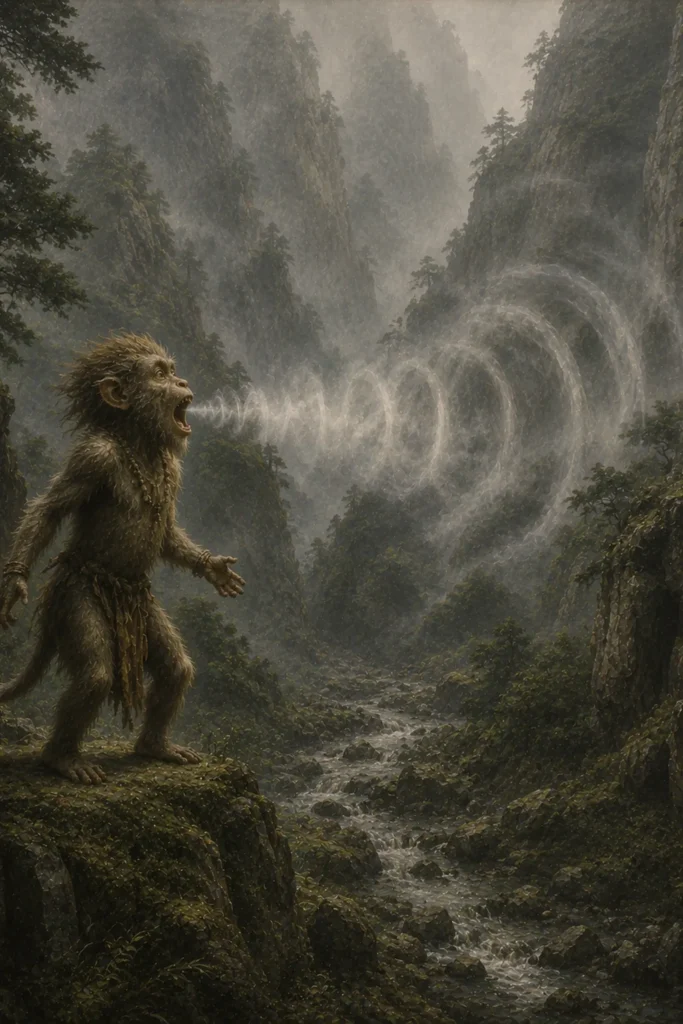
The figure was fixed in visual form in 1779 by Toriyama Sekien, who depicted Yamabiko in his Yōkai encyclopaedia as a small, ape-like or dog-like being. The echo spirit is not dangerous; at most it is confusing and eerie, because voices seemingly answer from nowhere.

At a glance: Yamabiko

Type: nature Yōkai, personification of the mountain echo
Origin: Japanese folk belief
Texts: Toriyama Sekien’s Yōkai encyclopaedia of 1779
Period: folk belief, fixed in visual form in 1779
Appearance: small ape-like or dog-like being

Context of tradition

Period of the Texts

The idea originates from Japanese folk belief surrounding mountain voices; it was given visual form in 1779 by Toriyama Sekien.

Area of Diffusion

Japan: The notion of a mountain spirit that repeats what is called out belongs to the general folk belief of mountain regions.

Sources

Well documented: Sekien’s Yōkai encyclopaedia of 1779 as the main visual source, together with modern Yōkai research, above all Foster.

Name and variants

Japanese: yama means mountain, hiko or biko means prince or youth; in everyday use, yamabiko simply means echo. Sekien writes the word with the characters for reverberation of the dark valley. Spelling and interpretation vary regionally between mountain prince and valley echo.

Form and voice

Appearance

In Sekien’s work, Yamabiko is a small, ape-like or dog-like being with an upright posture that dwells in remote valleys. Older and regional traditions also know an interpretation as a tree or mountain spirit; the ape-like image is the best-known version from Sekien.

Effect

Yamabiko explains the delayed echo: the call is repeated by the Yamabiko. The being is largely harmless, at most confusing and eerie, because voices seemingly answer from nowhere.

Profile: Yamabiko

The key aspects of the echo spirit at a glance.

Cultural Context

Japanese folk belief surrounding mountain voices: an explanatory nature Yōkai, canonised through Sekien’s illustration of 1779.

Object of Influence

The echo in the mountains: according to this idea, what the hiker calls out is repeated by the Yamabiko, not by the rock.

Depiction

Small, ape-like or dog-like being with an upright posture in remote valleys; regionally also interpreted as a tree or mountain spirit.

Function

Personification and explanation of the delayed mountain echo; an explanatory rather than a threatening Yōkai.

Dealing with it

No shrine or festival cult is documented; no festivals or protective rites specifically for Yamabiko are known.

Parallels

Within Japan, the Yobuko and the Kodama, the tree spirits; worldwide, the Greek nymph Echo as a personification of the same phenomenon.

From the mountain prince to Sekien's illustration

The word yamabiko is composed of yama, mountain, and hiko or biko, prince or youth; in everyday use it simply means echo. The Yōkai is the personification of this phenomenon. There are two layers here: an older notion of a mountain Kami or spirit that throws back sounds, and the visual fixation by Toriyama Sekien.

Sekien included the being in his Yōkai encyclopaedia in 1779 and wrote it with the characters for reverberation of the dark valley. His small, ape-like being with an upright posture became the definitive form of the Yamabiko and still shapes how the echo spirit is imagined today.

From the Yōkai canon to the train name

Through Sekien’s illustration, Yamabiko has a firm place in the Yōkai canon and in modern reference works, games and manga. The term yamabiko also lives on as an ordinary word for echo, among other things as the name of a Shinkansen train.

From the perspective of religious studies, Yamabiko is a harmless, explanatory nature Yōkai. Three clarifications: the ape-like appearance dominant today is strongly shaped by Sekien’s depiction and is not the only historical form. Yamabiko is not an evil figure but the personification of an acoustic phenomenon. And spelling and interpretation vary regionally between mountain prince and valley echo.

No cult for the echo

No separate shrine or festival cult is documented; Yamabiko is more an explanatory nature Yōkai than a cult deity. No festivals or protective rites specifically for Yamabiko are known either, and this should be honestly stated. Anyone who feels uneasy at eerie echo sites turns to the general protective forms of folk belief, not to a dedicated Yamabiko ritual.

Echo beings in Japan and elsewhere

Related within Japan are the Yobuko and, more broadly, the Kodama, the tree spirits, which are likewise associated with mountain voices and echo. In the Japanese mountain world, the hiker also encounters more powerful figures such as the Tengu king Sōjōbō or the mountain Kami Yama-no-Kami. Comparable worldwide is the Greek nymph Echo as a personification of the same acoustic phenomenon.

Frequently asked questions about Yamabiko

What is a Yamabiko?

The mountain-echo spirit of Japanese folk belief, a Yōkai that personifies the echo in the mountains.

Is Yamabiko dangerous?

No. It is a harmless, explanatory nature Yōkai; at most, the voice that seemingly answers from nowhere seems eerie.

Where does the ape-like image come from?

Mainly from Toriyama Sekien’s Yōkai encyclopaedia of 1779, which fixed the figure in visual form.

Further links

Recommended internal links:

Literature (selection)

A selection of key sources and studies:
  • Toriyama Sekien: Konjaku Gazu Zoku Hyakki. 1779.
  • Foster, Michael Dylan: The Book of Yōkai. Berkeley 2015.

Further standard works in the bibliography.

As a mountain-echo spirit and Yōkai of the reverberation, Yamabiko is one of the quietest figures of the Japanese spirit world: not a terror of the mountains, but the friendly, eerie answer that follows every call from the valley.

Classification & Protection

ILEVEL
The Protection Compass assigns this being to influence level I, Minor influence.

Against its influence, cross-cultural tradition names these protective means:

Compare in the Protection Compass →

Recommended protective means

iWell Guard

The simplest protective means in this collection: 41 layers of fine gold 999, platinum, silver and silicon, manufactured in Ruhla, Thuringia. It requires no activation, is bound to no person, and is effective within a radius of around 50 meters, even without being worn.

All protective means at a glance →