Ourea, the mountains as primordial gods
By Ralf Ittermann · last reviewed on
The Ourea are gods of the Greek tradition.
Primordial gods of the mountains, born of Gaia even before the Titans. The Ourea belong to the divine figures of Greek primordial times, predating even the Titans.
The Ourea are the mountain gods and primordial gods of the mountains in Greek mythology. According to Hesiod, they arose from Gaia; they belong to the Protogenoi, the primordial deities, and personify individual mountains such as Tmolos, Kithairon or Helikon.
As independent figures, the Ourea remain vague: Hesiod names no individual by name, and the named mountain gods of later tradition are scattered individual traditions. Their place is in genealogy and poetry, not narrative.
Type: Collective personifications of the mountains, Protogenoi
Origin: Greek cultural sphere, Hesiod’s Theogony
Texts: Hesiod, Theogony; scattered later mythography
Period: 8th century BC and later reception
Appearance: individual mountain figures as bearded, aged male forms

Textual history
Period of the Texts
The primary source is Hesiod’s Theogony from the 8th century BC; later mentions of individual mountain figures belong to mythography and poetry.
Area of Diffusion
The Greek cultural sphere; as personifications, the Ourea belong to specific mountains such as Tmolos, Kithairon or Helikon.
Sources
Sparse: the source material relies almost entirely on Hesiod; for the scattered individual traditions, Gantz provides an overview.
Name and variants
Greek: Ourea is simply the epic plural of óros, mountain: the mountains as personified deities. The singular form is uncommon.
Nature and effect
Appearance
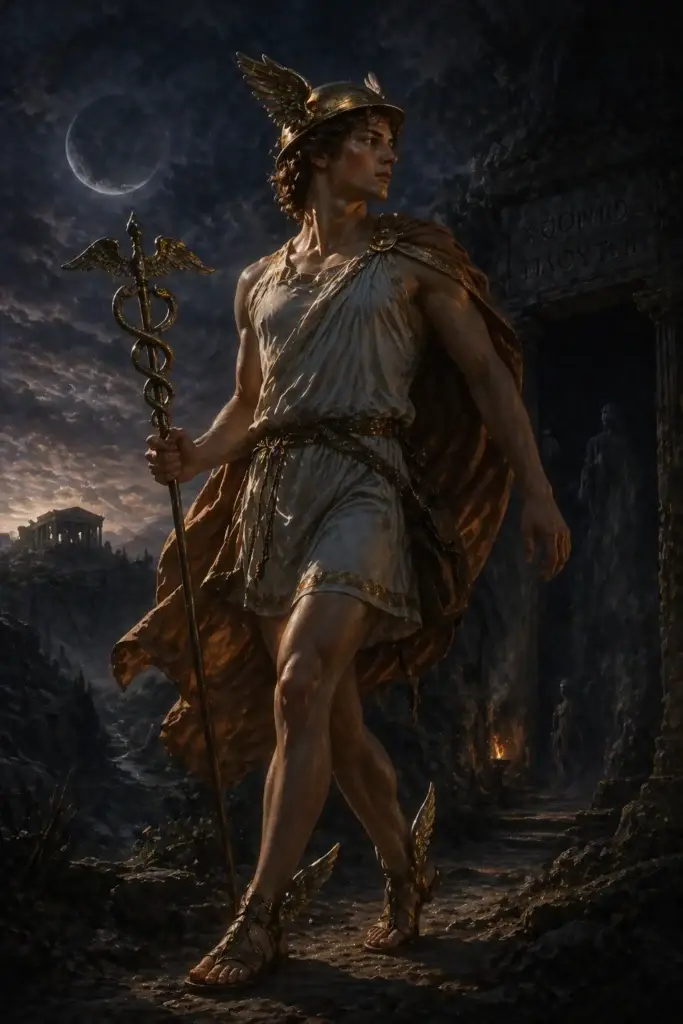
As independent figures, the Ourea are indistinct. Where individual mountains appear personified, such as Tmolos, Kithairon or Helikon, they take the form of bearded, aged male figures, usually in mythographic or poetic interpretation, rather than as a coherent iconography of the Ourea.
Effect
Each of the Ourea embodies a specific mountain. In narratives, they tend to appear as personifications of the setting, for example Kithairon and Helikon in an aetiological legend, or Tmolos as a judge.
Profile: Ourea
The key aspects of the primordial mountain gods at a glance.
Protogenoi of the Greek cosmogony: born of Gaia without a union of love, alongside Uranos and Pontos, even before the Titans.
Genealogy and poetry: the Ourea belong to the lineage of the primordial gods and to the poetic landscape, hardly to narrated action.
No coherent iconography; individual mountain figures appear as bearded, aged male forms of mythography and poetry.
Each embodies a specific mountain, in narratives usually appearing as a personification of the setting.
An organised cult is not attested; mountain worship was directed at the Olympian gods on the mountain, not at the mountain personification itself.
The Roman Montes as their equivalent; conceptually related are other Protogenoi such as Pontos and Uranos.
Gaia's birth of the long mountains
The primary source is Hesiod’s Theogony: Gaia gave birth from herself, without a union of love, first to Uranos, the starry sky, then to the long Ourea, the mountains, and to Pontos, the sea. This places the Ourea among the Protogenoi, the primordial deities, even before the Titans.
Beyond this note of birth, the early tradition offers little more. The named mountain gods who appear later, such as Tmolos as a judge or Kithairon and Helikon in an aetiological legend, are scattered individual traditions rather than a fully developed divine family.
Reception and classification
The Ourea are popularised chiefly through modern mythology reception and fantasy as primordial mountain gods; in antiquity they are marginal.
From a religious studies perspective, the Ourea are passive personifications without any active threat. Three clarifications: they are often depicted as a large divine family with many named individuals, yet Hesiod does not name a single Ourea individual. The named mountain gods, such as Tmolos, are later, scattered individual traditions. And Ourea is the plural; the singular form is uncommon.
Sacred mountains without their own cult
An organised cult of the Ourea is not attested. Mountains were considered sacred, with summit cults of Zeus and mountain altars, yet worship was directed at the Olympian gods on the mountain, not at the mountain personification itself. This should be honestly noted. The sanctity of the place and the personification of the place have remained two different things here.
Montes, Protogenoi and named mountains
Frequently asked questions about the Ourea
What are the Ourea?
The mountain gods and primordial gods of the mountains who, according to Hesiod, arose from Gaia; they belong to the Protogenoi.
Does Hesiod name individual Ourea?
No. He does not name a single Ourea individual; named mountain gods such as Tmolos are later traditions.
Were the Ourea worshipped?
A cult of their own is not attested; mountain worship was directed at the Olympian gods on the mountain.
Further links
Further reading:
- Greece – all beings of the Greek cultural sphere
- Gaia – the earth mother from whom the Ourea arose
- Tmolos, Oreads – named mountain god and mountain nymphs
- Amulet, protective candle, salt – traditional protective means
- Protection Compass – an overview of protective means
Literature (selection)
Further standard works in the bibliography.
As Greek mountain gods of the first generation, the Ourea remain primordial gods of the mountains in the literal sense: less active figures than the mountains themselves, cast into divine form.