Ochokochi, the wild one with the chest axe
By Ralf Ittermann · last reviewed on
Ochokochi is a spirit of Georgian tradition.
The hairy wild man who kills with the axe on his chest. Ochokochi is remembered as the wild one of the forest, feared for the axe fixed to his chest. Ochokochi is the wild man of Mingrelia’s forests, and the profile below shows how this figure fits the regional woodland lore.
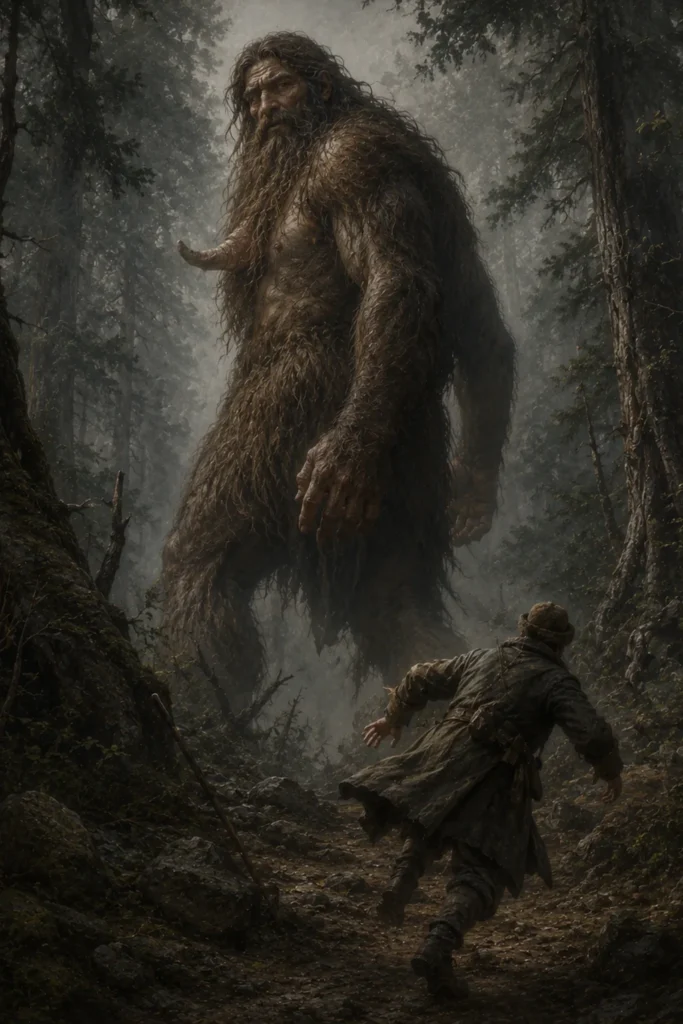
Ochokochi is a wild forest spirit of Mingrelian folklore in western Georgia: a gigantic, entirely hairy wild man with an axe- or hatchet-like outgrowth on his chest. He attacks travellers and hunters, killing them through a deadly embrace.
He belongs to the wilderness sphere of the Colchian-Georgian Caucasus and is hostile to the cultural realm; no cult is documented, and protection consists of avoidance and cunning.
Type: Dangerous wild forest spirit
Origin: Mingrelia, western Georgia, Caucasus
Texts: Mingrelian folklore, later adapted in literature
Period: oral folklore through to modern reception
Appearance: gigantic, hairy wild man with an axe-like chest outgrowth
Sources and area of origin
Period of the Texts
The figure belongs to Mingrelian folklore and was later reworked in literature, among other places in a ballad by Akaki Tsereteli.
Area of Diffusion
Mingrelia in western Georgia and the wilderness sphere of the Colchian-Georgian Caucasus.
Sources
Moderate: the tradition has mainly been documented through Elene Virsaladze and Kevin Tuite.
Name and variants
Mingrelian: The name Ochokochi is usually interpreted as ‘forest man’ or ‘goat man’, that is, wild man of the forest; this interpretation is not finally settled.
Appearance and effect
Appearance
Ochokochi is a gigantic, entirely hairy wild man with a long beard and an axe- or hatchet-like, bony or stone-like outgrowth on his chest, his iconic feature.
Effect
He is a dangerous forest spirit who attacks travellers and hunters; the legends describe a deadly embrace in which he presses the victim against the chest outgrowth. He is wild, unpredictable and hostile to the cultural realm.
Profile: Ochokochi
The key aspects of the forest wild man at a glance.
Figure of Mingrelian, Colchian folklore of western Georgia; he belongs to the wilderness sphere of the Colchian-Georgian Caucasus.
Travellers and hunters in the forest: those who cross the wilderness risk encountering the unpredictable wild man.
Gigantic, entirely hairy, with a long beard; on his chest the axe- or hatchet-like, bony or stone-like outgrowth.
Attacks on people in the forest: the deadly embrace presses the victim against the chest outgrowth.
No cult, no handed-down protective rituals: protection consists of avoidance, cunning and outwitting him through the hero or hunter.
Not to be confused with Ochopintre, the benevolent guardian of animals and the forest; typologically related are the wild man and the Almas.
The wild man of the Colchian forests
Ochokochi is a figure of Mingrelian, Colchian folklore whose name is usually interpreted as ‘forest man’ or ‘goat man’, that is, wild man of the forest; this interpretation is not finally settled. He belongs to the wilderness sphere of the Colchian-Georgian Caucasus.
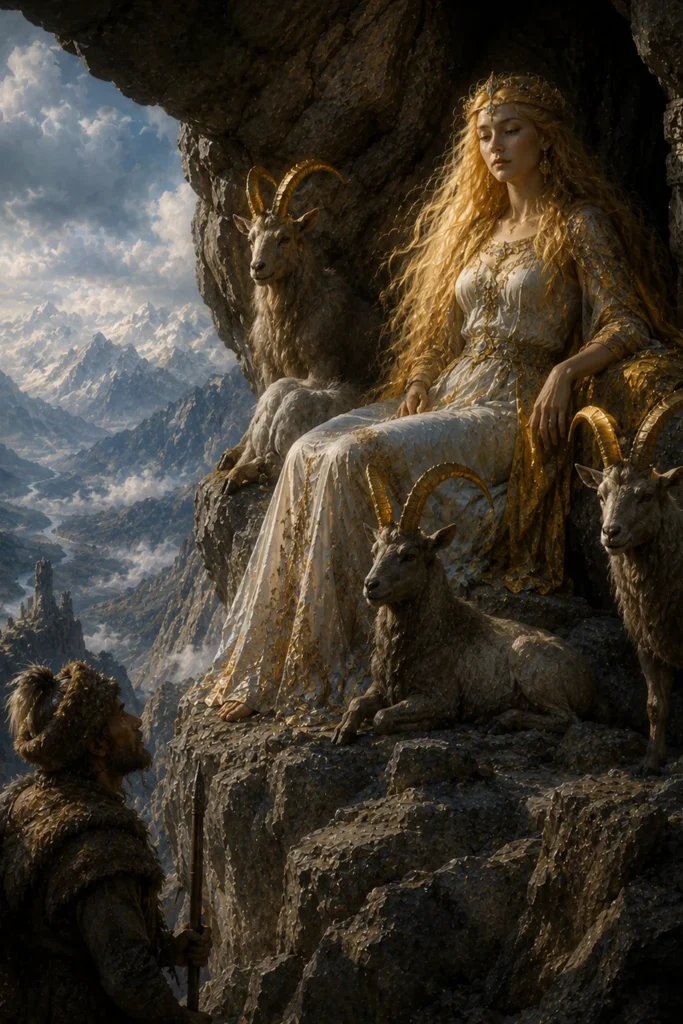
In the stories Ochokochi desires Tkashi-Mapa, the beautiful golden-haired mistress of the forest, who is closely linked to Dali, and pursues her. The forest wild man thus stands within a fixed narrative structure: the wilderness, its beautiful mistress and the crude pursuer, whom only the hero or hunter can outwit through cunning.
Ballad, image and classification
Ochokochi was reworked in literature by the Georgian poet Akaki Tsereteli in a ballad and is a fixed motif in modern Georgian illustration and fantasy.
In religious studies, Ochokochi is an actively dangerous, murderous wild spirit. An important clarification: he is occasionally confused with Ochopintre, the benevolent guardian of animals and the forest; but that is a different figure, closer to Dali’s sphere, not the aggressive chest-axe wild man.
Avoidance and cunning instead of ritual
No cult is documented; Ochokochi is an adversary, not a recipient of veneration. Protection consists of avoidance, cunning and outwitting him through the hero or hunter; no dedicated protective forms have been handed down, and that should be stated honestly. Those who follow the stories avoid the deep forests or rely on their own wits, not on a ritual.
Wild men in comparison
Frequently asked questions about Ochokochi
What is Ochokochi?
A wild, dangerous forest spirit of Mingrelian folklore in western Georgia, gigantic and entirely hairy, with an axe-like outgrowth on his chest.
How does he kill?
Through a deadly embrace in which he presses the victim against the chest outgrowth.
Is Ochokochi the same as Ochopintre?
No. Ochopintre is the benevolent guardian of animals and the forest; Ochokochi is the aggressive wild man of the forest.
Further links
Literature (selection)
Further standard works in the bibliography.
As a Mingrelian forest-dweller and wild man of the Caucasus, Ochokochi marks the counter-world to culture: the wilderness that does not tolerate humans and against which only avoidance and cunning prevail.