iWell Guard

Kaukas, the earth gnome with the quiet gifts

The Kaukas is a spirit of Baltic tradition.

The benevolent earth gnome that brings crops and prosperity.

SpiritBaltic

Table of Contents

Kaukas, the earth spirit of the Balts
Kaukas

The Kaukas is a Baltic, chiefly Lithuanian household spirit: a small chthonic earth gnome that brings prosperity and crops. Unlike the ambivalent Aitvaras, he is regarded as wholly benevolent.

His name derives from Old Baltic kaukolas, meaning a lump or clod of earth, pointing to his small size and his origin from the earth. He is attested across Lithuanian, Latvian, Finnish and Estonian, with Prussian precursors, in folklore records reaching into the 19th century.

Overview: Kaukas

Type: Benevolent, chthonic spirit of fertility and prosperity
Origin: Baltic folk belief with Prussian precursors up to the 16th century
Texts: Folklore records into the 19th century, studies by Greimas and Vėlius
Period: 16th to 19th century
Appearance: small earth gnome in green, blue or red clothing

Textual history

Period of the Texts

Baltic folk belief with Prussian precursors up to the 16th century; folklore records extend into the 19th century.

Area of Diffusion

Lithuania and Old Prussia; the word is also found across Lithuanian, Latvian, Finnish and Estonian.

Sources

Well documented, chiefly through Greimas and Vėlius; the Old Prussian accounts of the barstukai are subject to source criticism.

Name and variants

Lithuanian: kaukas, from Old Baltic kaukolas, a lump or clod of earth. The name points to the spirit’s small size and to his origin from the earth, from which he emerges like a clod from the field.

Being and effect

Appearance

The Kaukas is anthropomorphic: a small gnome of the underground in green, blue or red clothing, visible only in moonlight or mist. He can shrink to the size of a handful of dust.

Effect

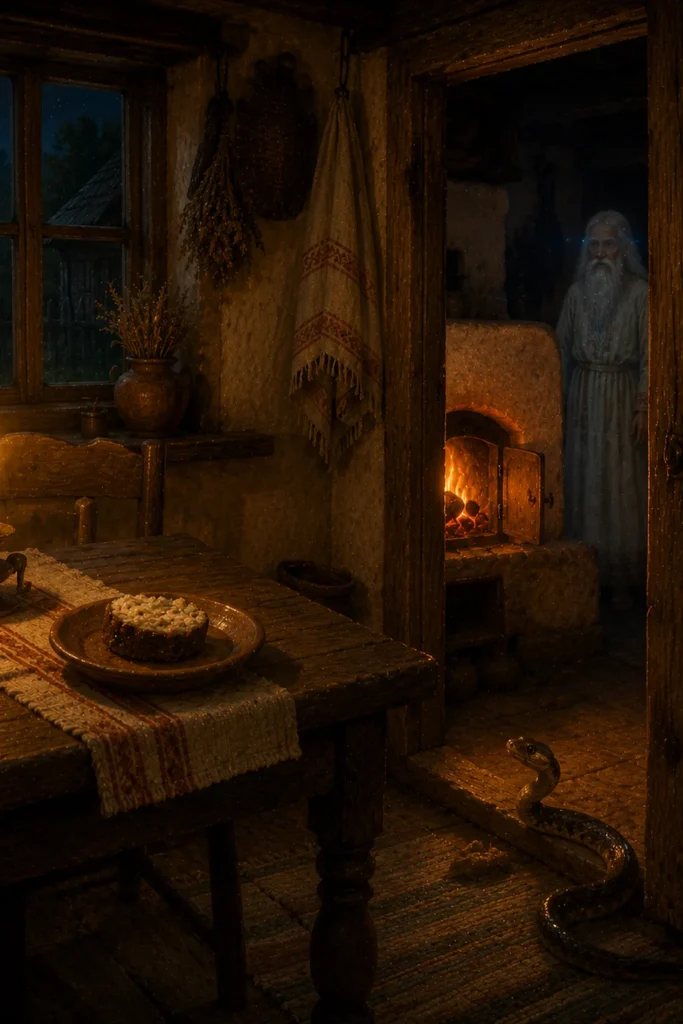
As a chthonic spirit of fertility and prosperity, he brings crops, hay and occasionally clothing, but never money, and is regarded as wholly benevolent. On his first visit he leaves behind a small item; if it is accepted, one sews him linen clothing in thanks.

Profile: Kaukas

The key aspects of the earth spirit at a glance.

Cultural Context

Chthonic household spirit of Baltic folk belief, related to the Prussian barstukai, servants of the earth god Puschkaits.

Responsible for

House and field: the Kaukas increases the harvest and prosperity of the farmstead he has attached himself to.

Depiction

Small earth gnome in green, blue or red clothing, visible only in moonlight or mist, able to shrink to the size of a handful of dust.

Function

Brings crops, hay and occasionally clothing, but never money; his gifts remain products of the field.

Cult

Offerings of bread, milk and beer; in thanks for his services, one sews him linen clothing. Reciprocity secures his goodwill.

Distinctions

Chthonic rather than airy, gnome-shaped rather than zoomorphic, only benevolent and without gifts of money: the clear counterpart to the Aitvaras.

From the clod of earth: origin and distribution

The name Kaukas derives from Old Baltic kaukolas, a lump or clod of earth, and thus already carries within it the spirit’s origin and form: small, earthbound, belonging to the field. The word is found across Lithuanian, Latvian, Finnish and Estonian, with Prussian precursors, and is attested in folklore records into the 19th century.

Among these precursors are the Prussian barstukai, servants of the earth god Puschkaits; their sources, however, are subject to source criticism. Dealings with the Kaukas are marked by reciprocity: on his first visit he leaves behind a small item, and whoever accepts it seals the relationship and thanks him with self-sewn linen clothing.

Reception and classification

The Kaukas is present in the reception of Lithuanian national mythology and in Baltic Neopaganism, for instance in the Romuva movement.

From a religious-studies perspective, he is a benevolent, chthonic spirit of prosperity. Three clarifications are important: he should not be equated with the fiery, ambivalent Aitvaras, even though both appear as synonyms in name lists. The Old Prussian sources on the barstukai are subject to source criticism. And his gifts are products of the field, never money.

Gifts and counter-gifts

Dealings with the Kaukas are not a ritual of warding off, but cultivated reciprocity: one offers him bread, milk and beer and thanks him for his gifts with self-sewn linen clothing. Whoever accepts the small item he leaves behind on his first visit thereby also accepts the relationship; the offerings secure his goodwill and the quiet prosperity of the farmstead.

Gnomes, house spirits and the fiery neighbour

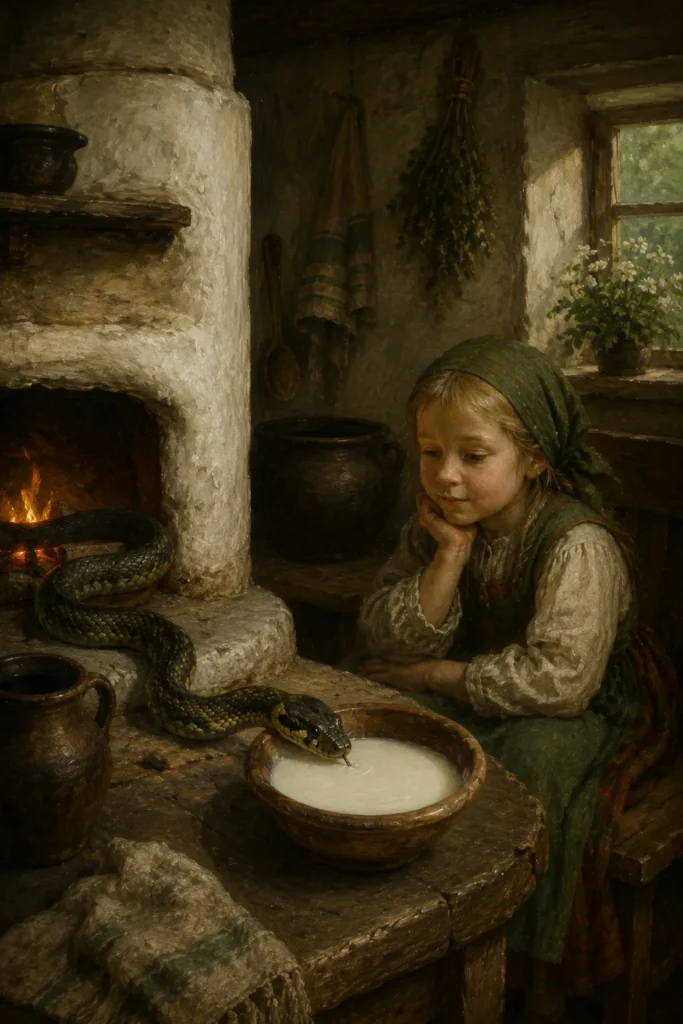
The Kaukas is related to the Prussian barstukai, servants of the earth god Puschkaits, and is close to the German dwarf and house spirit. He differs clearly from the Aitvaras: chthonic rather than airy, gnome-shaped rather than zoomorphic, only benevolent and without gifts of money. Also part of the Baltic household blessing is the sacred house snake Žaltys; a West Slavic relative is the Skrzat.

Frequently asked questions about the Kaukas

What is a Kaukas?

A Lithuanian household spirit: a small chthonic earth gnome that brings prosperity and crops and originates from the earth.

Is the Kaukas dangerous?

No. He is regarded as wholly benevolent, in contrast to the ambivalent and thieving Aitvaras.

Does he bring money?

No. He brings crops, hay and occasionally clothing, but no money; his gifts remain products of the field.

Further links

Recommended internal links:

Literature (selection)

A selection of key sources and studies:
  • Greimas, Algirdas Julien: Of Gods and Men. Studies in Lithuanian Mythology. Bloomington 1992.
  • Gimbutas, Marija: The Balts. London 1963.
  • Mannhardt, Wilhelm: Letto-Preussische Götterlehre. Riga 1936.

Further standard works in the bibliography.

As a Lithuanian household spirit and chthonic earth spirit, the Kaukas represents the friendly side of the Baltic household blessing: small gifts from the earth, returned with bread, milk and self-sewn linen clothing.

Classification & Protection

ILEVEL
The Protection Compass assigns this being to influence level I, Minor influence.

Against its influence, cross-cultural tradition names these protective means:

Compare in the Protection Compass →

Recommended protective means

iWell Guard

The simplest protective means in this collection: 41 layers of fine gold 999, platinum, silver and silicon, manufactured in Ruhla, Thuringia. It requires no activation, is bound to no person, and is effective within a radius of around 50 meters, even without being worn.

All protective means at a glance →