White Lady, a figure between death messenger and mourning soul
By Ralf Ittermann · last reviewed on
White Lady is a spirit of European tradition.
The clinking of her keys announces death in the house. The White Lady is a ghostly figure recurring throughout European folklore as a harbinger of death.
White Lady, known in German-speaking regions as the Weiße Frau, is a widespread female spirit of European tradition. She is usually a white-clad woman who died tragically, appearing at castles, roads or bodies of water, sometimes as a death omen, sometimes as a restless, mourning soul.
The tradition is pan-European, with influential records dating back to the sixteenth century and its core area in Europe; an influential variant emerged in the castles of German princely houses, such as those of the Habsburgs and Hohenzollerns.
Type: White-clad female spirit with a tragic backstory, often bound to a location
Origin: Pan-European tradition with its core area in Europe and an influential German castle variant
Texts: scattered, broadly popular, but academically inconsistent source material
Period: pan-European, with influential records since the sixteenth century
Appearance: white robe or nightgown, in the Hohenzollern variant with a jingling bunch of keys
Historical Classification
Period of the Texts
Pan-European: Influential records date back to the sixteenth century, with a legendary tradition still told today at castles and manor houses.
Area of Diffusion
Found worldwide, with its core area in Europe and an influential German castle variant in the houses of the Habsburgs and Hohenzollerns.
Sources
Scattered and broadly popular, yet academically inconsistent: dedicated monographs on the White Lady alone are rare, and popular sources tend to serve merely as an introduction.
Name and variants
Name: The designation is descriptive and derives from the white robe of the apparition. White carries several meanings at once: shroud, mourning garment, divine radiance and morning mist.
Appearance
Appearance
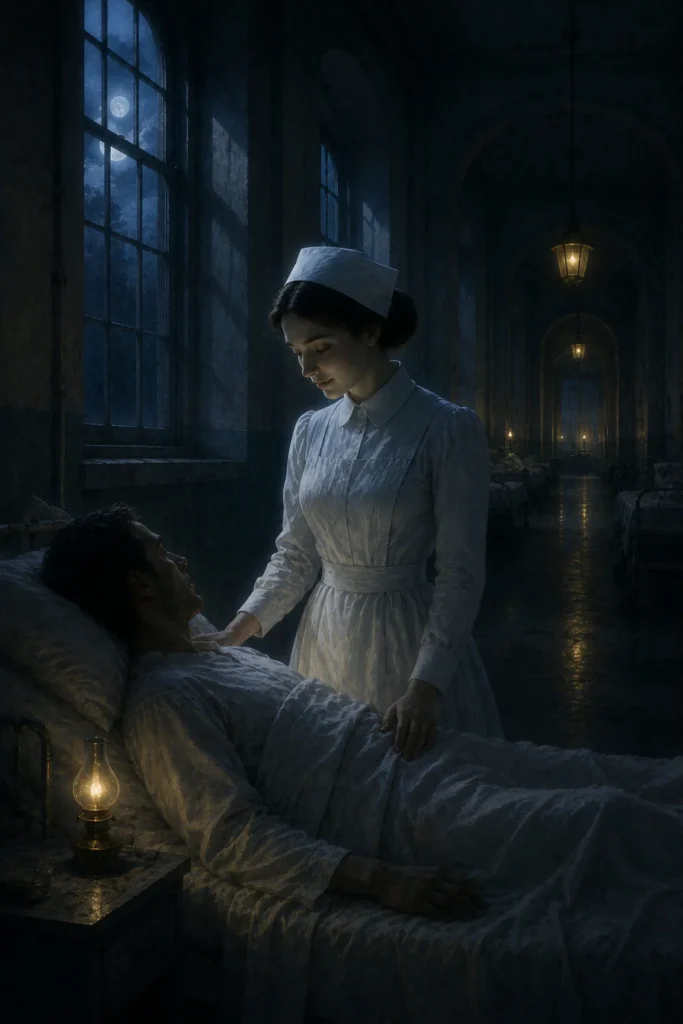
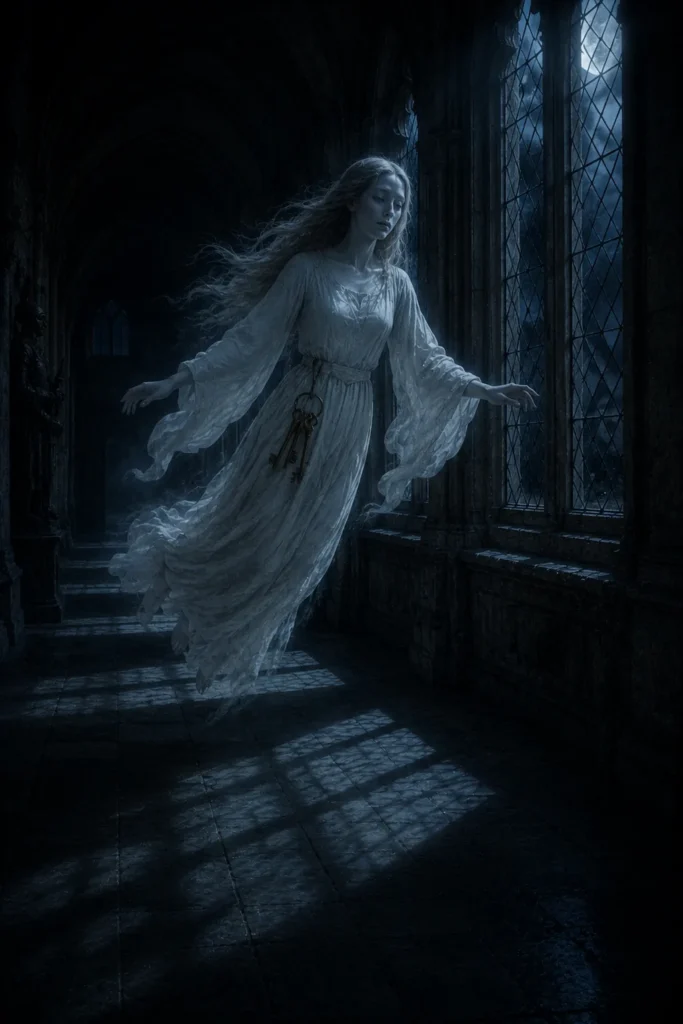
The White Lady appears in a white robe or nightgown as a pale figure, often with a tragic backstory of loss, betrayal or early death. The Hohenzollern variant carries a bunch of keys, whose jingling announces her and marks her as guardian of the house. White remains an ambivalent sign here, between purity and death.
Effect
The White Lady has two basic functions: in the dynastic variant she is a messenger of death and misfortune, appearing before the death of a family member; elsewhere she is a place-bound soul, mourning or seeking revenge. Some accounts show her as a silent apparition, others with a tragic flashback to the loss of a child or to betrayal.
Profile: White Lady
The key aspects of the White Lady at a glance.
Pan-European legendary figure with an influential form found in the castles of the Habsburgs and Hohenzollerns.
The inhabitants of the haunted place, in the dynastic variant the family itself, to whom she appears as a messenger of death.
White-clad, pale female figure with a tragic backstory, in some places with a jingling bunch of keys.
Appears at liminal places and times as a death omen or as a mourning, place-bound soul.
No fixed protective ritual is recorded; one interprets the apparition rather than escaping it. Holy water, candlelight and the sound of bells were generally regarded as protective signs.
La Llorona, Bean-nighe and the Radiant Boy as related figures of death lament and omen.
Perchta of Rosenberg and the deathbed curse
The name is descriptive and derives from the white robe of the apparition. An influential variant is the German White Lady in the castles of the Habsburgs and Hohenzollerns; an early documented sighting is dated to the year 1598 at Berlin Palace.
Popular is the identification with Perchta of Rosenberg, a Bohemian noblewoman of the fifteenth century, whom her husband is said, according to tradition, to have cursed on his deathbed; this attribution is legend, not established history. A further line of connection leads to the alpine figure Perchta or Berchta, where the motif shifts from the restless dead to a pre-Christian figure.
From legend to Gothic novel
The White Lady has a very broad reception in ghost stories, in tourism through ghost tours, and in popular culture. Wilkie Collins shaped the motif in a broader sense with his 1859 novel The Woman in White, though it is not identical to the folk belief.
The White Lady is a classic ancestral and place spirit with an omen function. She combines the cult of the dead, dynastic legitimation, since the apparition belongs to the house, and the cross-cultural figure of the lamenting, restless female dead. The merging with pre-Christian female figures such as Perchta is an example of syncretic reinterpretation.
Interpreting rather than banishing
No uniform, source-backed protective ritual is recorded for the White Lady; the source material on independent protective actions is genuinely thin. She is generally regarded as a passive omen that one does not escape but interprets, which is why invented protective rituals should not be claimed here.
In the broader context of the tradition, general signs are considered protective: blessed water as a Christian sign in dealing with the apparition, the light of a candle as a watch at the haunted place, and the sound of consecrated bells, which was thought to be a protective sign against misfortune.
White Ladies and weeping women compared
The White Lady is related to the Latin American La Llorona, the weeping woman, and to the Spanish-Portuguese Dama Blanca or Dama Branca. In the Celtic traditions, she is closely related to the Scottish Bean-nighe and the Irish Banshee; also related by name are the Dutch Witte Wieven and the Bohemian Bílá paní.
Frequently asked questions about the White Lady
Is the White Lady always an omen of death?
No. In the Hohenzollern variant she is regarded as a herald of death and misfortune who appears before the death of a family member. Elsewhere she is a site-bound, mourning or vengeance-seeking soul without any omen function.
Why does she appear in white?
White carries several meanings at once: shroud, mourning dress, divine radiance and morning mist. The colour thus remains an ambivalent sign between purity and death.
Is the White Lady the same figure as the Banshee?
No. Both are related in the motif of the female herald of death, but the Irish Banshee belongs to a distinct Celtic tradition.
Further links
Further reading:
- La Llorona – the weeping woman of Latin American tradition
- Bean-nighe, Radiant Boy – related spirits of the dead
- Holy water, protective candle, bells – traditional protective signs
- Protection Compass – protective means at a glance
Literature (selection)
Further standard works in the bibliography.
As a white lady ghost, the White Lady belongs to the widely received figures of European legend: at times a herald of death with a jangling bunch of keys, at times a silent, mourning soul at castles and roadsides.