Anhanga, the ancient soul of the wilderness
By Ralf Ittermann · last reviewed on
Anhanga is a spirit of the Tupi-Guarani tradition of Brazil.
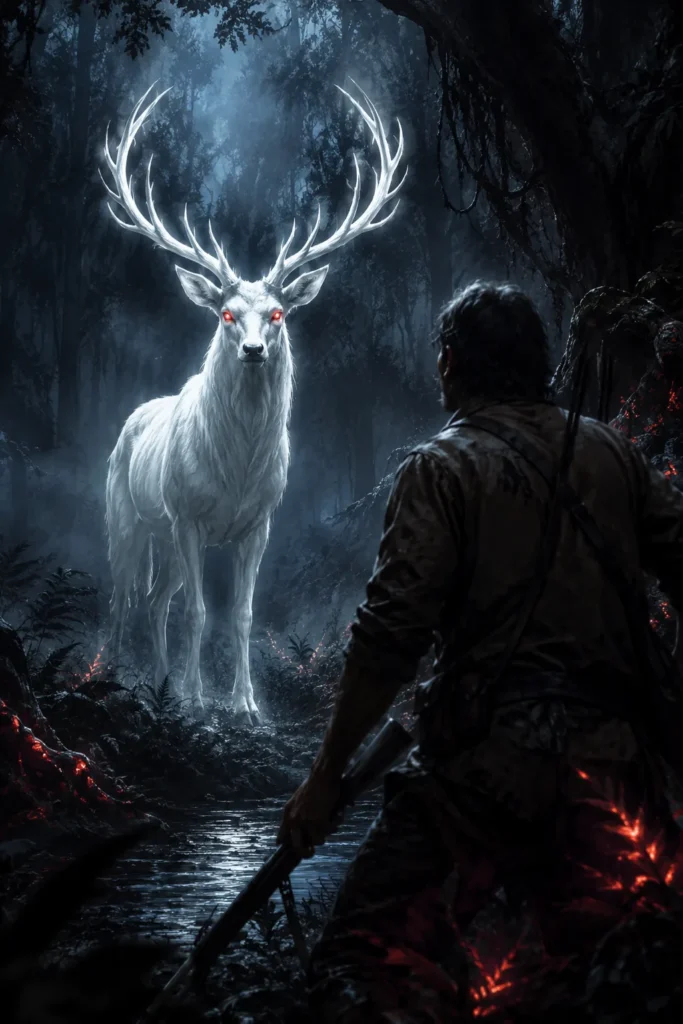
The white stag with fiery eyes watches over the game. The account frames Anhanga as an ancient guardian spirit, embodied in the white stag that watches over the game of the wilderness.
Anhanga is the guardian spirit of game of the Tupi-Guarani, classically a white stag with fiery eyes. As a shapeshifter, he punishes hunters who kill pregnant animals or their young, afflicting them with madness, fever and cruel illusions.
He is among the oldest colonially documented Brazilian myths: as early as the 16th and 17th centuries, chroniclers and missionaries such as Manuel da Nóbrega, José de Anchieta and Fernão Cardim described the figure. At its core lies a sparing taboo: whoever spares mother animals and their young has nothing to fear from Anhanga.
Type: Guardian spirit of game, lord of animals with a sparing taboo
Origin: Tupi-Guarani-speaking region of Brazil
Texts: Jesuit chronicles and letters of the 16th and 17th centuries, Câmara Cascudo
Period: colonially documented since the 16th century
Appearance: shapeshifter, classically a white stag with fiery eyes
Area of origin and sources
Period of the Texts
Anhanga is one of the oldest colonially documented Brazilian myths: the evidence dates from the 16th and 17th centuries, from chroniclers and missionaries such as Nóbrega, Anchieta and Cardim.
Area of Diffusion
The Tupi-Guarani-speaking region of Brazil. There, Anhanga watches over the game and encounters hunters above all.
Sources
Good: the Jesuit chronicles and letters of the 16th century as well as the standard works of Luís da Câmara Cascudo on Brazilian folklore.
Name and variants
Tupi-Guarani: The name originally denotes soul or spirit, literally old soul. The Jesuits reinterpreted it as evil spirit or demon; in Anchieta’s Tupi drama, Anhangupiara, the enemy of the Anhangás, appears as an angel, evidence of this demonisation.
Appearance and behaviour
Appearance
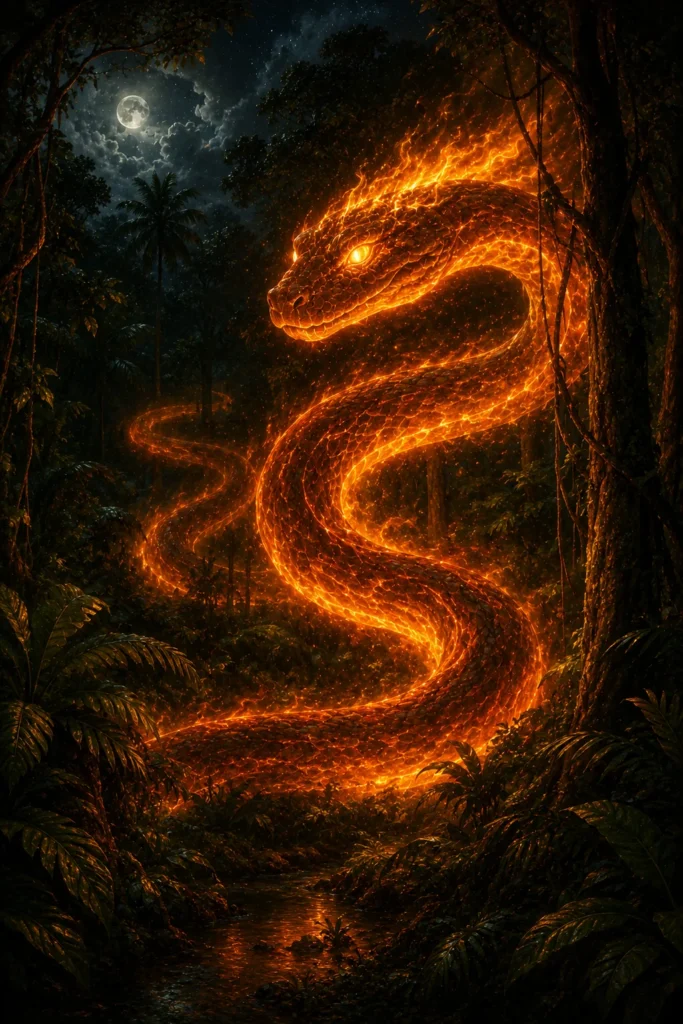
The core image is the white stag with fiery eyes. Anhanga also appears as an armadillo or as an invisible force; this changeability stands for the elusive punishing power of the wilderness.
Effect
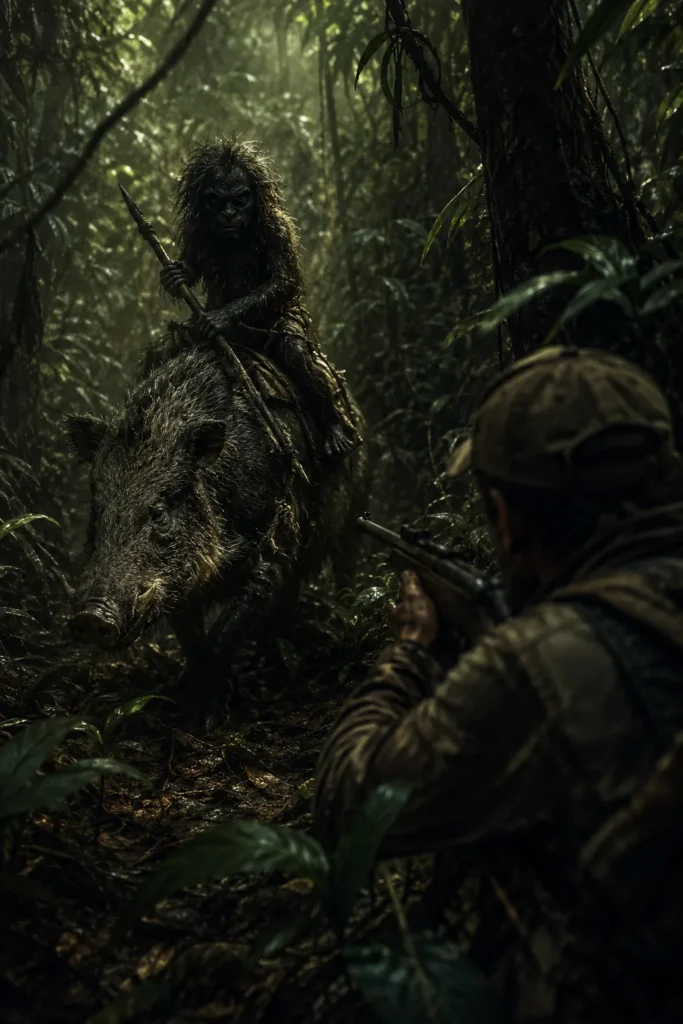
Anhanga pursues and torments disrespectful hunters with madness, fever and cruel illusions and is regarded as a harbinger of misfortune. That he protects precisely the pregnant animals marks a reproductive and sparing taboo: whoever endangers the game population is punished.
Profile: Anhanga
The key aspects of the game warden at a glance.
Hunters, especially those who hunt pregnant animals or females with young and thereby break the taboo of restraint.
Shapeshifter: classically a white deer with fiery eyes, alongside an armadillo or an invisible force.
Protection of game and its reproduction; punishes offenders with madness, fever and illusions and is regarded as a bringer of misfortune.
Do not hunt pregnant animals or females with young, and treat game with respect; fixed offering rituals are less clearly documented than for the Caipora.
The archetype of the lord of the animals with a taboo of restraint, as it recurs in game-protecting spirits of other hunter cultures, for example the Slavic Leshy.
From the old soul to the missionaries' demon
Anhanga was described in the 16th and 17th centuries by chroniclers and missionaries such as Manuel da Nóbrega, José de Anchieta and Fernão Cardim, and thus belongs to the oldest colonially documented myths of Brazil. The Tupi-Guarani name originally denotes soul or spirit, literally old soul.
It was only the Jesuits who reinterpreted the term as evil spirit or demon. How far this reinterpretation went is shown by Anchieta’s Tupi drama, in which Anhangupiara, the enemy of the Anhangás, appears as an angel. In missionary literature, the game-keeper of the Tupi-Guarani had become an adversary of heaven.
Folclore canon and classification
Anhanga is a firm part of the Brazilian folclore canon and of the reception of Tupi mythology, and is present in popular culture, including in fantasy and game bestiaries. As an environmental mascot he is less instrumentalised than the Curupira.
From the perspective of religious studies, Anhanga is a protective spirit of game and lord of the animals with a pronounced hunting and restraint taboo. It remains important to clarify that he was originally not a demon but a soul or spirit of the Tupi-Guarani; it was only the Jesuits who placed him within a demonic framework, an example of colonial reinterpretation of indigenous spirits.
The taboo of restraint as protection
Protection from Anhanga lies not in defensive magic but in behaviour: do not hunt pregnant animals or females with young, and treat game with respect. Tradition emphasises this taboo; fixed offering rituals are less clearly documented here than for the Caipora. Those who observe the closed seasons of the wilderness stay outside his wrath.
The Tupi triad and the lord of the animals
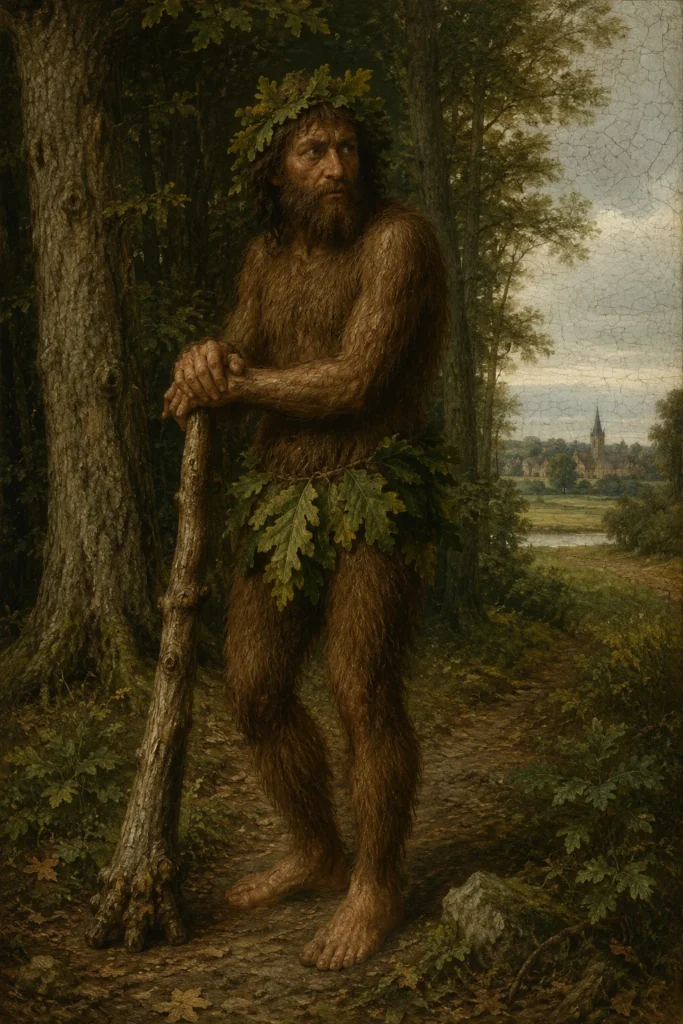
Anhanga forms with the Caipora and the Curupira the Tupi triad of forest lords. Within this triad, he is the specialist for game itself: the Caipora rules over the animals and punishes excess, the Curupira protects the forest with false tracks, and Anhanga watches over the reproduction of game. He corresponds to the archetype of the lord of the animals with a taboo of restraint, as embodied in other cultures for example by the Slavic Leshy.
Frequently asked questions about Anhanga
Is Anhanga a demon?
Originally a spirit or an old soul of the Tupi-Guarani; it was only the Jesuits who reinterpreted the term as evil spirit or demon.
Whom does Anhanga particularly punish?
Hunters who kill pregnant animals or females with young; typical punishments are madness and fever.
How does he appear?
Classically as a white deer with fiery eyes, also as an armadillo or an invisible force.
Further links
Further reading:
- Caipora – the mistress of the animals from the same triad
- Curupira – the forest protector with the twisted feet
- Leshy – the Slavic forest lord as an archetypal counterpart
- Amulet, Smoke cleansing, Mugwort – traditional protective means
- Protection Compass – an overview of protective means
Literature (selection)
Further standard works in the bibliography.
As a white deer, protective spirit of game and at the same time Tupi game-keeper with a strict taboo of restraint, Anhanga embodies the rule of the wilderness: only what is needed is taken, and mother animals remain spared.