Iroko-Man, the spirit in the crown of the sacred tree
By Ralf Ittermann · last reviewed on
The Iroko-Man is a spirit of the Yoruba tradition.
Whoever fells the sacred tree draws the curse upon their family.
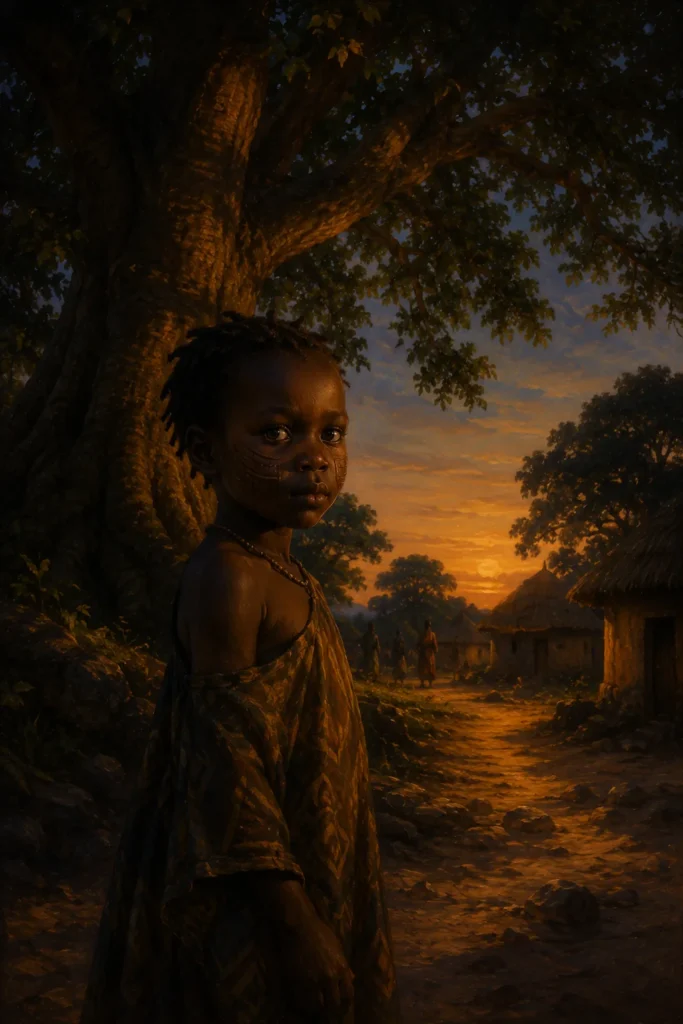
The Iroko-Man is the spirit of the sacred Iroko tree of the Yoruba, whose sky-high crown is regarded as God’s throne. The tree, botanically Milicia excelsa, can live for around five hundred years and embodies longevity, strength and stability.
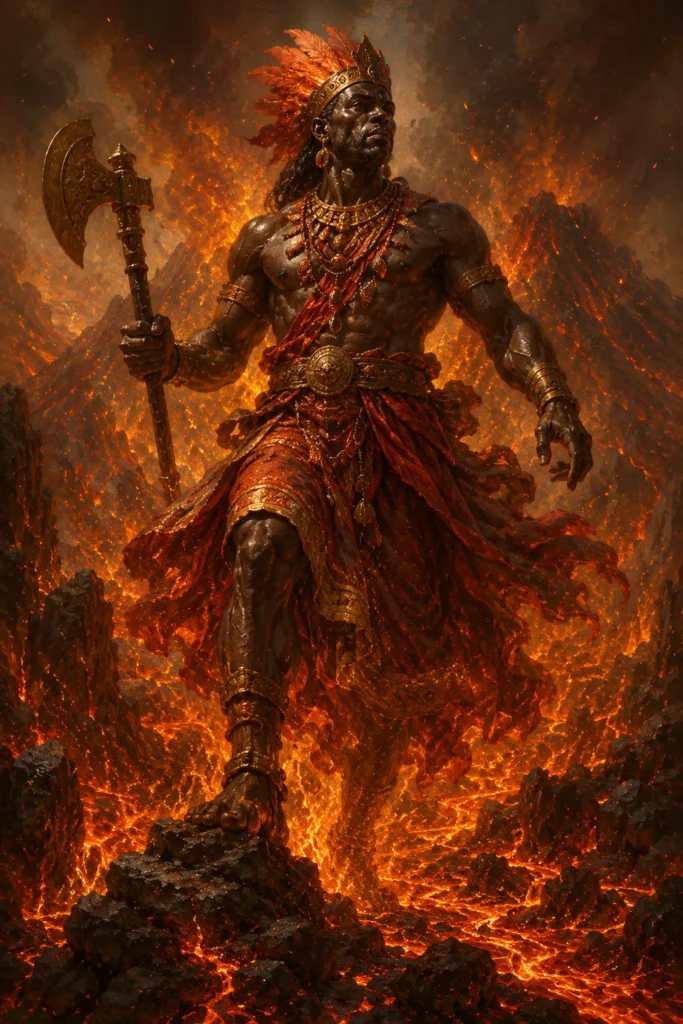
The spirit can appear as a man and is immediately dangerous: whoever meets him face to face, according to tradition, falls into madness and dies; whoever fells the tree is cursed and brings misfortune upon their family. In the African American diaspora, the Iroko lives on as an independent deity.
Type: Tree spirit of the sacred Iroko tree
Origin: Yoruba in Nigeria and Benin
Texts: ethnobotany and diaspora studies
Period: living tree cult with influence extending into the diaspora
Appearance: spirit of the tree that can appear as a man

Historical Classification
Period of the Texts
The Iroko cult is a widespread Yoruba tree cult, well documented in ethnobotany and in studies of the diaspora religions.
Area of Diffusion
The Yoruba land in Nigeria and Benin, with influence extending into the African American diaspora from Cuba through Brazil to Haiti.
Sources
Good: The tree cult is documented in ethnobotany and diaspora studies, from Verger to Thompson.
Name and variants
Yoruba: Iroko is the Yoruba name of the tree, botanically Milicia excelsa. In Hausa it is called loko, a root that leads to the diaspora deity Loko or Papa Loko.
Tree and spirit form
Appearance
The Iroko is the axis between the visible and invisible world; the height of its crown is regarded as the throne of God. The tree symbolises longevity, strength and stability, and its spirit can appear as a man.
Effect
According to tradition, whoever meets the Iroko-man face to face falls into madness and dies. Whoever fells the tree is cursed and brings misfortune upon their family.
Profile: Iroko-Man
The key aspects of the tree spirit at a glance.
Sacred tree of the Yoruba with a well-documented tree cult; also revered in Igbo legends and in the Vodun of Togo and Benin.
Anyone who comes too close to the tree, especially woodcutters: the offence against the tree strikes the offender and their family.
The tree spirit of the Iroko, which can live for about five hundred years; its seat in the sky-high crown is interpreted as the throne of God.
Guardian of the sacred tree and world axis between the worlds; when respected, he grants blessing, prosperity and protection.
Rituals and offerings at the foot of the tree; those who must take wood ask permission beforehand or bring an offering to avert the curse.
Milicia excelsa and the Throne of God
The Iroko, botanically Milicia excelsa, can live for about five hundred years and is regarded by the Yoruba as a sacred tree, inhabited by the Iroko-man, whose seat in the sky-high crown is interpreted as the throne of God. Iroko is the Yoruba name of the tree; in Hausa it is called loko, a root that leads to the diaspora deity Loko or Papa Loko.
The tree cult is well documented in ethnobotany and diaspora studies. The tree is the axis between the visible and invisible world; at its foot, rituals and offerings are made to ask for blessing, prosperity and protection.
From Local Spirit to Portable Deity
In the African-American diaspora religions, the Iroko lives on as an independent deity: as Iroko in Cuban Santería, whose material seat is usually the Ceiba, as Iroko in Brazilian Candomblé, and as Loko or Papa Loko in Haitian Vodou, the guardian of the sanctuary. He is also revered in Igbo legends and in the Vodun of Togo and Benin.
In religious studies terms, the Iroko-man is a classic tree cult: the sacred tree as an inhabited, dangerous guardian and as a world axis between the worlds. It combines the sacredness of nature, the world of ancestors and spirits, and a ritual economy of offering for blessing and curse for offence. In the diaspora, it changed from a local spirit into a portable deity with the Ceiba as a substitute throne.
Offerings at the Foot of the Tree
What is well established from sources is to respect the tree, not to fell it, and not to approach it disrespectfully. At its foot, rituals and offerings are made to ask for blessing, prosperity and protection. Those who must take wood traditionally ask permission beforehand or bring an offering to avert the curse.
Tree Spirits and Yoruba Relatives
The Iroko-man corresponds to the Greek Dryad, the tree spirit dwelling in a particular tree, and the Japanese Kodama, the spirit of sacred, ancient trees whose felling brings misfortune. Within the Yoruba tradition, he must be distinguished from Aja and Aroni: Aja is the Orisha of the whole forest, Aroni a freely roaming forest spirit in the Osanyin circle, while the Iroko-man is bound to his one sacred tree.
Frequently Asked Questions about the Iroko-Man
Why must the Iroko not be felled?
The tree spirit curses the fellers and their family with misfortune; averting the curse requires asking permission or making an offering.
Can the spirit take on a form?
Yes, he can appear as a man; seeing him directly is considered fatal and, according to tradition, leads to madness.
Is the Iroko cult still alive?
Yes, in West Africa and, as Loko or Iroko, in Santería, Candomblé and Vodou.
Further links
Further reading:
- Aja – the Orisha of the forest and herbal medicine
- Aroni – the one-legged forest spirit in the Osanyin circle
- Dryad and Kodama – tree spirits of other cultures
- Holy water, Smoke cleansing, Amulet – traditional protective means
- Protection Compass – protective means at a glance
Literature (selection)
Further standard works in the bibliography.
The Iroko-man turns a tree into a sanctuary: as the Iroko tree spirit, he inhabits what has been revered for generations as the sacred tree of the Yoruba, granting blessing when respected and repaying offence with curse, madness and misfortune.