Nëna e Vatrës, guardian of hearth and family
By Ralf Ittermann · last reviewed on
Nëna e Vatrës is a spirit of Albanian tradition.
The mother of the hearth, who watches over house and family.
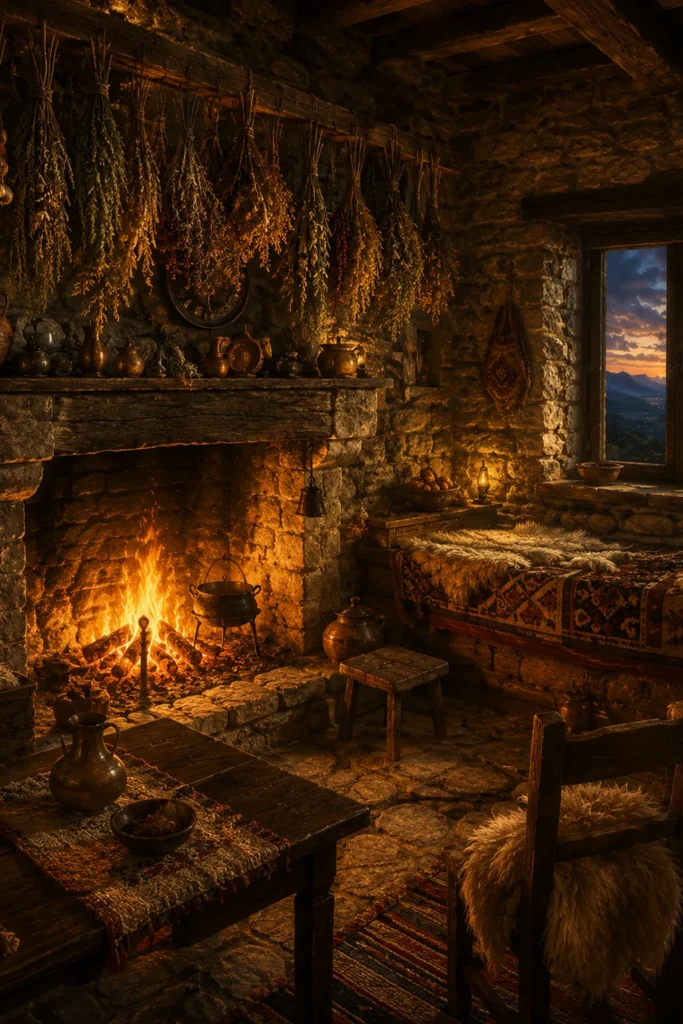
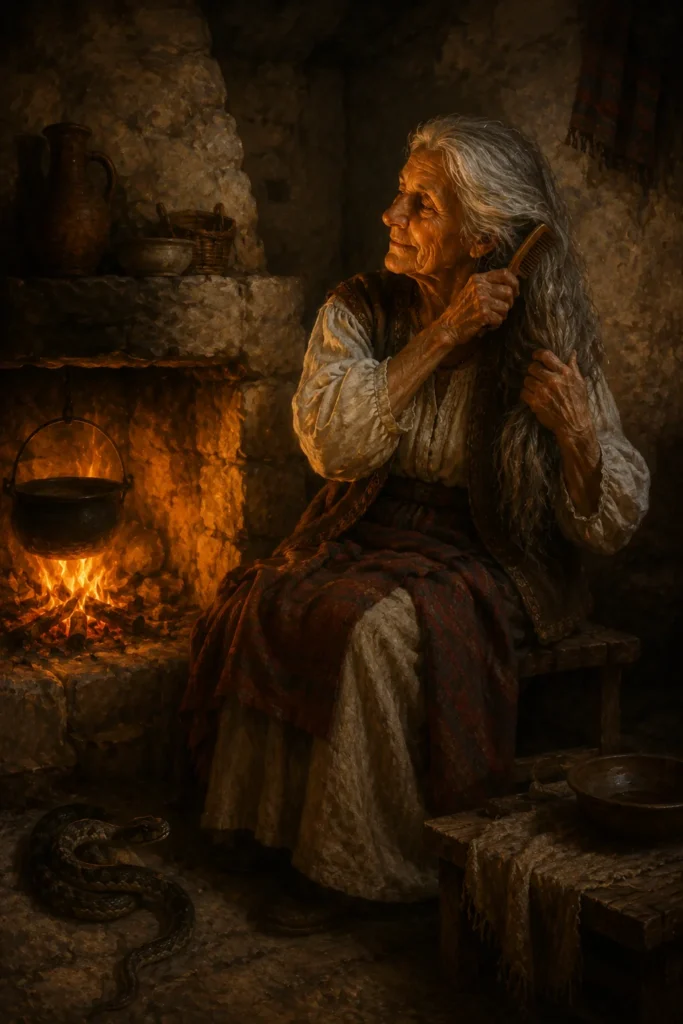
Nëna e Vatrës, in simplified spelling Nena e Vatres, is the mother of the hearth: a hearth-fire protective being of Albanian folk belief. She appears as an old woman at the hearth and watches over the hearth and the continuation of the family.
She is closely linked to the house snake, the vitore, the guardian of house and ancestors. The personified figure of the hearth mother is thinly documented, whereas the underlying hearth cult is old.
Type: hearth-fire protective being of house and family
Origin: Albanian folk belief, recorded in the 20th century
Texts: folkloric records, chiefly Mark Tirta
Period: documented in the 20th century, the hearth cult itself older
Appearance: old woman at the hearth, at times as the house snake
Traditional context
Period of the Texts
Albanian folk belief, recorded in the 20th century; the main source is Mark Tirta. The tradition is scattered, and she is not a fixed deity.
Area of Diffusion
The Albanian-speaking region; her cult site is not a sanctuary but the hearth of each individual house.
Sources
Thin and regional: scattered folkloric records, drawn chiefly from Tirta and the reference works of Elsie.
Name and variants
Albanian: nënë means mother, vatër hearth; the word vatër is linked to the Avestan fire ātar. Dialect variants are Plaka e Vatrës, the old woman of the hearth, and Shtriga e Vatrës. The hearth, the vatra, is regarded as the centre of the house and equated with the continuation of the family.
Appearance and behaviour
Appearance
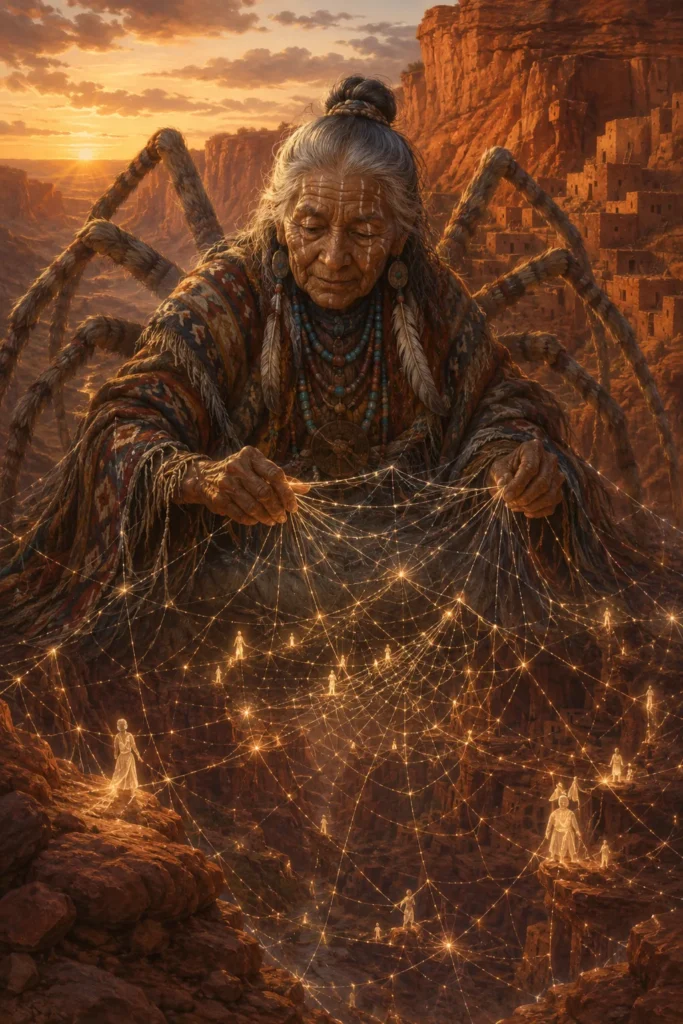
Nëna e Vatrës is described as an old woman who sits at the hearth, spins or combs her grey hair. Central to her is the link to the house snake vitore, the guardian of house and ancestors, which in some places itself appears as an old woman. The hearth mother and the hearth snake are intertwined but not identical expressions of the same hearth and ancestor complex.
Effect
She protects the hearth, the house and the continuation of the family and demands order. If the hearth is left unswept in the evening, she becomes angry; this is the most concrete rule handed down.
Profile: Nëna e Vatrës
The key aspects of the hearth mother at a glance.
Part of the Albanian hearth and ancestor complex, in which the hearth is equated with the continuation of the family.
House and family: she watches over the hearth as the centre of the house and over the continuation of the family.
An old woman who sits at the hearth, spins or combs her grey hair; in some places she appears in the form of the house snake.
Protection of the hearth, the house and the descendants; her anger falls upon the neglected hearth if it remains unswept in the evening.
Food offerings into the fire and around the hearth, ritual cleaning of the hearth; the house snake vitore is respected and never killed.
Hearth, ancestors and the house snake: the tradition
Albanian nënë means mother, vatër hearth; the word is linked to the Avestan fire ātar. The hearth is regarded as the centre of the house and equated with the continuation of the family; whoever honours the hearth mother secures both. In dialect she also appears as Plaka e Vatrës, the old woman of the hearth, or as Shtriga e Vatrës.
The main source is the folklorist Mark Tirta; the tradition is scattered and regional, and Nëna e Vatrës never became a fixed deity. All the closer, then, is her connection to the house snake vitore, the guardian of house and ancestors: both belong to the same hearth and ancestor complex without being identical.
Legacy and classification
Nëna e Vatrës is a niche topic, known chiefly through Tirta and Elsie. Culturally significant is the hearth metaphor vatra, after which the Albanian-American federation Vatra is named.
In religious studies she is an example of the hearth as the sacred centre of house, ancestors and family continuity. Two clarifications: she is not a goddess with a temple cult, but a thinly attested hearth figure intertwined with the house snake. The underlying hearth cult, by contrast, is old.
Food offerings and hearth care
Food offerings into the fire and around the hearth are attested, along with the ritual cleaning of the hearth. There is no public cult and no temple; the cult site is the hearth of each house. Part of the house-snake custom is not to kill the vitore and to treat it with respect, since its death brings misfortune. Beyond cleaning and food offerings, dedicated rituals for the personified hearth mother are thinly attested.
From Hestia to Gabija: the hearth figures of Europe
Typologically, Nëna e Vatrës corresponds to the Greek Hestia and the Roman Vesta, though here purely domestic, as well as to the Roman Lares and Penates, the Slavic Domovoi and the Baltic Gabija. The closest native parallel is the house snake itself. She is to be distinguished from the Albanian fire god Enji: he is the reconstructed divine fire, she the watchful protective figure at the hearth of the individual house.
Frequently asked questions about Nëna e Vatrës
Who is Nëna e Vatrës?
The mother of the hearth, a hearth-fire protective being of Albanian folk belief, linked to the house snake vitore.
Did she have a temple cult?
No. Her cult site is the hearth of each house; public veneration is not recorded.
When does she become angry?
When the hearth remains unswept in the evening; this is the most concrete rule handed down.
Further links
Further reading:
- Enji – the reconstructed Albanian fire god
- Hestia, Vesta – the classical hearth goddesses
- Gabija, Domovoi – hearth and house figures of other cultures
- Protective candle, Salt, Amulet – traditional protective means
- Protection Compass – protective means at a glance
Literature (selection)
Further standard works in the bibliography.
As the Albanian hearth mother, Nëna e Vatrës represents a quiet form of belief: the mother of the hearth needs no temple, for her sanctuary is the tended hearth fire of every house.