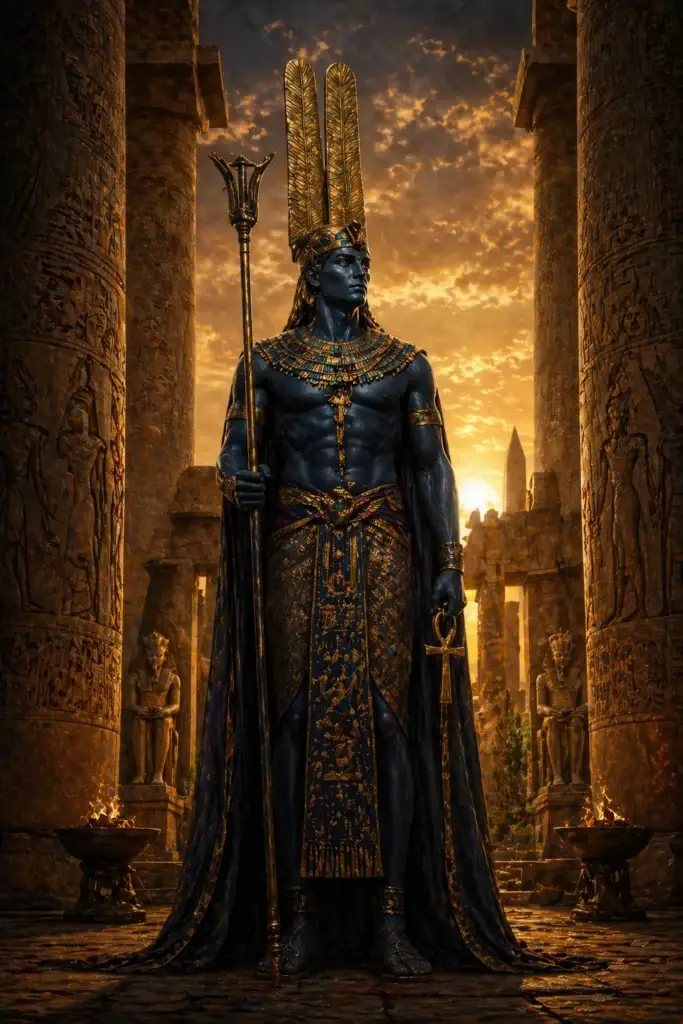
Ash, Lord of the Oases and Vineyards
By Ralf Ittermann · last reviewed on
Ash is a god of the Egyptian tradition.
One of the oldest gods of Egypt, Lord of the Oases.
Ash is one of the oldest attested gods of Egypt, god of the oases and the Libyan desert. He was regarded as Lord of Libya, as god of the vineyards of the western Delta, and as a benevolent mediator between Egypt and the fertile Westland.
His documented line begins on early dynastic clay seals, at the latest in the 2nd Dynasty, and extends thinly, but without interruption, into the 26th Dynasty. A major cult centre of his own is not confirmed; he is present above all on wine-jar seals, which attest his connection to wine.
Type: God of the oases and the western desert, Lord of Libya
Origin: Ancient Egypt, early dynastic clay seals (2nd Dynasty at the latest)
Texts: clay seals, wine-jar seals, reliefs of Sahure, attestations up to the 26th Dynasty
Period: Early Dynastic to Saite Period
Appearance: man with feather crown, sometimes falcon-headed or with Seth-animal head

Context of Tradition
Period of the Texts
Ash is attested from the Early Dynastic Period, at the latest the 2nd Dynasty, with a thin but very long line of evidence extending to the 26th Dynasty in the Saite Period.
Area of Diffusion
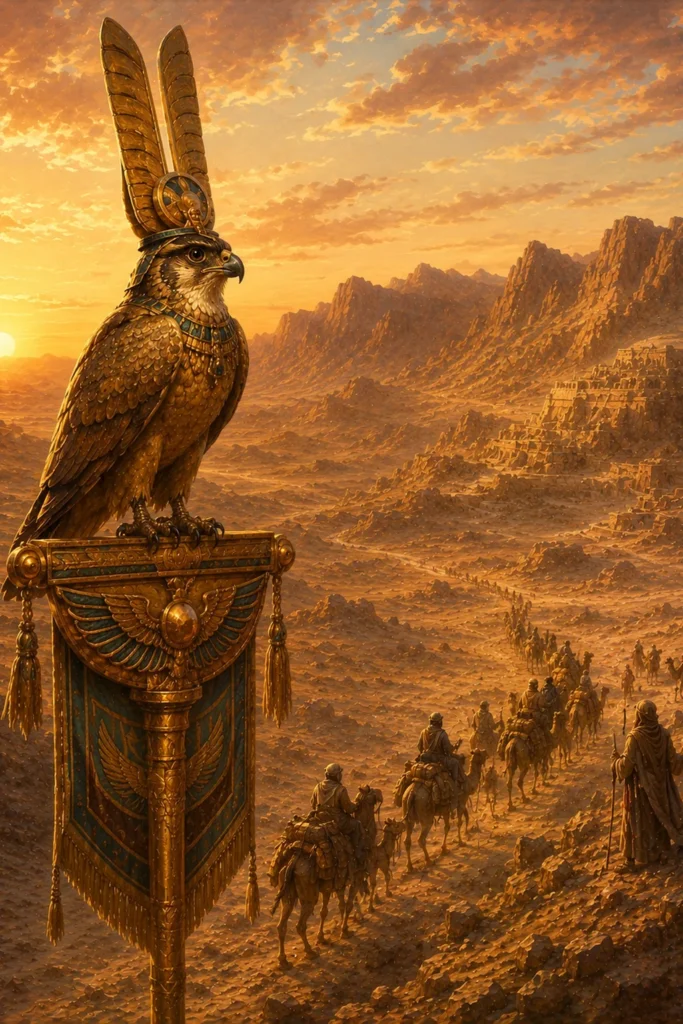
The western desert and the oases in the land of the Tjehenu, the Libyans, together with the vineyards of the western Delta.
Sources
Thinly but long attested: early dynastic clay seals, wine-jar seals, the reliefs of Sahure and individual attestations from the Saite Period, alongside the specialist reference works.
Name and variants
Egyptian: Ash, with the variant form Sha; there is no established etymology of the name. His epithet Nubti, ‘of Ombos’, is the key to his close connection with Seth.
Form and effect
Appearance
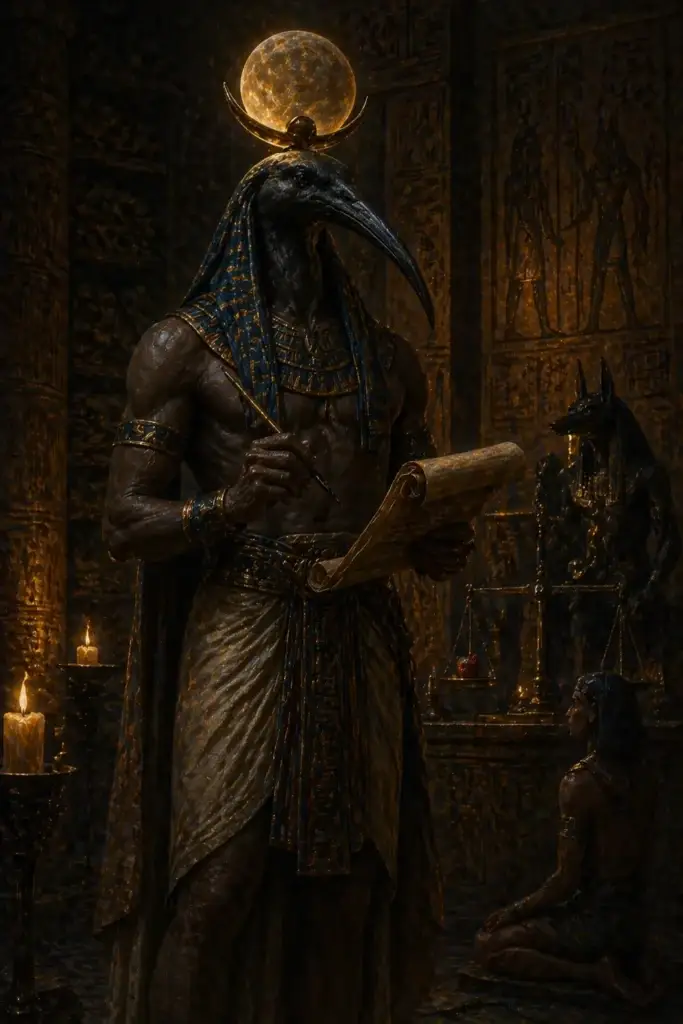
Ash is mostly depicted in human form, often with a tall feather crown or ostrich feather as a reference to Libya, sometimes falcon-headed or wearing the White Crown. Disputed is the depiction with the head of the Seth-animal, which was already prone to confusion with Seth in antiquity, which is why his name was always added; a rare late form shows him with three heads.
Effect
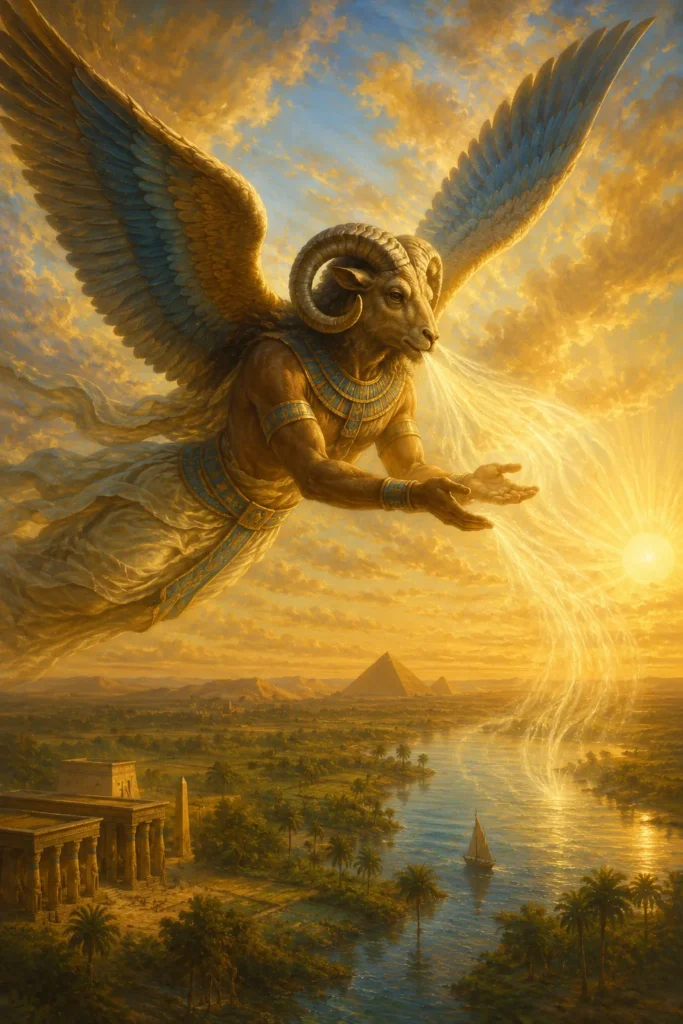
Ash is god of the oases and the western desert, of the barren desert as well as the fertile oases, and Lord of Libya. His connection to wine is well attested: as god of the vineyards of the western Delta and of the produce of the oases, he was regarded as a benevolent deity who oversaw the yields of the oases on behalf of the pharaoh.
Profile: Ash
The most important aspects of the oasis god at a glance.
A rare minor god of Ancient Egypt and one of its oldest: a god of the western border between the Nile Valley and the land of the Tjehenu.
Produce of the oases and vineyards: Ash oversaw the yields of the oases and of the vineyards of the western Delta on behalf of the pharaoh.
Human-shaped with a tall feather crown or ostrich feather, sometimes falcon-headed, sometimes with the head of the Seth-animal; a rare late form is three-headed.
Protection of oases and wine: the barren desert as well as the fertile oases, along with the vineyards of the western Delta.
No confirmed cult centre of his own: Ash is attested mainly on wine-jar seals, alongside individual contexts such as the reliefs of Sahure and in the Saite Period.
Seth as the younger desert god with a connection to Ombos, who overlaid Ash, and Ha, the god of the west, to whom Ash was assimilated.
A God of the First Dynasties
The name Ash, with the variant form Sha, has no established etymology. The god is attested from the Early Dynastic Period, at the latest the 2nd Dynasty, on clay seals, with a thin but very long line of evidence extending to the 26th Dynasty. His region is the western desert with the oases in the land of the Tjehenu, the Libyans.
A major cult centre of his own is not confirmed; Ash is present above all on wine-jar seals, alongside individual contexts such as the reliefs of Sahure and in the Saite Period. His epithet Nubti, ‘of Ombos’, connects him with Seth: Ash is the older desert god, whom the younger one later overlaid.
State of Research and Classification
Ash is regarded as a rare minor god; current specialist literature questions his often assumed Libyan origin and instead views him more as a genuinely Egyptian god of the western border.
From a religious-studies perspective, Ash is a benevolent god of the oases and the desert. Important clarifications: the multi-headed form is a rare late attestation, not his standard image; the equation with Seth is an overlay, not an identity; and the Libyan origin is disputed.
Wine Jars Instead of Temples: the Cult of Ash
A major cult centre of Ash’s own is not confirmed. He is attested mainly on wine-jar seals, which make tangible his role as god of the vineyards of the western Delta and of the produce of the oases, alongside individual contexts such as the reliefs of Sahure and in the Saite Period. His cult was thus less a matter of temple service than of everyday practice: whoever secured wine and the yields of the oases for the pharaoh did so under the sign of this benevolent god.
Ash, Seth and Ha: the Desert Gods of the West
Ash has an early-formed, close bond with Seth, since both are desert gods with a connection to Ombos; Ash is the older desert god, who was later overlaid and equated with Seth. He is to be distinguished from Ha, the god of the west, but was assimilated to him. Thus three figures stand side by side in the west of Egypt, occupying the same desert from different angles.
Frequently Asked Questions about Ash
Who is Ash?
One of the oldest gods of Egypt, god of the oases and the Libyan desert, Lord of Libya and god of the vineyards of the western Delta.
Is Ash the same as Seth?
No, that is a later overlay; Ash is the older, independent oasis god, who shares the connection to Ombos with Seth.
What is Ash especially associated with?
With the oases and the vineyards of the western Delta, whose yields he oversaw on behalf of the pharaoh.
Further links
Further reading:
- Egypt – all beings of the Egyptian cultural sphere
- Seth – the desert god who later overlaid Ash
- Ha, Sopdu, Pakhet – further desert gods of Egypt
- Amulet, Smoke cleansing, Salt – traditional protective means
- Protection Compass – protective means at a glance
Literature (selection)
Further standard works in the bibliography.
As an Egyptian oasis god and at the same time a desert god of the west, Ash embodies the double face of the Westland: the hostile expanse and the fertile oases, whose wine and yields he watched over for the pharaoh.