Sound and Light for Warding Off
By Ralf Ittermann · last reviewed on
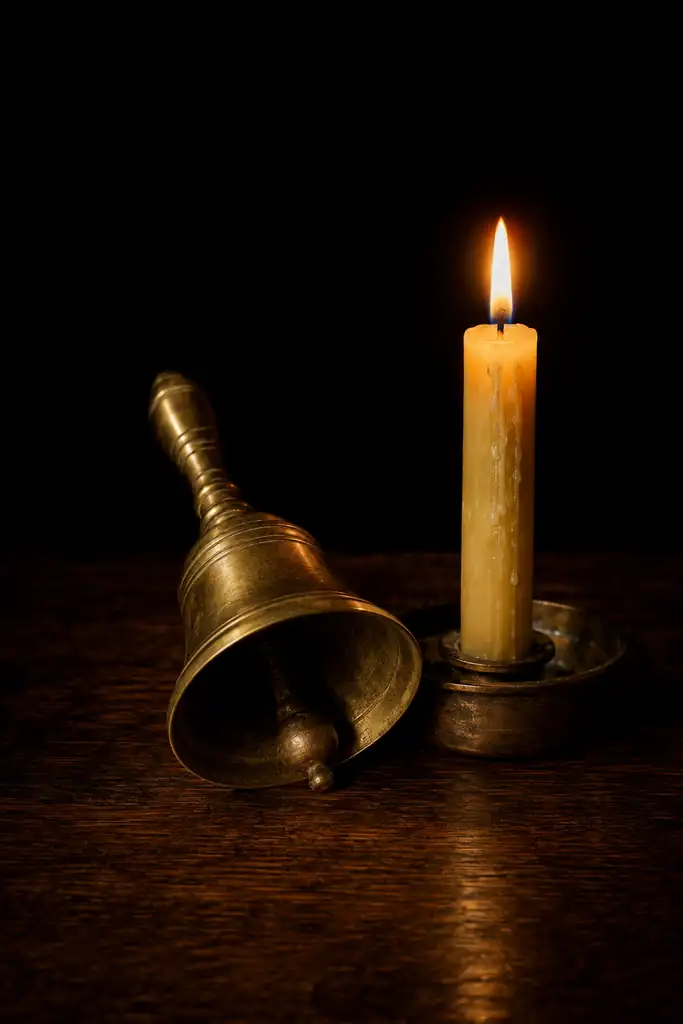
Among the means of protection known to folk tradition, sound and light hold a special place: they are fleeting, precious, and can be produced anywhere. The ringing of a bell cannot be carried in your pocket, a candle cannot be nailed to a building.
Their effect unfolds in the moment of use, not permanently. Precisely in this lies their character as active means of protection that people deliberately employ when they perceive a threat or want to mark a boundary.
Cultures on every continent have described sound and light as means of warding off. The forms differ: church bells in Europe, cymbals in Buddhist Asia, drums in West African rituals.
Torches at the threshold, candles on the altar, bonfires on the night of the solstice. What unites them is the basic principle: sound and light pervade space, mark a presence, and according to tradition are incompatible with that which does harm.
On this page you will find an overview of the category, the commonalities of the operative principles, and a brief introduction to the three detail pages: protective bells, protective candle, and protective fire.
Common Features and Operative Principle
In tradition, sound and light share several properties that establish their protective character.
First, both are regarded as forms of energy that change a space from within. A burning candle alters the atmosphere of a room differently than a hanging amulet.
A bell tone pervades walls that a painted sign cannot cross. Tradition describes this penetrating power as essential: what acts in darkness becomes visible; what operates in silence is disturbed.
Second, sound and light are bound to a human action. Someone must ring, light, strike fire. In many traditions this act itself is regarded as part of the protection, because it concentrates intention and focus. To the mere presence of a bell without ringing or a candle without flame, tradition mostly attributes no protective effect.
Third, there is a shared assignment to thresholds and transitions. Bells are rung at special times, not continuously. Candles burn in the night, not in broad daylight.
Fires blaze at the solstice and the onset of winter. Tradition locates the danger at the boundaries: between day and night, between the seasons, between the known and the unknown.
Cross-Cultural Overview
The three detail pages of this category address the most important manifestations.
Protective bells and bell sound: The tone of a bell or small bell is regarded in European, Japanese, and Tibetan tradition as a means of driving away harmful beings and defining sacred spaces.
According to medieval sources, church bells were meant to keep demons at bay and calm storms. Small bells on animal collars, prams, and door handles had the same apotropaic function on a smaller scale.
The protective candle: Light in controlled, compact form. The candle stands in the transition between mere light and ritual act: it is lit with intention, often blessed, sometimes marked with signs.
In Christian, Jewish, pagan, and syncretic traditions, the candle burns to ward off nocturnal beings, to protect the dying, and to keep open a connection to the sacred.
Protective fire and threshold light: The open fire is the older, larger variant. Need-fires, solstice fires, and stable fires served in European folk tradition for collective purification and for marking the year’s boundaries, at which harmful forces were considered especially active.
Fire at the front door, torches around the field, charcoal crosses above the threshold: light as the drawing of a boundary.
Use and Limits
Tradition describes sound and light as effective against a multitude of threats, but it also emphasizes conditions and limits. Ringing without belief and knowledge of its purpose was regarded by many transmitters of the lore as ineffective. The candle that burns carelessly has a different status in ritual folk practice than the one lit deliberately.
According to consistent tradition, sound and light are not permanent protective barriers. They create a window of safety, not a wall.
Someone who walks through an uncanny region at night with a candle is, according to tradition, better protected than someone without light. But at the same time, tradition stresses that the extinguishing of the flame interrupts the protective effect immediately.
A further limit lies in the nature of the threat. Not all harmful beings are considered sensitive to sound or light by folk tradition.
Certain earth spirits or beings expressly associated with fire cannot be driven off by these means. Which beings are described against which means of protection is shown by the Protection Compass.
In the Protection Compass
In the Protection Compass, protective bells, the protective candle, and protective fire are each linked with the beings against which they were used according to tradition. There you can see at a glance which classes of beings and which cultures describe these means of protection, and at which threat level they are recommended.
Literature (Selection)
Related key terms: sound and light protection bells warding off protective candle protective fire noise spirits.
iWell Guard and Protective Traditions
The connection of sound, light, and protection runs through cultures that knew nothing of one another. European bells, Tibetan cymbals, ancient Egyptian torches: everywhere arose the experience that sound and light change something in space.
The iWell Guard was developed with the aim of bringing together such protective traditions in a worn form that accompanies the wearer independently of time and place. It does not replace the ritual use of sound and light as tradition describes it, but complements it as a permanently worn reminder of these principles.
Personal experiences may vary. Not a medical device. No promise of healing.