Gruagach, the Hairy One at the Milk Stone
By Ralf Ittermann · last reviewed on
The Gruagach is a spirit of Celtic tradition.
The Hairy One, who watches over herd and milk in exchange for an evening offering. As a cattle-protecting figure, the Gruagach holds a notable place in the folklore of the Gaels.
The Gruagach is a Gaelic cattle and household protective spirit whose name means the Hairy One. The same word also denotes a hairy giant and sorcerer in hero tales; the meanings must be distinguished.
The Gruagach is attested by oral collections of the 19th century, in Scotland as well as in Ireland, where in the north he is called Grogan. At the heart of the tradition is a real custom: the daily milk offering into a hole in a particular stone, attested by Pennant as early as the 18th century.
Type: cattle and household protective spirit; in fairy tales a giant and sorcerer
Origin: Gaelic Highlands and Ireland
Texts: Campbell, Briggs, Pennant
Period: attestations from the 18th to 19th century
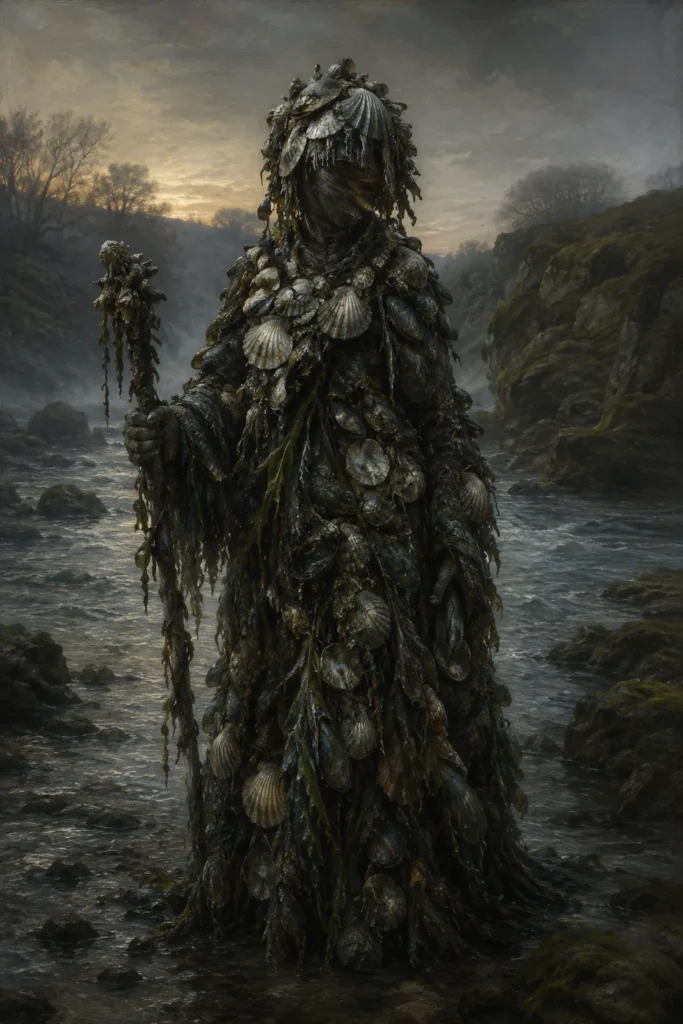
Appearance: long-haired, dressed in green or shaggy and naked

Source context
Period of the Texts
The attestations range from the 18th to the 19th century: Pennant attests the milk offering custom as early as the 18th century, while the great oral collections followed in the 19th century.
Area of Diffusion
Scotland and Ireland; in the north of Ireland the being is called Grogan, and on Skye the Gruagach is the male recipient of the milk offering.
Sources
Good source material: the collections of John Gregorson Campbell and John Francis Campbell, as well as Briggs as a canonisation.
Name and variants
Gaelic: The name comes from gruag, hair, and means the Long-Haired One; the same word also means maiden and chieftain. This ambiguity explains why the name carries such different figures.
Form and effect
Appearance
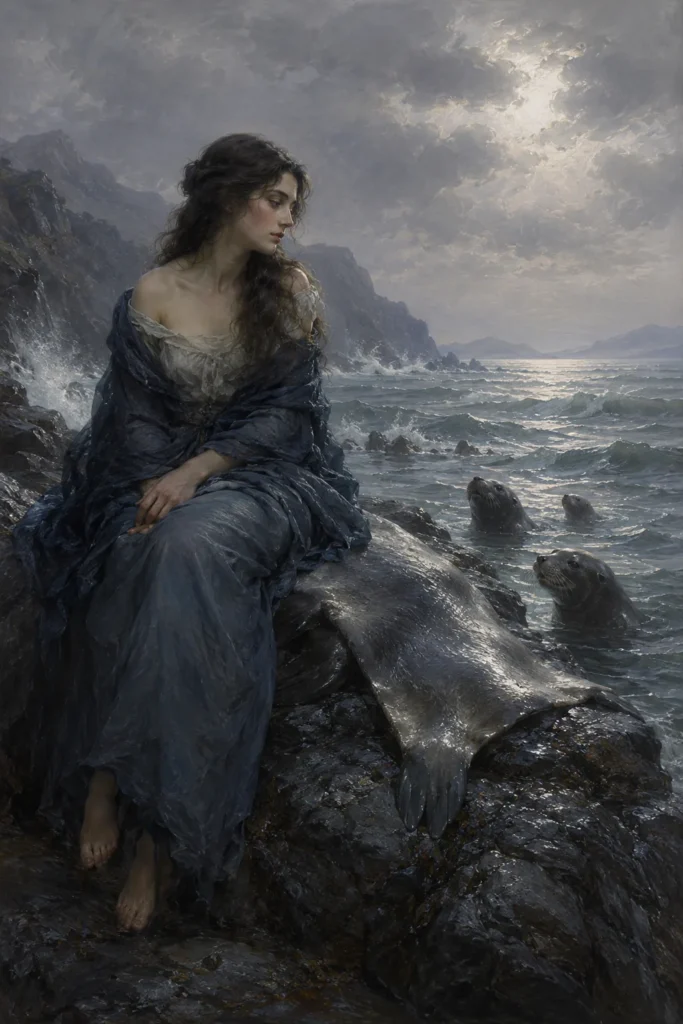
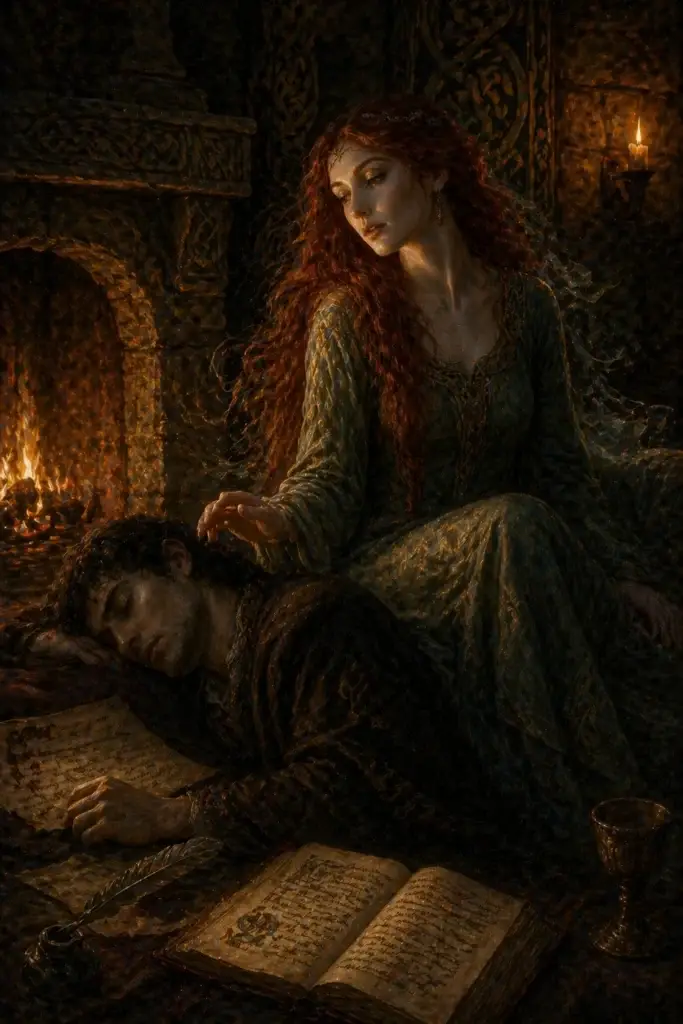
As a Highland cattle-keeper, the Gruagach appears as a green-clad figure with long golden hair, sometimes beautiful, sometimes pale and gaunt; the male brownie-like type appears as a handsome youth in green and red, or as a naked, shaggy being. In the Irish and southern fairy tales he is a hairy giant or ogre.
Effect
As a protective spirit, the Gruagach safeguards milk and herd; neglect he punishes by letting the milk dry up, the cattle stray into the corn, or the best cow lie dead in the morning. As a magician and giant of the hero tales, however, he is instead an adversary, enchanter and abductor. The functions are meaning-specific and must not be mixed.
Profile: Gruagach
The key aspects of the Gaelic protective spirit at a glance.
Gaelic Highlands and Ireland: a protective spirit with a real milk offering rite, whose name also denotes a fairy-tale giant.
Cattle and household: the Gruagach safeguards milk and herd and watches over the farm to which he has attached himself.
Long-haired and dressed in green, sometimes beautiful, sometimes pale and gaunt; the male type also as a shaggy, naked being, and in fairy tales as a giant.
Guardian of milk and herd in exchange for the evening offering; if neglected, the milk dries up, the cattle stray into the corn, or the best cow dies.
Daily milk offering into a hole in a particular stone, the Clach na Gruagaich or the Leac Gruagaich; a gift of clothing counts as an insult.
One Name, Several Beings
The name Gruagach comes from Gaelic gruag, hair, and means the Long-Haired One; the same word also means maiden and chieftain. The figure is attested by oral collections of the 19th century, in Scotland as well as in Ireland, where in the north it is called Grogan; the milk offering custom is attested by Pennant as early as the 18th century.
Behind the one name stand several beings: the green-clad cattle-keeper of the Highlands, the male brownie-like farm spirit known on Skye, and the hairy giant and sorcerer of the Irish and southern hero tales. Tradition keeps these meanings apart, and anyone describing the Gruagach must say which one they mean.
Afterlife and classification
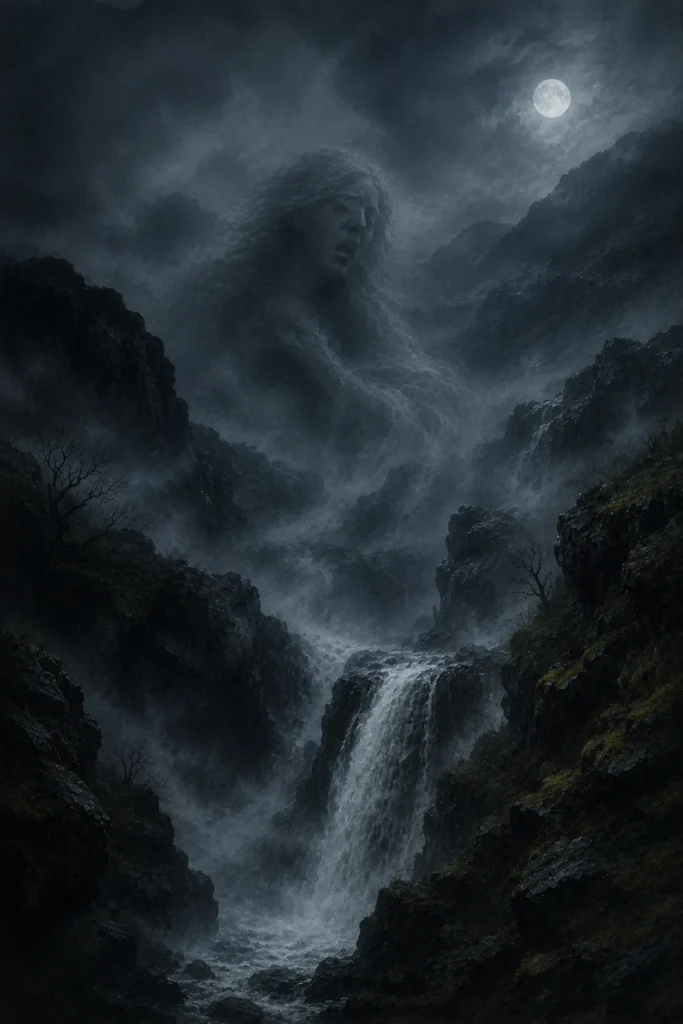
The Gruagach is preserved in the great Gaelic collections of the 19th century and canonised by Briggs. In occult reference works the cattle-keeper dominates, in fairy-tale research the giant and sorcerer, while in neo-pagan reception he is sometimes reinterpreted as a fairy queen.
In religious studies, the Gruagach is a Gaelic protective spirit with a real milk offering rite. Important clarifications: it is a name for several beings, not a single one. He is neither always female nor always a giant, but depends on region and gender. And the interpretation as a goddess or druidic survival is either modern reception or a discarded conjecture.
Milk Offering and Clothing Taboo
The cult of the Gruagach was a tangible one: each evening, part of the milk was poured into a hole in a particular stone, the Clach na Gruagaich or the Leac Gruagaich. The custom is attested throughout the Highlands and expressly documented for Skye, where the Gruagach is the male recipient. As with the Brownie, a gift of clothing counts as an insult that drives the helper away.
Glaistig, Brownie and Other Relatives
Frequently asked questions about the Gruagach
What is a Gruagach?
A Gaelic cattle and household protective spirit; the same name is also used for a giant and enchanter of the heroic tales. The two meanings should be distinguished.
Is the Gruagach male or female?
Both, depending on the region; on Skye he is the male replacement of the Glaistig, while in the Highlands a female cattle-keeper also appears.
How was he honoured?
With a daily offering of milk poured into a hollow in a particular stone, the Clach na Gruagaich or the Leac Gruagaich.
Further links
Further reading:
- Celtic – all beings of the Celtic cultural sphere
- Glaistig – her female counterpart in the Highlands
- Brownie and Fenodyree – related household spirits
- Salt, Amulet, Smoke cleansing – traditional protective means
- Protection Compass – protective means at a glance
Literature (selection)
Further standard works in the bibliography.
As a Gaelic cattle protection spirit with a real milk-offering rite and, at the same time, as a hairy figure of the heroic tales, the Gruagach shows how far a single name can stretch within tradition: from the silent farmyard guardian to the enchanting giant.