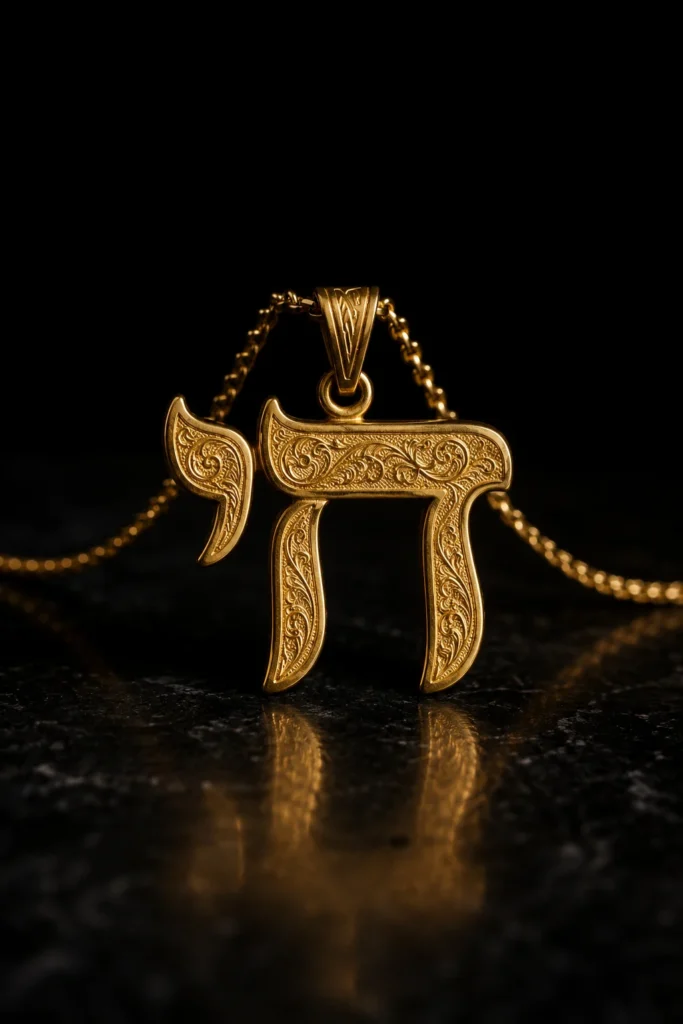
Lucky Charms: Meaning, History and the Best-Known Symbols
By Ralf Ittermann · last reviewed on
A lucky charm is an object or a sign credited with the task of bringing its owner good fortune and keeping misfortune away.
From the horseshoe to the four-leaf clover to the beckoning cat Maneki-neko, almost every culture knows its own lucky charms. This overview explains what defines a lucky charm, where the custom comes from and which symbols are the best known.
What a Lucky Charm Is
A lucky charm is an object, an animal or a sign credited with the property of attracting good fortune and warding off mishap. The concept is firmly established in the German-speaking world and covers a wide range of things, from the small pendant to the picture on the wall.
A lucky charm is usually small and portable. Many people carry it as a pendant, as a coin in the pocket or as a figurine. Other lucky charms stand in the home, hang above the door or are given as gifts on particular occasions.
Central to the idea is the notion that the object has a favourable effect on the fate of its owner. This effect is not justified scientifically but rests on custom, tradition and personal meaning.
Lucky charms are well studied in folklore studies. They are among the most visible remnants of an older folk belief and have persisted into the present as a self-evident part of everyday life.
Unlike a religious cult object, the lucky charm is not tied to any particular doctrine. It is used by people of very different worldviews, often without firm belief in any effect, more as a familiar custom.
This page places the lucky charm in context, describes its history and presents the best-known examples. Several of them have detailed individual pages in the lexicon of protective symbols.
The German word Glücksbringer is comparatively young and only became common in the nineteenth century. Older terms spoke of a token of luck or of a good fortune one carried with oneself.
The present-day concept brings together a great variety of objects that were formerly known under various names, and thereby makes a whole group of customs graspable under a single word.
Lucky Charm, Protective Symbol and Amulet
Lucky charm, protective symbol and amulet are often used interchangeably in everyday speech. On closer examination, however, the terms denote different emphases.
A protective symbol is meant above all to ward off harm. Its purpose lies in defence, for example against the evil eye, against harmful forces or against misfortune. The underlying stance is defensive.
A lucky charm, by contrast, is meant above all to bring about something good. Its purpose lies in an increase of fortune, of success and of favourable circumstances. The underlying stance is attractive.
The amulet is the broader umbrella term for a worn object with an attributed effect. An amulet can be meant to protect or to bring luck. The page on amulet, talisman and protective sign explains these terms in detail.
In practice the meanings overlap strongly. Many objects are both at once. The horseshoe counts as a lucky charm and at the same time as a sign of defence, the beckoning cat as a sign of luck and of prosperity.
For this overview, therefore, an open understanding applies. A lucky charm is any sign in which the idea of fortune brought about stands in the foreground, even when a defensive sense resonates alongside it.
Origin and History of the Good-Luck Custom
The custom of carrying objects as lucky charms is very old. Even from antiquity small pendants and figurines are known that were meant to secure luck and well-being.
Many of today’s lucky charms have a long prehistory. The horseshoe combines the old belief in the protective power of iron with the esteem for the horse. The pig has stood since the Middle Ages for possessions and for sufficient food.
With the Reformation and the Enlightenment many magical ideas lost their open validity. The good-luck custom nevertheless endured, because it was understood less as a doctrine than as a familiar part of everyday life.
In the nineteenth century printed greeting cards and small mass-produced articles gained in importance. Through them the lucky charms common today spread in a fixed visual language, especially around the turn of the year.
In the twentieth century the lucky charm became, once and for all, a commodity. It is made and sold as jewellery, as a pendant and as a small gift. The older magical background often recedes into the background in the process.
The history of the lucky charm thus shows a widespread pattern. An old folk belief loses its literal validity, but the custom remains and lives on in a weakened, everyday form.
It is striking that many lucky charms stem from rural life. Horseshoe, pig and clover are connected with farmstead, stable and field. With urbanisation these references lost their immediate vividness. The signs themselves, however, remained and became general emblems of good fortune, whose rural origin most people today are no longer aware of.
The Best-Known Lucky Charms
In the German-speaking world a fixed circle of lucky charms has taken shape, one that recurs again and again on cards, in shop windows and as jewellery.
The horseshoe is one of the best-known lucky charms. It combines the attributed protective power of iron with the form of an upward-open arc that is meant to gather luck. There are still differing views today about how to hang it and how to interpret it.
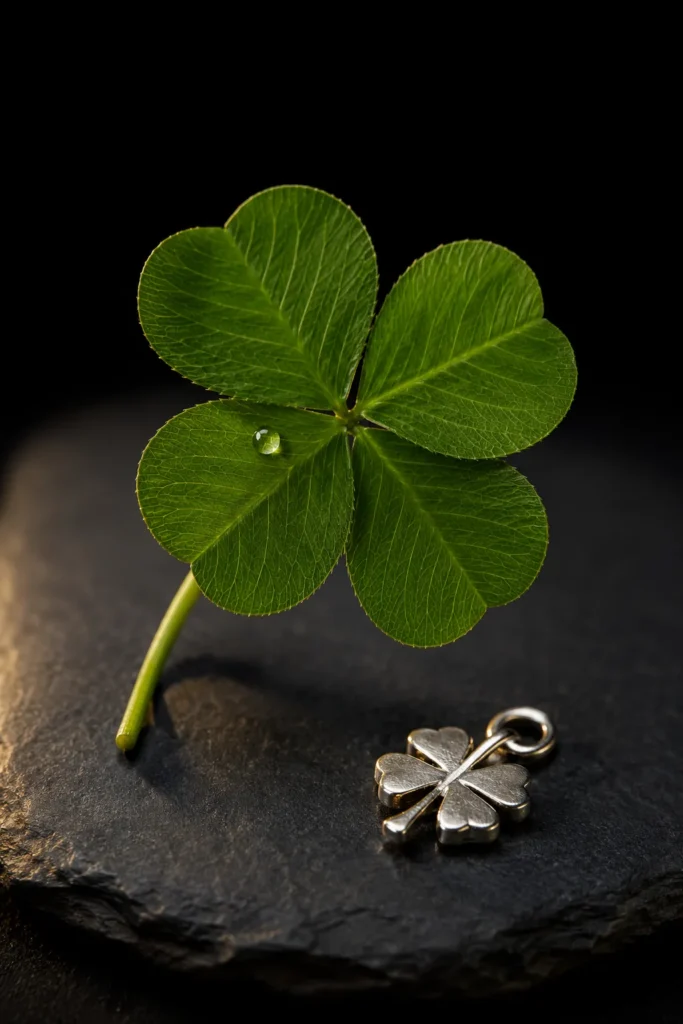
The four-leaf clover owes its meaning to its rarity. Whoever finds such a leaf has found something extraordinary, and precisely this fortunate stroke of finding carries over onto the leaf itself.
From Japan comes the beckoning cat Maneki-neko, which with a raised paw beckons luck and customers. Also from Japan comes the Daruma, a wish figure whose eyes are painted in when a resolution is made and when a goal is reached.
Further common lucky charms are the lucky pig, the ladybird, the fly agaric and the chimney sweep. They do not carry their own lexicon page but belong firmly to the handed-down circle of good-luck signs.
These examples show the range of the good-luck custom. A lucky charm can be an object, a plant, an animal or a figure. What they have in common is solely the attributed task of bringing good fortune.
Several of these signs carry their meaning already in the name. The ladybird is named in German after the Mother of God, Mary, and was regarded as an animal assigned to her that brought good fortune.
The lucky pig points to an old connection between pig and prosperity, which is still preserved in the German saying about having had a pig (meaning to have had luck). Such linguistic traces show how deeply the good-luck custom is anchored in everyday life.
Lucky Charms from Around the World
The good-luck custom is not confined to Europe. Almost every culture knows its own lucky charms, and many of them have become known in the German-speaking world too through trade and travel.
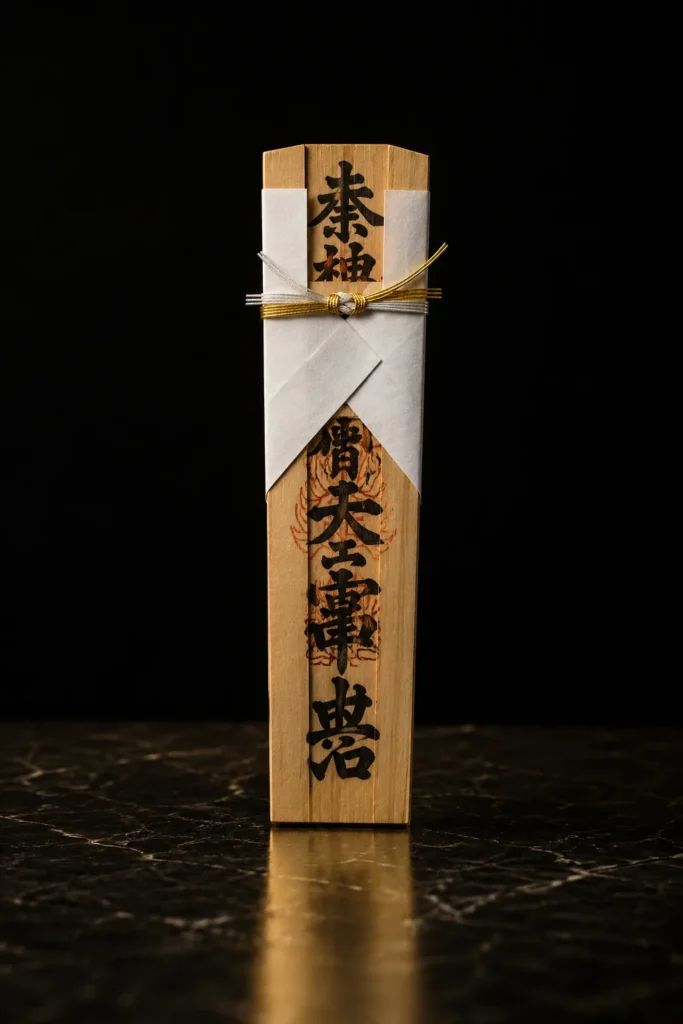
In Japan the variety of good-luck signs is especially great. Alongside Maneki-neko and Daruma there are numerous small pendants and figures acquired at temples and shrines.
In the Chinese sphere certain coins, signs and animals count as bringers of luck. Often a homophony of words plays a role here, so that an image at the same time recalls a wish for good fortune.
In Italy and the Mediterranean region the small red horn, the cornicello, is a widespread bringer of luck and of defence. In many countries of Latin America their own customs of luck and of votive offering have developed.
In North America the rabbit’s foot pendant belongs among the well-known, though today contested, lucky charms. Such examples show that ideas about the lucky charm turn out differently across cultures.
For all this diversity the basic idea remains the same. A familiar sign is linked with the hope for a favourable fate and is carried along or set up in everyday life.
In Scandinavia and the Baltic region their own customs of luck and of the home have persisted, which include small carved figures and signs.
In India and in Southeast Asia, in turn, good-luck signs are closely bound up with religious ideas. There the boundary between lucky charm and religious sign is fluid and cannot everywhere be drawn sharply.
Lucky Charms for Special Occasions
Lucky charms are especially closely bound up with particular occasions. On these occasions they are given as gifts, worn or set up.
The most important occasion is the turn of the year. At New Year’s Eve and New Year’s Day lucky charms are given as gifts in great numbers. They are meant to place the new year under a good omen.
Examinations too are a frequent occasion. Many people carry a familiar object with them before an examination, one meant to give them a feeling of security.
At weddings, at house moves and at the start of a new stage of life, lucky charms are likewise gladly handed over. The gift expresses a wish and accompanies the recipient into the new situation.
In all these cases it is less the belief in a magical effect that stands in the foreground. More important is the gesture. The lucky charm makes a good wish visible and tangible.
In sport, too, the lucky charm plays a visible role. Athletes and teams carry familiar objects with them or follow fixed routines that give them a feeling of security. This behaviour shows that the good-luck custom is not confined to contemplative occasions but appears wherever people face an uncertain outcome.
It is precisely in this function as the carrier of a wish that the lucky charm has persisted to the present day. It connects people and gives a wish an enduring form.
Why Lucky Charms Matter to Many People
From today’s point of view the question arises why lucky charms have remained so widespread despite an enlightened worldview. Folklore studies and psychology offer several explanations for this.
A lucky charm gives a person the feeling of not being entirely at the mercy of an uncertain situation. In situations one cannot steer, the familiar sign creates a hold.
The lucky charm also works as a reminder. It can call to mind a loved one who gave it, or a resolution one has made. This meaning is personal and independent of any magical assumption.
Studies on perception show that a familiar object can reduce inner tension. Whoever feels calmer often approaches a task more composedly. Here lies a sober, psychological reading of the good-luck custom.
What matters is honest classification. A lucky charm does not change the course of things. It can, however, change the experience of a situation, by establishing confidence and a connection to familiar people.
In this view the lucky charm is not a tool against fate but a companion. It stands for hope, for affection and for the remembrance of what is important to one.
At the same time, research points to a limit. Whoever relies on a lucky charm alone may neglect a necessary preparation. The lucky charm unfolds its meaningful value when it accompanies good preparation, and not when it is meant to replace it. In this measured form it fits without contradiction into a sober worldview.
Lucky Charms and Protective Symbols Compared
Lucky charms and protective symbols together form a wide field of signs with which people seek to secure their well-being. Both groups can be considered well side by side.
Protective symbols in the narrower sense are directed against a danger. These include the evil eye, harmful spirits or general misfortune. The lexicon treats these signs on numerous pages of their own.
Lucky charms are directed towards a gain. They are meant to attract good fortune, success and favourable circumstances. Many signs cannot be assigned unambiguously because they fulfil both tasks.
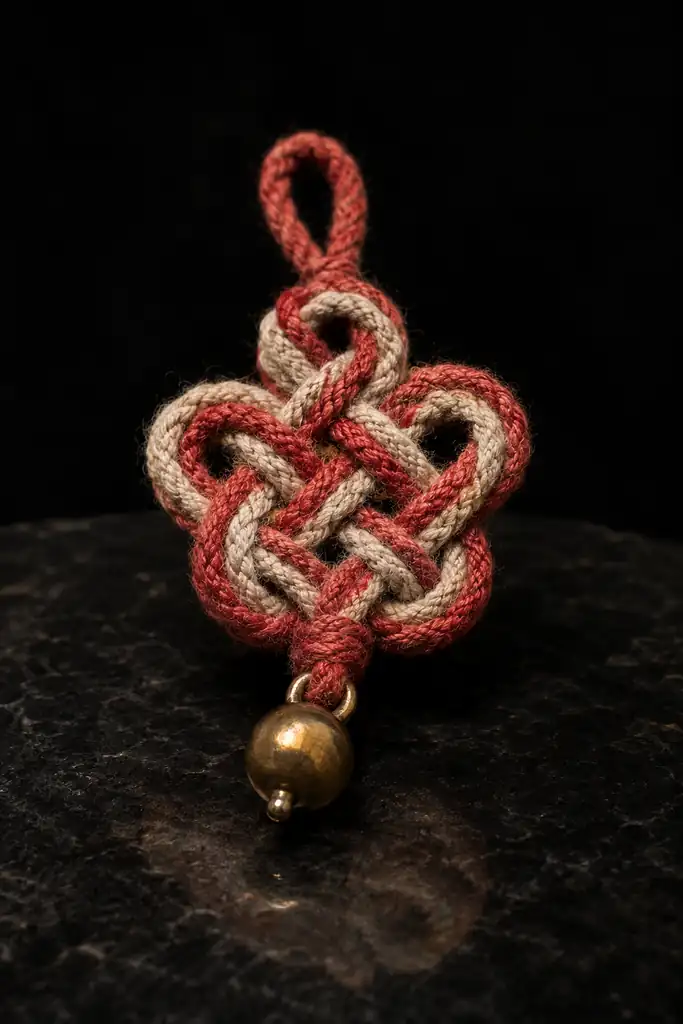
A good example is the horseshoe. It counts as a lucky charm and at the same time as an old sign of defence made of iron. It is similar with the endless knot and with several East Asian signs.
For an ordered overview of the defensive signs, the page on protective symbols serves. There the protective signs of many cultures are arranged by origin and function.
Lucky charms and protective symbols thus belong to the same family of signs. They differ in their direction of view, in the wish for defence or for increase, and in everyday life they often pass fluidly into one another.
The lexicon treats numerous of these signs on pages of their own and arranges them by origin and task. Whoever is interested more closely in a particular symbol will find there the detailed account. This overview page remains throughout the point of departure that places lucky charms and protective signs in their common context.
Lucky Charms Today
Lucky charms are as widespread in the present as hardly any other inheritance of the old folk belief. They appear as jewellery, as a pendant, as a figure and as an image on cards and gifts.
At the turn of the year lucky charms are a fixed part of the customs. Clover, horseshoe, pig and chimney sweep adorn cards, pastries and small presents.
As a jewellery motif the four-leaf clover and the horseshoe in particular have prevailed. They are offered as pendants and as bracelet links in many designs.
From Japan, Maneki-neko and Daruma have found a loyal following in the German-speaking world too. They stand in homes and in shops, often more as decoration than as a religious sign.
In today’s use the magical origin usually recedes. The lucky charm is understood as a familiar sign, as jewellery and as a gesture, less as an effective magical object.
At its core, however, the lucky charm remains what it always was. It is a visible sign of the hope for a good fate and of the affection between people who wish one another good fortune.
Literature (Selection)
Related key terms: lucky charm good-luck symbol Japanese lucky charm horseshoe four-leaf clover Maneki-neko Daruma ladybird chimney sweep talisman protective symbol.
iWell Guard and Protective Traditions
iWell Guard stands in the cultural-historical line of portable protective objects, to which the lucky charm also belongs. A modern companion for people who live with protective symbols: made in Germany, 41 layers of solid gold, platinum and silver, with a 30-day right of return.
Personal experiences may vary. Not a medical device. No promise of healing.