The Knot Amulet: Protection in Cord and Knot
By Ralf Ittermann · last reviewed on
The knot is among the oldest means of protection known to humanity. Even before writing existed, tradition knew the principle: whoever ties a knot binds something, and what is bound cannot take effect.
This basic idea unfolds with astonishing breadth, from the red woolen thread on the wrist of a devout Jewish child, through the knots of the Tibetan protective threads, to the knot charms of seventeenth-century German folk medicine.
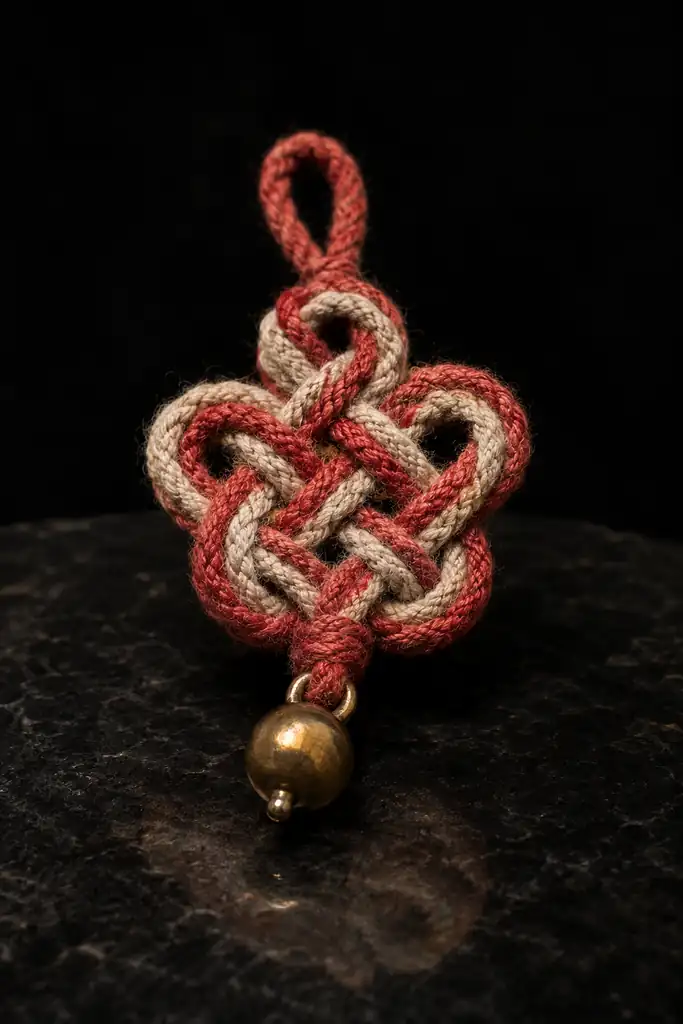
The knot amulet is an object that bears one or more knots and conveys protection through these knots. The knot may be set in a thread, a rope, a strip of leather or a cord.
It can be simple or complex, it can be worn on the body or fastened to a place. What they have in common is the binding: an act that, in tradition, holds powers fast, interrupts connections or draws a boundary.
The knot amulet belongs to the category Amulets and protective objects.
Quick overview
The knot amulet works through the symbolic and ritually charged act of the knot. It can hold back harmful powers before they reach the wearer, or interrupt a connection between the harmer and the protected person.
Forms known worldwide are the red thread of Jewish folk belief, the Tibetan protective threads, the European knot charms, and the knot amulets of ancient Egypt and Mesopotamia.
The untying of the knot by an authorized person can also release an influence that has been bound fast. The number of knots is regarded as significant in many traditions.
Origin and tradition
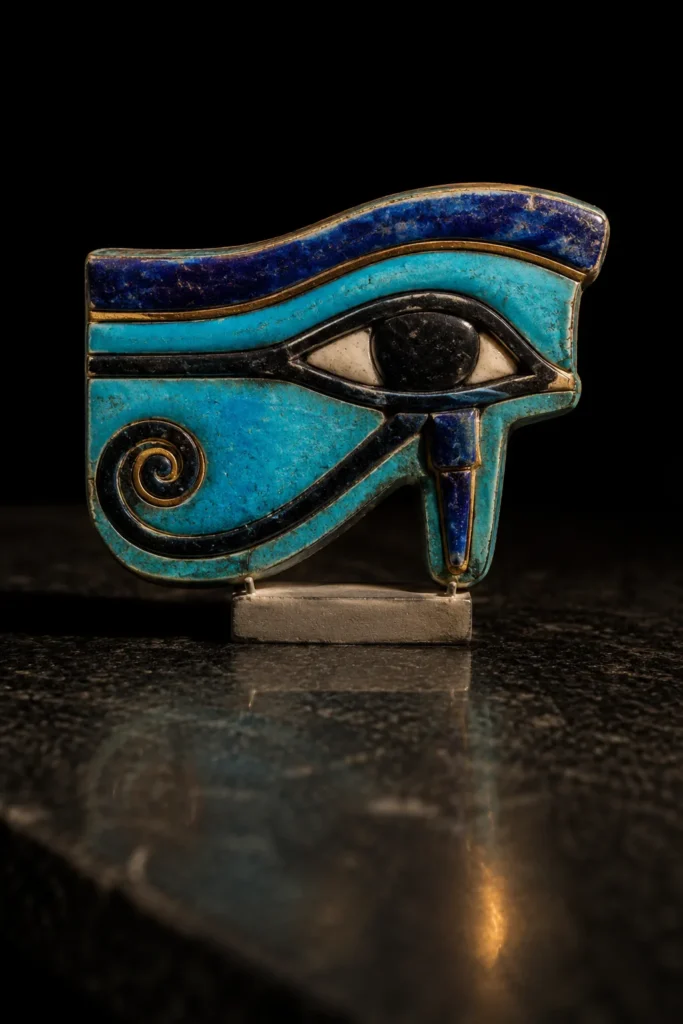
Knot signs as protection are well attested from ancient Egypt. The Tjet sign, also called the Isis knot or the Blood of Isis, is a knot-shaped symbol made in red and placed with the mummy.
The Book of the Dead contains its own formula for this amulet and describes the desired effect: the protection of the dead through the power of Isis. The knot appears here not as a decorative element but as a functional sign.
In Mesopotamia, knot rituals appear in incantation texts: a thread was provided with a certain number of knots, and the formula spoken in the process defined what was to be bound. Similar practices are handed down from the Hittite sphere, where knot threads were incorporated into healing rituals.
In the Greco-Roman sphere, the ligatura, the binding, is a widespread term for the knot amulet. Pliny describes knot-bearing amulets meant to bind fever or bites. The magical papyri of Hellenistic Egypt know knot rituals with precise instructions on the number of knots and on the speaking of the formula.
In German folk belief, the knot ritual is present in folk medicine: warts are charmed and bound with a thread that is then buried. Fever is “tied” to a tree or a stone by driving in a nail or binding a thread.
This transference magic, in which the illness or the affliction passes into the knot and remains “locked” there, is a chapter of its own in folk medicine.
The red thread, known from Jewish practice, has its origin in a Kabbalistic tradition, which holds that a red woolen thread wound seven times around the tomb of the matriarch Rachel and then cut into seven pieces grants protection against the evil eye.
This practice became known in the twentieth century, far beyond the strictly religious context, through the popularization of Kabbalistic content. The thread itself, worn on the wrist, is the knot amulet in its most reduced form.
Working principle according to tradition
The working principle of the knot element rests on the idea of interruption and binding.
The knot interrupts: it severs the continuity of a thread. In the logic of tradition, this corresponds to the interruption of a connection between the harmer and the protected person. Whoever is bound cannot take effect; whoever is severed by a knot does not reach the goal.
The knot binds: it holds fast. A harmful power that “goes into” a knot cannot escape from there as long as the knot is not untied. This is the reason why many knot rituals end with the burying, burning or discarding of the knot-bearer: the power must vanish along with the object.
The knot seals: in certain traditions the knot serves not as a defense toward the outside but as a closure toward the inside. A blessed means of protection secured with a knot is regarded as sealed: its power is within, the harmful stays outside.
The number of knots is significant in many traditions. Seven, nine and three are especially frequent knot numbers in European traditions. The formulas spoken while tying often count the knots down: “One for the evil, two so that it yields, three so that it stays bound.”
Cross-cultural spread
The knot amulet is attested worldwide. The Tibetan Buddhist tradition knows protective threads, srung skud, which are charged by a lama or a monk through the recitation of mantras and then tied to the recipient’s wrist or neck. Their knots have a spiritual meaning, and wearing them is regarded as continuous protection.
In India, protective threads belong to folk belief and to formal religious practice. The festival of Raksha Bandhan, in which a thread is tied around the wrist, has its origin in ideas of protection.
The Mouli, a red or yellow thread tied during religious acts, combines the thought of blessing with a protective function.
In Latin American folk belief, especially in Mexican and Brazilian traditions, red or black threads on the wrist are widespread as protection against the evil eye. In Brazil, the Fita do Senhor do Bonfim, a colored protective thread from the church context, is regarded as protection and good-luck charm at once.
In Arab folk belief, knot rituals are known from pre-Islamic times and have survived in popular practice despite later theological criticism.
What it is used against
The knot amulet is described in tradition against various categories of harmful influence.
Against the evil eye, the protective thread is regarded in many cultures as the first and simplest measure, especially for children. The logic is: the evil eye strikes the thread first, is bound there and does not get through to the wearer.
Against harm-causing spirit beings, demons, nightmare-causing beings and nocturnal attackers, knot rituals serve to interrupt the connection between the being and the sleeper.
Against illnesses that were traced back to supernatural causes, the knot ritual of folk medicine is a chapter of its own. The illness is “tied” and sent away; this is the analogical logic of transference magic.
In the Protection Compass, the specific beings are listed against which knot amulets are used according to tradition.
Application and limits
According to the logic of tradition, the knot amulet requires the correct formula or intention when it is tied. A raw knot in a thread without intention is not regarded as a means of protection in most traditions.
The act of tying must be accompanied by a clear intention, and many traditions know specific sayings or prayers spoken in the process.
The number of knots is significant and should correspond to the respective tradition. Arbitrary knot numbers undermine the logic of tradition.
The untying of the knot is, in many traditions, as significant as the tying. A knot amulet that one simply throws away without untying it or removing it in a ritual manner is sometimes regarded as carrying risk, because the bound power is then released without intention.
As with all protective objects, the rule holds: the knot protects against that for which it was made, not against everything. Whoever wears a protective thread against the evil eye thereby has no general protection against demons.
Literature (selection)
Related key terms: knot amulet red thread knot protection knot magic.
iWell Guard and protective traditions
The knot as a means of protection is among the oldest and most widespread protective principles.
Its core, the interruption of a harmful connection through a deliberate act, is the same basic principle on which the iWell Guard is built: a worn object that unites within itself the protective traditions of various cultures and serves the wearer as continuous protection.
The worldwide spread of knot magic, from Tibet through Jewish Europe to West Africa, shows that this principle belongs to the most stable basic patterns of human protective experience.
Personal experiences may vary. Not a medical device. No promise of healing.