iWell Guard

Tate, house father of the winds

Tate is god of Lakota tradition.

The wind itself and father of the four wind directions.

GodLakota

Table of Contents

Tate, the wind father of the Lakota
Tate

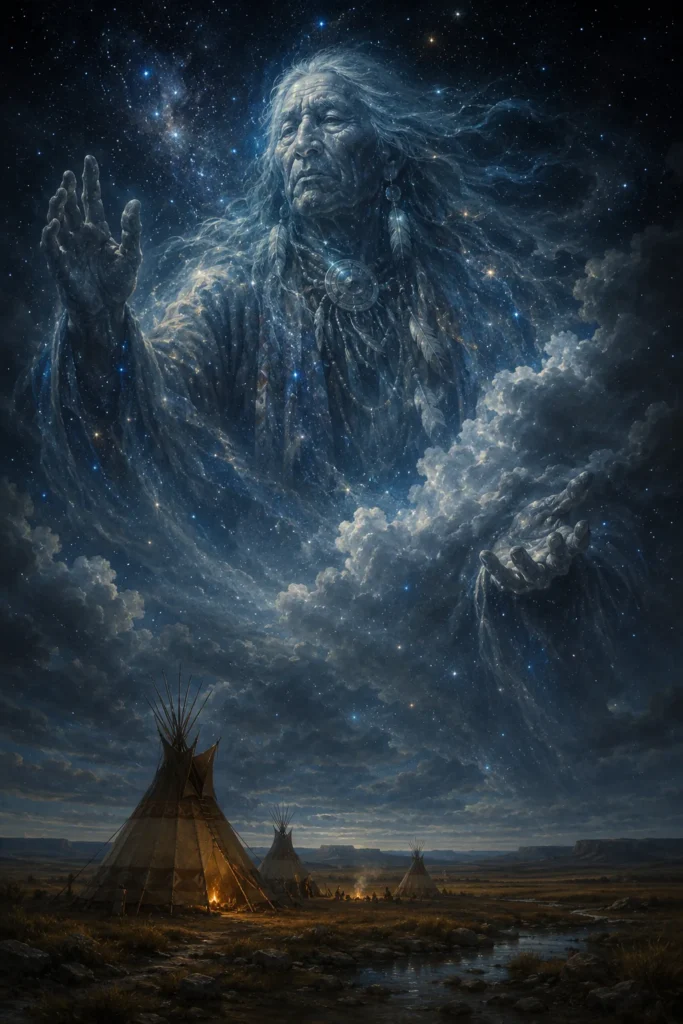
Among the Lakota, Tate is the wind and the father of the four wind directions. In Walker’s creation cycle, he is the companion of Skan and housefather of the winds; his sons are sent out to establish the four cardinal directions, from which directions and seasons arise.

Tȟaté simply means wind and personifies the wind itself. Central to this figure is James R. Walker’s creation cycle, popularised in the collection The Sons of the Wind; the closed narrative arc in this rounded form is largely Walker’s own literary work.

Overview: Tate

Type: wind god, father of the four wind directions
Origin: Lakota, northern Plains
Texts: Walker cycle, popularised in The Sons of the Wind
Period: Lakota tradition, documented around 1900
Appearance: usually without fixed form, companion of Skan

Textual history

Period of the Texts

Lakota tradition in the Walker cycle, documented around 1900 and partly reconstructed in literary form; popularised in 1984 in The Sons of the Wind.

Area of Diffusion

The Lakota of the northern Plains; Tate belongs to cosmology and ritual, especially to the invocation of the four directions.

Sources

Moderate: the main evidence comes from Walker (Lakota Myth, Lakota Belief and Ritual), together with the edition The Sons of the Wind.

Name and variants

Lakota: Tȟaté means wind. The name personifies the wind itself, without further epithets; the wind sons carry their own names for the four directions.

Appearance and behaviour

Appearance

Tate usually has no fixed form; in Walker’s account, he is in part the created companion of Skan and housefather of the winds. He embodies the wind as an ordering principle.

Effect

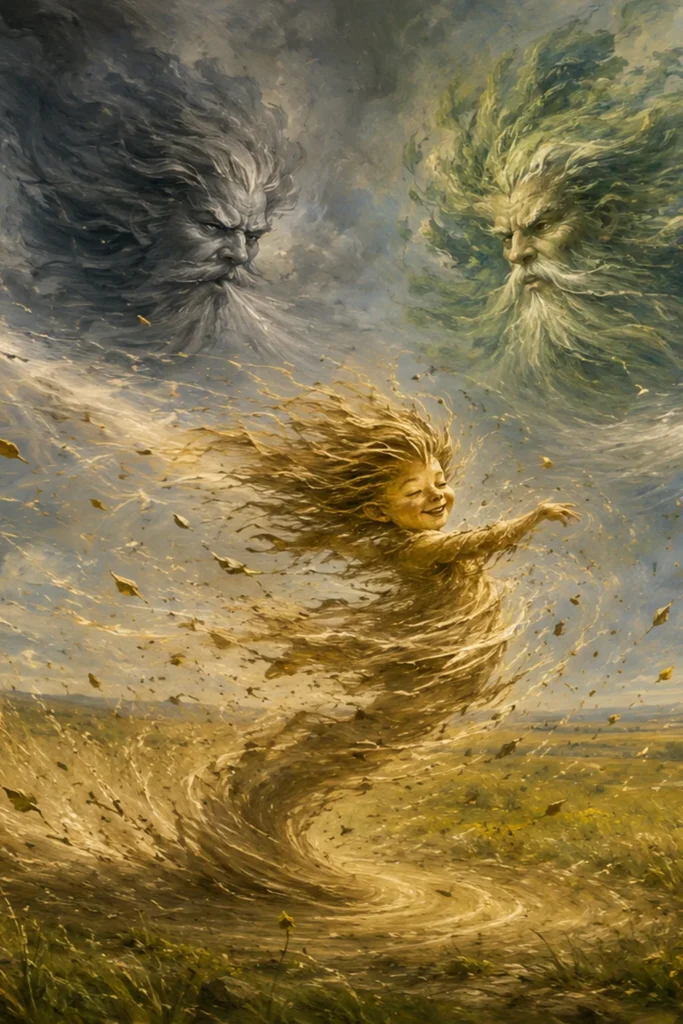
Tate is the father of the four elder wind sons: Yata in the north, Eya in the west, Yanpa in the east and Okaga in the south, along with the youngest, Yum or Yumni, the whirlwind. He is married to Ite or Anog Ite, the double-faced woman. The sons are sent out to establish the four cardinal directions; from this, directions and seasons arise.

Profile: Tate

The key aspects of the wind father at a glance.

Cultural Context

Wind god of Lakota cosmology; in the Walker cycle the companion of Skan and housefather of the winds. Above him stands the sky and movement force Skan.

Responsible for

The wind and the ordering of the cardinal directions: his sent-out sons establish the four directions, from which the seasons arise.

Depiction

Usually without fixed form; Tate becomes tangible as housefather, whose five sons are the winds and whose wife is Ite, the double-faced woman.

Function

Ordering principle of the wind: father of Yata, Eya, Yanpa and Okaga as well as of the whirlwind Yum, who receives no direction of his own.

Practice

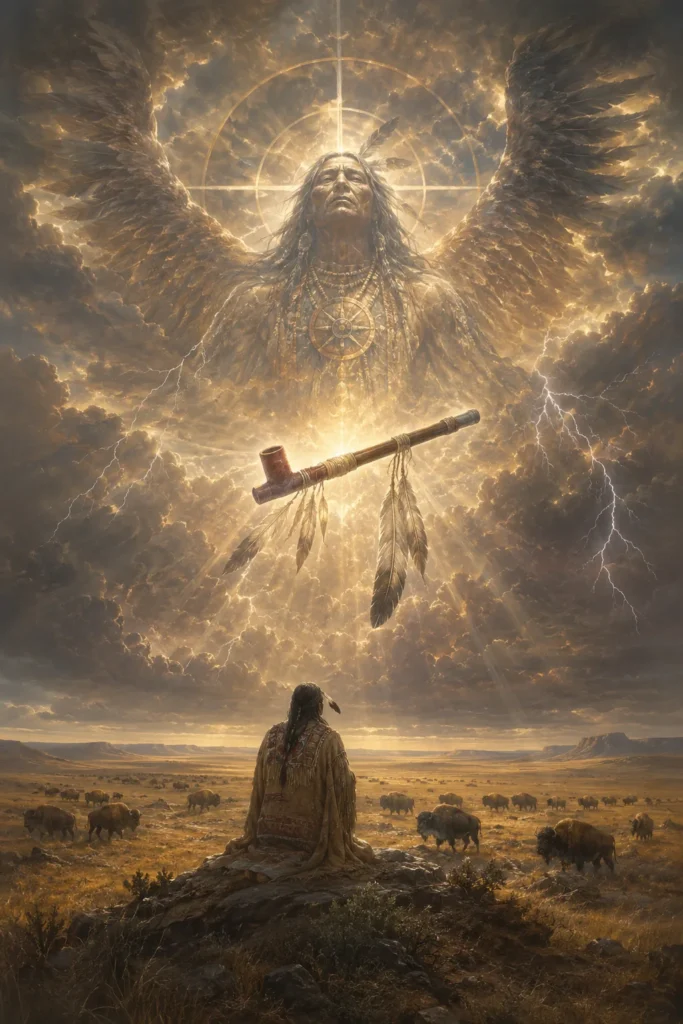
There is no independent protective form associated with Tate; he lives on in the ceremonial invocation of the four directions. Details are omitted out of respect.

Comparables

Typologically close stands the Iroquois Gaoh, who orders the four animal winds; above Tate stands Taku Skanskan.

The creation cycle of Tate and his sons

Tȟaté means wind and personifies the wind itself. Tate is central to James R. Walker’s creation cycle, popularised in the collection The Sons of the Wind: there he is the created companion of Skan and housefather of the winds, married to Ite or Anog Ite, the double-faced woman.

His sons, Yata in the north, Eya in the west, Yanpa in the east, Okaga in the south, and the youngest, the whirlwind Yum, are sent out to establish the four cardinal directions; from this, directions and seasons arise. Source criticism remains important here: the closed narrative arc of Tate, his wife Ite and the four winds is, in this rounded form, largely Walker’s own literary cycle.

Legacy and source criticism

Through the collection The Sons of the Wind, Tate is widely known, often without reflection on his origin in Walker.

From a religious-studies perspective, Tate presents the wind as the ordering father of the cardinal directions. An important clarification: the mythologically rounded Tate-Ite cycle is not a uniform old myth; Ella Deloria criticised Walker’s blending of fiction and tradition, and the editors identify the elements original to Walker.

The invocation of the four directions

There is no independent protective form associated with Tate; he lives on in the ceremonial invocation of the four directions. Out of respect for Lakota ceremonial knowledge, this is treated with restraint. The fact that the directions themselves are traced back to the sent-out wind sons makes Tate a quiet reference point of this practice, without any cult of his own attaching to him.

Wind fathers and wind families compared

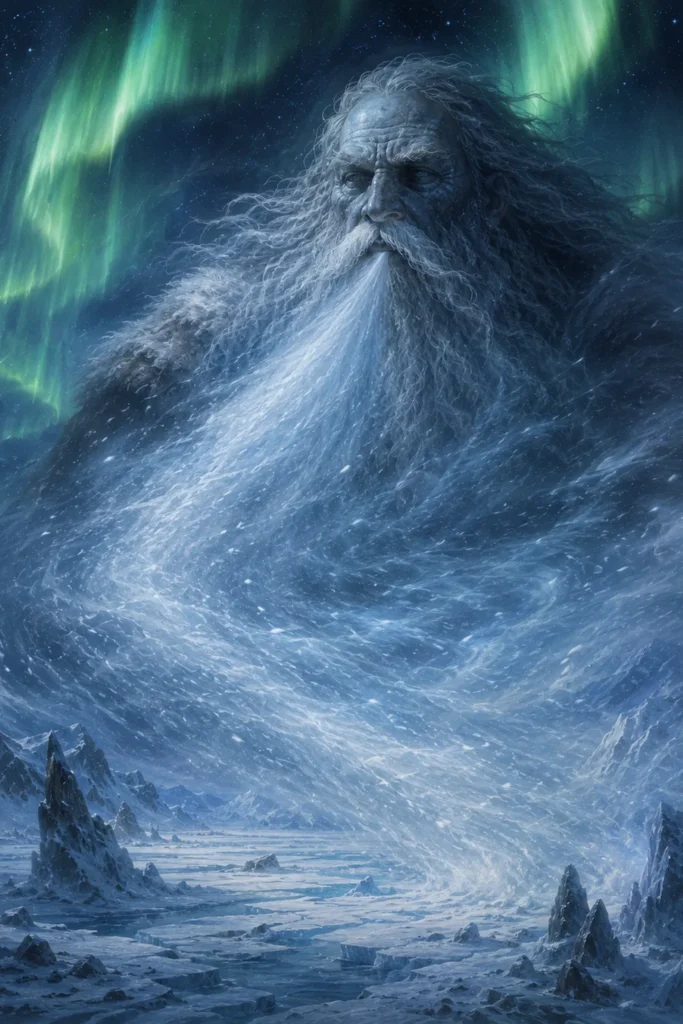
Tate is the father of a wind-direction family and is thus typologically close to the Iroquois Gaoh, who orders the four animal winds. Above him stands the sky and movement force Taku Skanskan; among his children, the whirlwind Yum falls outside the ordered structure. The north-wind giant Waziya belongs to the same tradition but is an independent winter figure and not a wind son.

Frequently asked questions about Tate

Who is Tate?

The wind and father of the four wind directions of the Lakota; in Walker’s creation cycle, the companion of Skan and housefather of the winds.

What are the names of the four wind sons?

Yata in the north, Eya in the west, Yanpa in the east and Okaga in the south, along with the youngest, the whirlwind Yum.

Is the Tate cycle old?

The rounded narrative arc is largely Walker’s own literary cycle, not a uniform old myth; Ella Deloria criticised the blending of fiction and tradition.

Further links

Recommended internal links:

Literature (selection)

A selection of key sources and studies:
  • Walker, James R.: Lakota Myth. Lincoln 1983.
  • Dooling, D. M. (ed.): The Sons of the Wind. The Sacred Stories of the Lakota. New York 1984.
  • Walker, James R.: Lakota Belief and Ritual. Lincoln 1980.

Further standard works in the bibliography.

In retellings, Tate remains the Lakota wind father par excellence: the father of the four winds, whose sent-out sons gave the cardinal directions their place, and at the same time a figure whose rounded narrative form was only created by Walker’s pen.

Classification & Protection

IILEVEL
The Protection Compass assigns this being to influence level II, Noticeable influence.

Against its influence, cross-cultural tradition names these protective means:

Compare in the Protection Compass →

Recommended protective means

iWell Guard

The simplest protective means in this collection: 41 layers of fine gold 999, platinum, silver and silicon, manufactured in Ruhla, Thuringia. It requires no activation, is bound to no person, and is effective within a radius of around 50 meters, even without being worn.

All protective means at a glance →