Amulets and Protective Objects
By Ralf Ittermann · last reviewed on
Amulets and protective objects are items to which tradition attributes the ability to protect their bearer or a particular place from harmful influence. The term “amulet” derives from the Latin amuletum, whose origin is uncertain.
The underlying idea is older than any writing: even in Paleolithic sites we encounter objects whose placement on the body or at the threshold of the camp points to notions of protection.
What distinguishes this category from other means of protection is its physical closeness to what is to be protected. A protective object is worn, carried along, or attached to a fixed place that is regarded as a threshold or center. It is not a one-time ritual, but a permanently effective device.
Whether the attributed effect comes from the material itself, from its form, from charged symbols, or from an act of consecration, each tradition answers for itself. What they all share is this: the object is meant to set a boundary between the protecting and the harming sphere.
This page provides an overview of the type of protection known as “amulets and protective objects.” The individual objects are described on their own detail pages.
Amulets and protective objects are worn protection. Carried on the body, they accompany the person.
Shared Features and Working Principle
Despite the diversity of forms, some shared basic patterns can be identified in folkloristic research.
Material: Certain substances are regarded across many cultures as inherently averting: iron, silver, particular woods, stones with natural inclusions such as flints or holed stones. The material thus carries a protective quality of its own, which can be strengthened by working or consecration, but is not first created by it.
Form and sign: Geometric forms, especially circles and closed curves, are regarded in many traditions as averting: the circle encloses what protects and shuts out what harms.
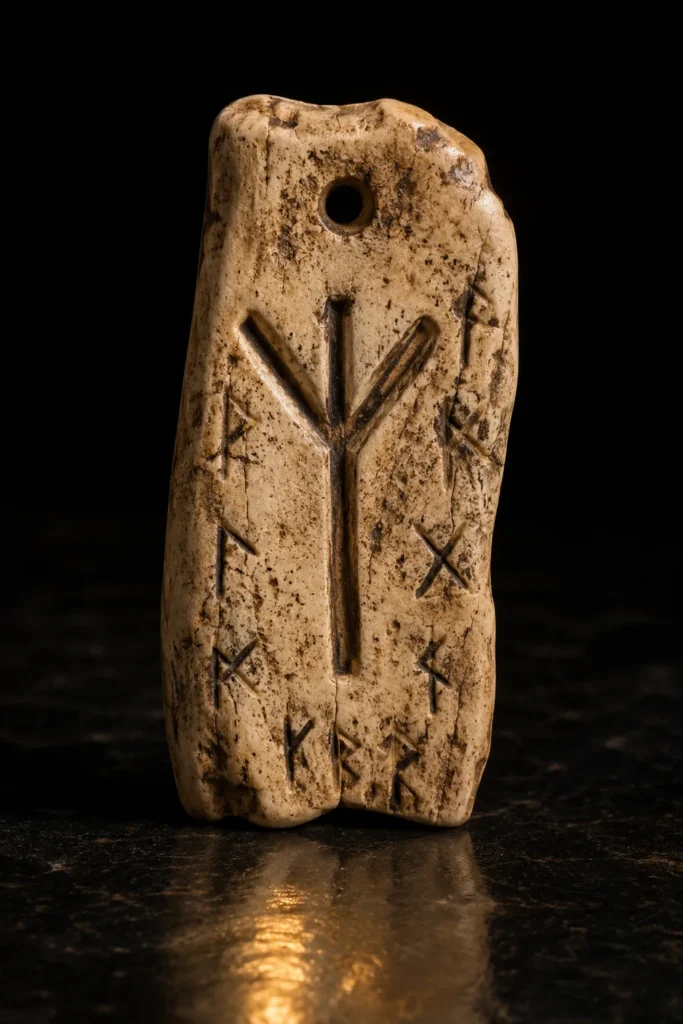
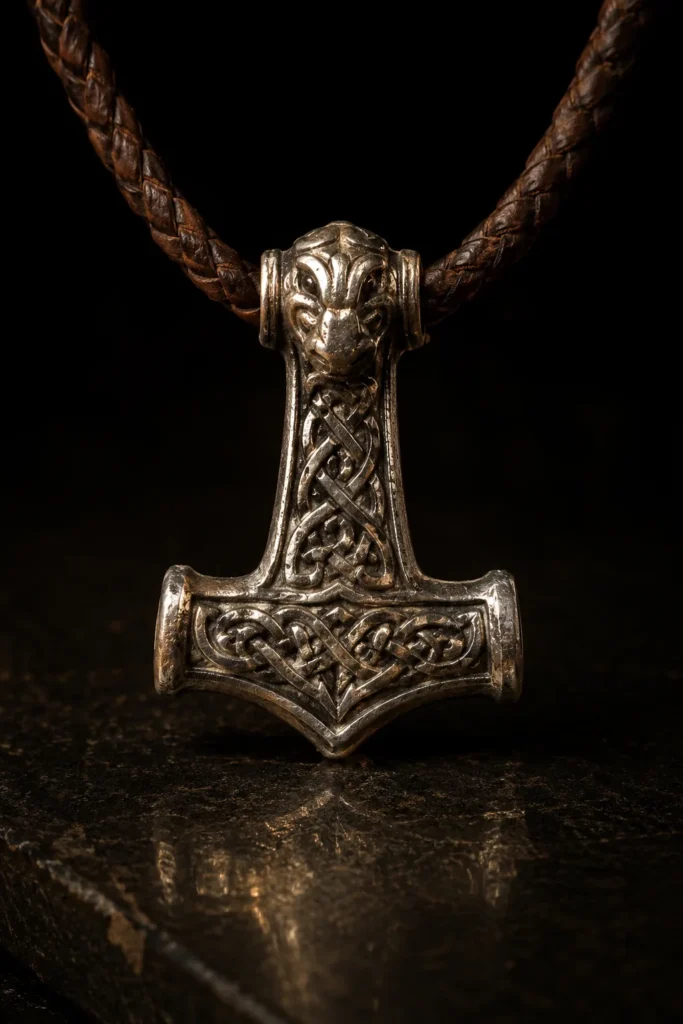
Knots, nets, and interlacings also appear again and again, as do written characters, divine names, and formulas that are inscribed into the material or laid into the object on paper.
Consecration or charging: Many traditions distinguish between a raw object and a consecrated one. Consecration, carried out through ritual, prayer, a particular point in time, or a qualified person, is regarded as a strengthening of the object’s protective effect, without first creating it.
Some traditions also know of the exhaustion or defilement of an amulet: it must be renewed, cleansed, or replaced.
Intention: Already in early modern folkloristic sources, a distinction is drawn between the pure amulet, which works of its own accord, and the talisman, which is made and charged through deliberate intention and often at an astrologically favorable moment.
This distinction is fluid in practice, but significant in theory because it reflects different conceptions of how things work.
The overarching idea is that a carefully made or found object condenses the cosmic information field in a way that directs harmful influences past or back from the bearer or place.
The traditions describe this each with their own images, without any one of them being able to raise a claim to truth over the others.
Cross-Cultural Overview
The five protective objects presented on this website as detail pages come from different traditions and in part follow different working principles, yet all of them show the basic pattern described above.
Amulet: The term in the narrower sense denotes an object that confers protection on its bearer without requiring a deliberate act of charging.
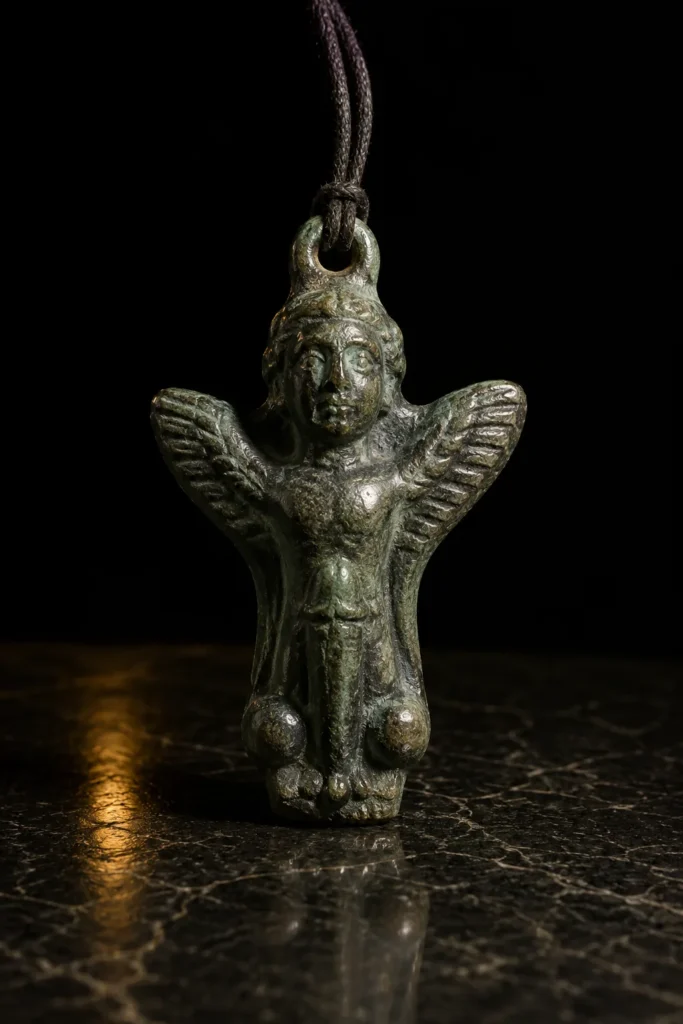
Amulets are the oldest and most widespread form of worn protection. From Egyptian faience figures through Mesopotamian cylinder seals to the pendants of medieval Europe, this tradition runs through all cultures and epochs.
Talisman: The talisman differs from the amulet through its deliberate manufacture for a particular purpose and at a particular point in time.
In the Arabic, Jewish, and European learned magic of the Middle Ages and the early modern period, talismans were engraved or inscribed according to astronomical constellations. The talisman is not only protection, but also an active force in a particular direction.
Horseshoe: The horseshoe combines two protective principles: iron is regarded in many traditions as hostile to misfortune, and the horseshoe-shaped opening is regarded as a catch basin for luck or as a sign that wards off what harms. As threshold protection above house and stable doors, it is attested throughout Europe and beyond.
Protective Pouch and Breverl: The filled pouch combines several protective carriers in one: herbs, signs, written amulets, or relics are gathered together and worn on the body or in the house. In the German-speaking world, the “Breverl” is the best-known type: a small packet of blessed paper, herbs, and holy signs.
Knot Amulet: Knots and threads are among the oldest and most widely distributed means of protection in the world. The knot binds or interrupts: it holds evil fast before it reaches the bearer, or it interrupts the connection between what harms and what is protected.
The red thread of the Jewish custom, the binding system of the Tibetan protective threads, and the European knot charms show the same basic idea in very different garb.
Use and Limits
Each tradition gives its own indications of how a protective object works and where its limits lie. Several patterns recur.
Protective amulets are not regarded as all-powerful. They are meant to ward off specific kinds of influence: one protects against the evil eye, another against nocturnal attacks, a third against break-in and theft.
Anyone who wears a protective object without knowing what it is handed down to guard against acts, by the logic of folklore studies, on uncertain ground.
Many traditions emphasize the integrity of the object: a broken, defiled, or stolen amulet loses its effect or reverses it. The Breverl, for instance, may not be opened; the horseshoe may not hang with its openings facing down, because otherwise the luck falls out.
These rules belong to the body of tradition and show that protection was not thought of as passive and automatic, but as something that requires care.
For the limits, one further point applies: no object replaces judgment or the recognition of a concrete dangerous situation. The traditions know no guarantees, they know means.
In the Protection Compass
In the Protection Compass, the protective objects of this category are linked with the beings against which, according to tradition, they were used.
Anyone who wants to know which amulets are handed down for a particular kind of being can filter in the Protection Compass by class, culture, or Influence Level and view the corresponding means of protection directly.
Literature (Selection)
Related key terms: amulets talisman protective pendant amulet meaning.
iWell Guard and Protective Traditions
The iWell Guard arose from the observation that cultures worldwide and independently of one another have developed worn protective objects.
Form, material, and symbolic language differ, but the basic idea is the same: a compact object that, worn on the body, condenses the protective qualities of the cosmic information field and sets a recognizable form of boundary against harmful influences.
The iWell Guard takes up this tradition and translates it into a form that fits present-day wearing practice.
Personal experiences may vary. Not a medical device. No promise of healing.