iWell Guard

Glaukos, from fisherman to prophet of the sea

Glaukos is a god of the Greek tradition.

A magic herb turned the fisherman into an eternal sea god.

Table of Contents

Glaucus, god of Greek tradition
Glaukos

Glaukos was a mortal fisherman from Anthedon in Boeotia, until a magic herb changed his life: he laid his catch on an herb sown by Cronus, the dead fish came back to life and leapt into the sea. He tasted it himself and became an immortal sea god.

Oceanus and Tethys took him in and taught him the art of prophecy. As a blue-green merman he has since appeared to sailors and foretold their fate. His unfortunate love for the nymph Scylla, who fled from him, had lasting consequences.

At a glance: Glaukos

Type: deified fisherman, prophetic sea god
Origin: Anthedon in Boeotia, transformed by a magic herb
Texts: Aeschylus, Euripides, Ovid, Pausanias, Apollonius, Nonnus
Period: classical antiquity to late antiquity
Appearance: blue-green merman, dripping hair, fish tail

Historical Classification

Period of the Texts

From Aeschylus and Euripides to Ovid and Nonnus, Glaukos remains present in literature throughout antiquity.

Area of Diffusion

Native to the Boeotian coast, worshipped in Anthedon, yet known as a wandering sea god throughout the Aegean.

Sources

Well attested, but inconsistent in origin: Ovid, Pausanias and Apollonius name different lineages.

Name and variants

Greek: Glaukos means sea-green. The accounts of his origin vary: sometimes he is regarded as the son of Nereus, sometimes other fathers are named.

Form and effect

Appearance

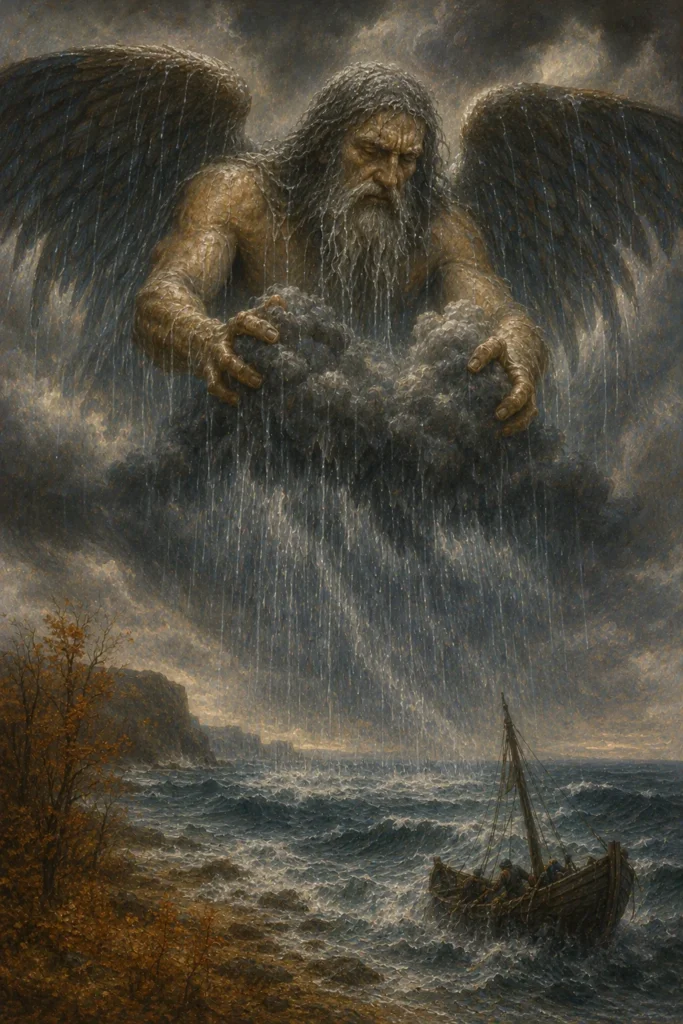
Glaukos is a bearded merman with dripping, copper-green hair, an algae-covered chest and a fish tail. Plato uses this overgrown image as a metaphor for a soul disfigured by passions.

Effect

His oracles, regarded as reliable, helped sailors and Argonauts; he foretold Heracles’ immortality to him. Towards humans he is benevolent, a helper and warner, not a seducer.

Profile: Glaukos

The key facts about the sea god at a glance.

Tradition

From Aeschylus to Ovid, Pausanias and Nonnus: well documented, but inconsistent.

Responsible for

Prophecy and safe passage, worshipped by fishermen and sailors of the Aegean.

Depiction

Blue-green merman, dripping hair, seaweed on his chest, fish tail.

Sphere of Influence

Warns, prophesies and helps sailors; foretold Heracles his immortality.

Cult

Vows on the shore, cult site near Anthedon, oracle site on Delos.

Parallels

Compared to the shape-shifting Proteus, related to Triton and Nereus; once taken in by Oceanus.

The fisherman whom an herb made immortal

Ovid recounts the transformation: Glaucus laid his catch on a herb that Kronos had sown, and the dead fish leapt back into the sea alive. He tasted it himself, leapt in after them and became an immortal sea god; Oceanus and Tethys purified him of his mortal nature, and the other sea gods taught him the art of prophecy.

Accounts of his origin vary; in some he is regarded as a son of Nereus. Best known is the myth surrounding Scylla: Glaucus fell in love with the fleeing nymph and asked Circe for a love potion. But Circe desired him herself, and out of jealousy poisoned Scylla’s bathing cove.

From stage subject to star name

Glaucus was the subject of ancient dramas, including a lost play by Aeschylus, and in the modern era a popular motif in painting and Baroque opera. One clarification is important: it was not Glaucus who turned Scylla into a monster, but the jealous Circe, whose own love he had rejected.

From a religious-studies perspective, he is an example of a deified mortal and a local Boeotian fisher and oracle deity: the vegetation magic of the immortalising herb meets the divination of the sea, more a popular coastal cult than a state religion.

Vows for a safe voyage

Fishermen and sailors paid particular reverence to Glaucus and heeded his oracles; on the shore they made vows for a safe voyage. A worn amulet accompanied this invocation, holy water was linked to the same vow, and salt served as the fishermen’s purifying agent. His cult site was near Anthedon, along with an oracle site on Delos.

Sea gods and deified mortals

As a mortal who became a sea god, Glaucus shares the fate of Ino-Leucothea. He belongs to the circle around the sea queen Amphitrite, which he joined after his transformation. Unlike the destructive Charybdis in the same strait, he remained well-disposed towards humans.

Frequently asked questions about Glaucus

Was Glaucus always a god?

No. He was a mortal fisherman from Anthedon and only became an immortal sea god through a magical herb.

Did Glaucus turn Scylla into a monster?

No. He loved her, but the transformation was brought about by the jealous Circe, whose love he had rejected.

Further links

Recommended internal links:

Literature (selection)

A selection of key sources:
  • Ovid: Metamorphosen. Buch 13 und 14.

Further standard works in the bibliography.

When Glaucus became a sea god, the fisherman from Anthedon lost none of his affection for humans: he warned, prophesied and helped where other sea powers spread terror. The myth of Glaucus and Scylla also shows that it was not he but the jealous Circe who turned the rejected nymph into a monster.

Classification & Protection

ILEVEL
The Protection Compass assigns this being to influence level I, Minor influence.

Against its influence, cross-cultural tradition names these protective means:

Compare in the Protection Compass →

Recommended protective means

iWell Guard

The simplest protective means in this collection: 41 layers of fine gold 999, platinum, silver and silicon, manufactured in Ruhla, Thuringia. It requires no activation, is bound to no person, and is effective within a radius of around 50 meters, even without being worn.

All protective means at a glance →