Achelous, the river god with the broken horn
By Ralf Ittermann · last reviewed on
Achelous is a god of the Greek tradition.
His broken horn became the cornucopia of antiquity. Achelous was honored by the Greeks as the greatest of the river gods.
Achelous is the greatest river god of Greece, son of Oceanus and Tethys, father of the Sirens and spring nymphs.
His central myth is the wrestling match with Heracles over Deianeira: as a shapeshifter he took the form of a bull, a serpent and a man with a bull’s forehead; Heracles broke off one of his horns, which the Naiads filled to create the cornucopia.
Type: Greatest river god of Greece
Origin: son of Oceanus and Tethys
Texts: Homer to Ovid
Period: archaic to present in the river’s name
Appearance: horned shapeshifter, bull, serpent, man with a bull’s forehead

Traditional context
Period of the Texts
From Homer and Hesiod to Ovid and Strabo: a continuous ancient tradition.
Area of Diffusion
Aetolia and Acarnania as the core region, the cult spread throughout Greece.
Sources
Very well attested: Sophocles, Ovid, Apollodorus and Strabo record the myth and its interpretation.
Name and variants
Greek: Achelous denotes both the god and the greatest river of Greece at once, interpreted euhemeristically as an image of real water management measures.
Bull form and cornucopia
Appearance
Iconographically Achelous appears as a bull-shaped or man-headed bull; his symbol is the cornucopia.
Effect
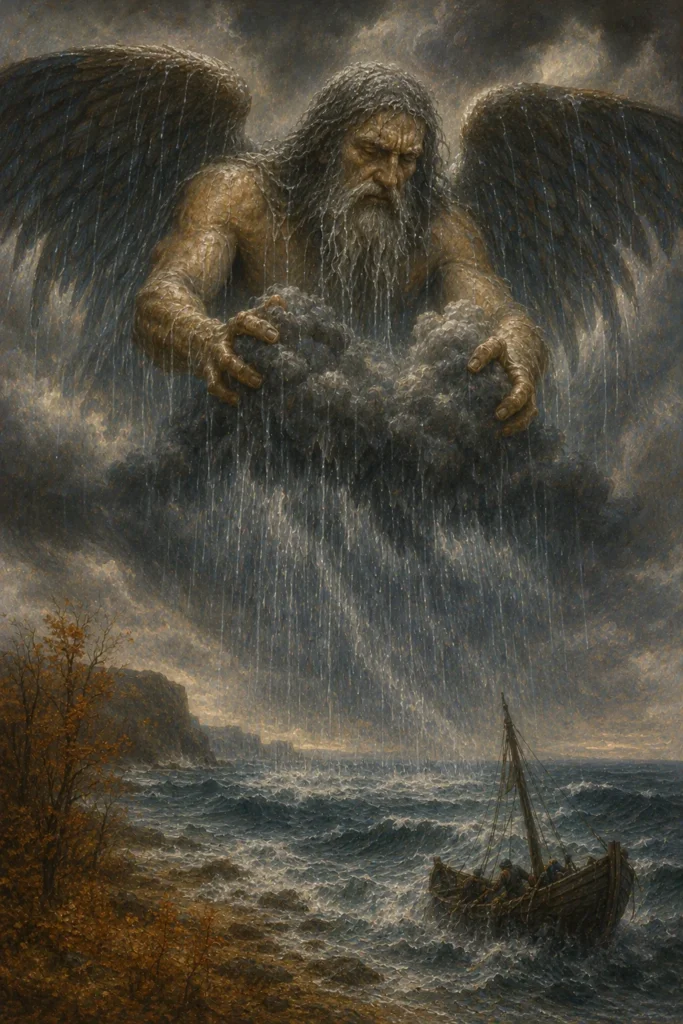
Achelous is dangerous as a raging torrent that, according to Ovid, tears away trees and cattle, while also being a giver of fresh water.
Profile: Achelous
The key aspects of the river god at a glance.
The most important of the three thousand river gods, son of Oceanus and Tethys.
The fresh water of Greece: fertility of the fields, danger of the flood.
Horned man-bull or bull form, widely depicted in vase and coin art.
Giver of fresh water, defeated rival in the contest for Deianeira.
Prayers, offerings and oaths, altars with nymphs and Pan throughout Greece.
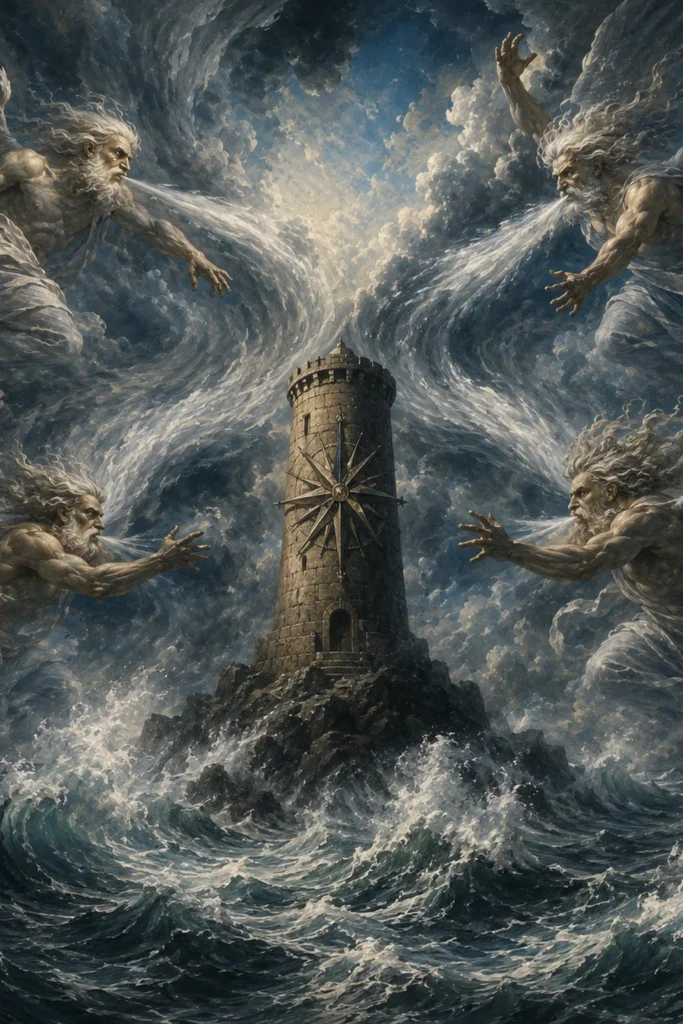
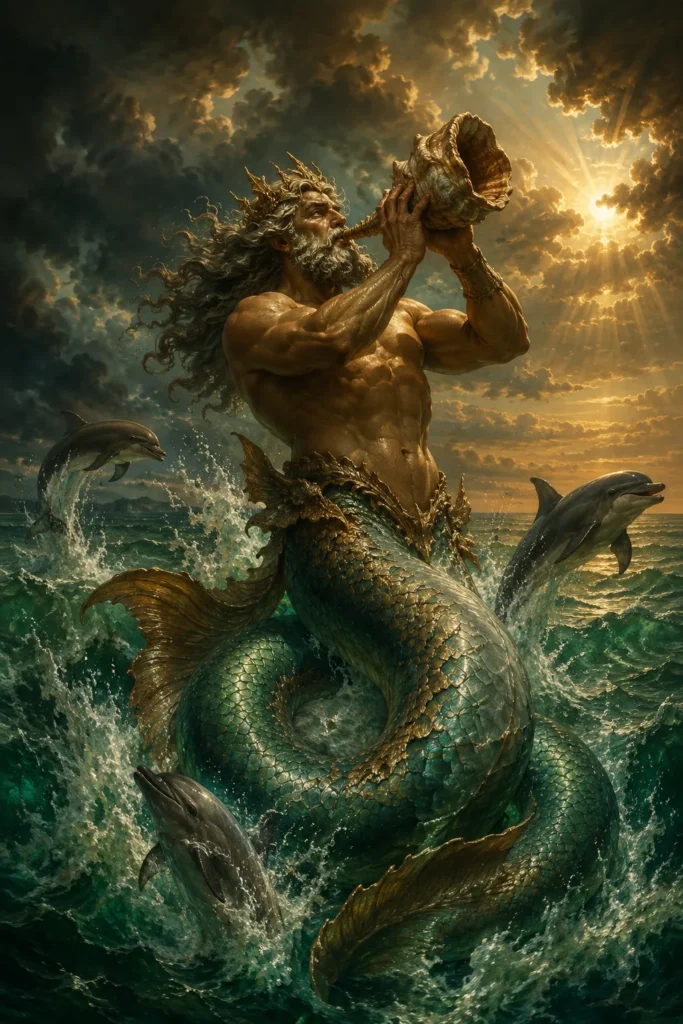
A fresh-water god, distinct from the sea powers Oceanus, Nereus and Triton.
The wrestling match for Deianeira
Achelous, the eldest of the river gods, fought Heracles for Deianeira: as a shapeshifter he took the form of a bull, a serpent and a man with a bull’s forehead, but Heracles broke off one of his horns, which the Naiads filled with fruit: the cornucopia.
Strabo interpreted this euhemeristically: the bull’s roar as the rushing of the water, Heracles’ victory as the taming of the river.
From votive offering to heraldic emblem
The most lasting legacy is the cornucopia, to this day a symbol of abundance in art and heraldry, a popular motif since Renaissance art.
In religious studies, Achelous is the personification of the greatest Greek river and of fresh water, part of river-god veneration with Oceanus as its origin.
Offerings, oaths and shared altars
The relationship with Achelous was one of veneration: prayers, offerings, oaths, and the Oracle of Dodona demanded that offerings be made to him; he shared cult sites with nymphs and Pan on the Ilissos near Athens.
Holy water draws on this veneration, salt served as a purifying agent, and an amulet as a protective sign for river and ford.
Oceanus, Nereus, Triton compared
Frequently asked questions about Achelous
What is the cornucopia?
The horn broken off during the wrestling match, which the Naiads filled with fruit; to this day a symbol of abundance.
Why did Achelous fight Heracles?
Both courted Deianeira; Heracles broke off one of his horns and married her.
Literature (selection)
Further standard works in the bibliography.
Anyone searching today for Achelous river god or Heracles’ cornucopia finds the same myth: the greatest river of Greece, which lost a horn in a wrestling match and thereby gained the symbol of abundance.