Ishum, the torch-bearer of the nocturnal streets
By Ralf Ittermann · last reviewed on
Ishum is a god of the Mesopotamian tradition.
The night watchman with the torch, who moderates Erra’s wrath. The profile portrays Ishum as the torch-bearer whose nightly rounds kept the wrath of Erra in check.
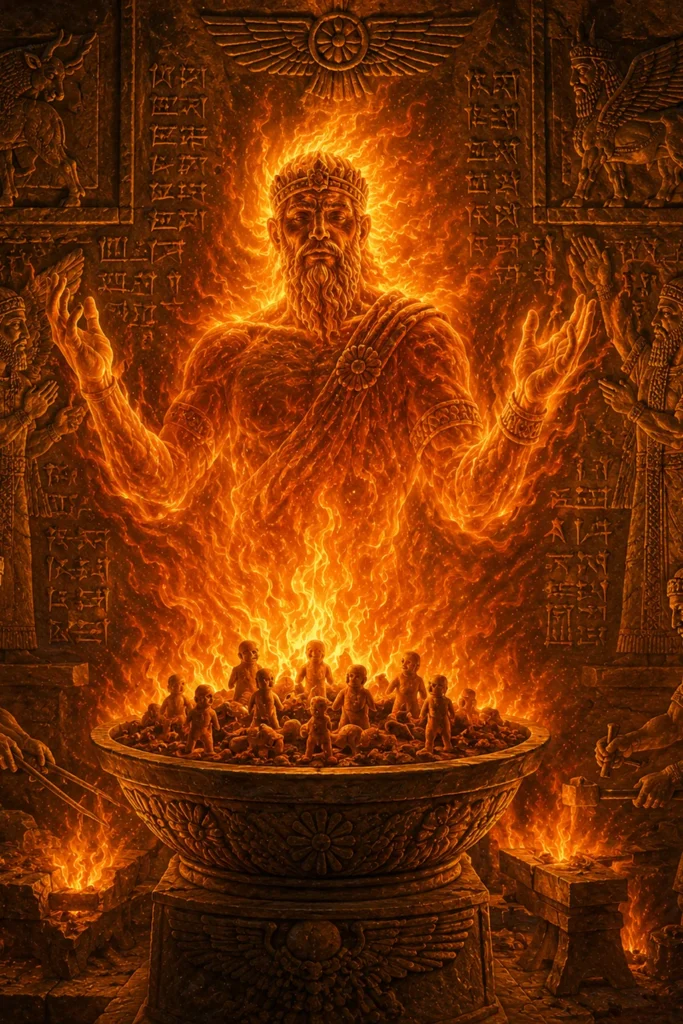
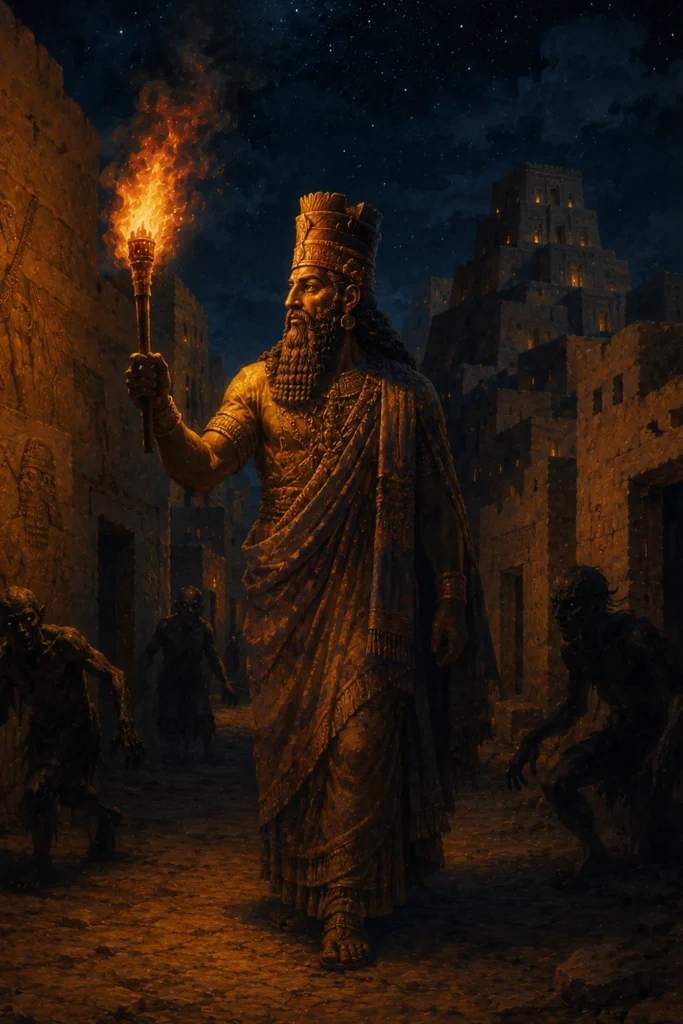
Ishum is the fire god and divine night watchman of Mesopotamia, a torch-bearing herald who lights the streets at night and protects the houses. His light is at the same time his protection.
The main source is the Erra Epic of the 1st millennium BC: there, Ishum is the benevolent companion and vizier of Erra, the god of plague and war, whose destructive fury he moderates until, in the end, cosmic order is restored.
Type: Torch-bearing fire god, divine night watchman
Origin: Akkadian, the name probably related to išatum, fire
Texts: Erra Epic as the main source, along with incantation contexts
Period: 1st millennium BC
Appearance: god with the torch who walks the streets at night
Area of origin and sources
Period of the Texts
Of Akkadian origin; the main source is the Erra Epic from the 1st millennium BC.
Area of Diffusion
Babylonia and Assyria: there Ishum was known as the nocturnal protector of streets and houses.
Sources
Well documented: the Erra Epic in the edition by Cagni and the handbooks of Assyriology.
Name and variants
Akkadian: Ishum, the name probably derives from išatum, fire. His epithets characterise his office: herald of the street, hero who walks about at night, and herald of the night, lord of the street. In his night-watchman function he is closely connected with the Sumerian Ḫendursanga.
Appearance and behaviour
Appearance
Ishum is a torch-bearing god who lights the streets at night and protects the houses; light is his protection.
Effect
As a nocturnal guardian, Ishum patrols with the torch and safeguards households from the dangers of the night. In the Erra Epic he is the benevolent herald who contains Erra’s unbridled destruction and, in the end, restores cosmic order.
Profile: Ishum
The key aspects of the night watchman at a glance.
Akkadian fire and light god, closely connected with the Sumerian Ḫendursanga in his night-watchman function.
Households, nightly seekers of protection and the streets of the city: whoever was out at night stood within his domain.
A torch-bearing god who walks about by night, illuminating the alleys and driving the shadows from the streets.
Illuminates and guards the streets by night, wards off evil from the houses and appeases the plague and war god Erra.
Invocation as a nocturnal protector; the light symbolism of the torch against darkness and evil, also in incantation contexts.
The herald of the night in the Erra Epic
The name Ishum probably derives from the Akkadian išatum, fire. The god’s epithets describe his office precisely: herald of the street, hero who walks about by night, herald of the night, lord of the street. He is closely linked with the Sumerian Ḫendursanga, who bears the same night-watchman function.
Ishum’s most significant literary role is in the Erra Epic: there he is the loyal companion and vizier of the plague and war god Erra. He acts as a moderating force on Erra’s destructive fury and, at the end of the epic, restores cosmic order. Here fire appears not as a consuming force but as a civilising power.
Research and interpretation
Ishum is received in Assyriological scholarship, especially within research on the Erra Epic; no living cult exists.
In the study of religion, Ishum embodies fire and light as an order-establishing and protective power: the moderating, civilising fire set against Erra’s unleashed destruction. One clarification is important: Ishum is not evil for accompanying Erra. On the contrary, he is the benevolent, moderating herald who restrains Erra’s destruction.
The torch as protection of the night
Well attested in the sources are the invocation of Ishum as a nocturnal protector and the light symbolism of the torch against darkness and evil; the god is also present in incantation contexts. His protection is directly tangible: the torch-bearing watchman who walks the streets by night illuminates the alleys and keeps the houses safe from the dangers of darkness.
Ishum among the fire gods of Mesopotamia
Ishum’s closest relative is Nusku, likewise a Mesopotamian god of light and fire with a nocturnal protective function; yet while Nusku is the god of the lamp and the sacrificial fire and vizier of Enlil, Ishum is the watchman who himself walks the streets. He is distinguished from Girra, the pure fire and smithing power of the incantation series, by his benevolent guardian role. The Vedic Agni is comparable as a fire god. In the Sumerian tradition, Ḫendursanga corresponds to him.
Frequently asked questions about Ishum
Is Ishum evil for accompanying Erra?
No. He is the benevolent, moderating herald who restrains Erra’s destruction and, at the end of the epic, restores cosmic order.
Why does Ishum carry a torch?
As a night watchman, he uses it to illuminate and protect streets and houses; light is his protection.
Who is Erra?
The plague and war god of Mesopotamia, whose companion and vizier in the Erra Epic is Ishum.
Further links
Further reading:
- Mesopotamia – all beings of the Land Between the Rivers
- Nusku and Girra – the related fire gods of Mesopotamia
- Agni – the Vedic fire god as a parallel
- Protective candle, smoke cleansing, amulet – traditional protective means
- Protection Compass – protective means at a glance
Literature (selection)
Further standard works in the bibliography.
As a fire god who is at once night watchman and herald of the street, Ishum represents the friendly face of the flame: the torch that protects rather than consumes, and the voice that can even moderate Erra’s wrath.