Holy Water: Consecrated Water for Defense
By Ralf Ittermann · last reviewed on
Within the protective tradition, holy water stands for a different basic element than incense substances do: the medium of purification and defense here is not fire and smoke but water.
Even so, the logic of holy water follows exactly the same structure as smudging: a substance is altered ritually through an act of blessing and can then purify and protect rooms, people and objects.
For this reason holy water is treated together with incense substances on the overview page on smudging and purification: it is the liquid counterpart to incense smoke, the sprinkling equivalent of the room filled with incense.
The Christian tradition made holy water one of the best known means of protection in popular belief; its roots, however, reach far beyond Christianity. Ritually purified or consecrated water is known to almost all cultures with a developed religious life.
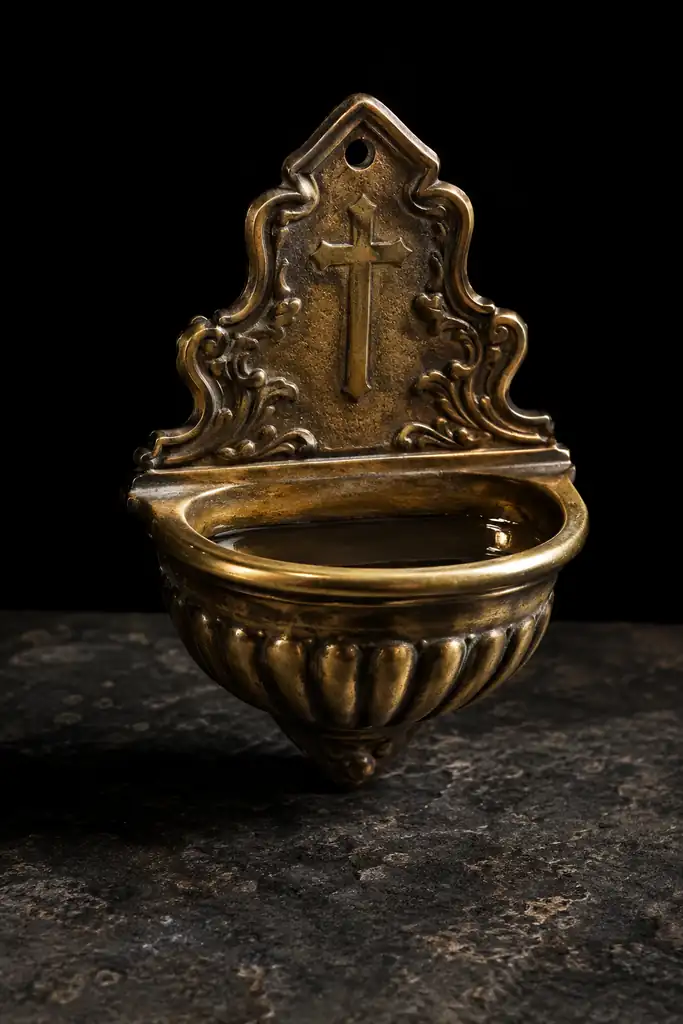
Holy water is blessed water and serves in popular piety to ward off evil powers.
Quick Overview
Holy water is water that has been defined as sacred and protective through a priestly act of blessing. In the Catholic tradition it contains salt as a sign of purity, in accordance with the prescribed rite.
It is used to sprinkle people, rooms and objects, and is held in fonts at church entrances for self-blessing.
In popular tradition it is regarded as a powerful means against demons, spirits and sorcery. According to this tradition, the protective effect does not depend on the chemical composition of the water but on the completed act of consecration and the intention bound up with it.
Origin and Tradition
The ritual sprinkling with water has forerunners in practically all ancient religions. In ancient Mesopotamia, rooms, priests and cult objects were sprinkled with ritually purified water before sacred acts began. In Egyptian temples, pouring water from the Nile, the sacred river, was part of the daily purification rituals.
In ancient Israel the Torah prescribed washings and sprinkling with water for specific situations of purity (Numbers 19 describes sprinkling with the water of the red heifer as purification from the impurity of death).
Christianity took over and transformed these practices. The early Christian consecration of baptismal water is one of the oldest liturgical texts of the Church; it contains the conviction that through prayer and blessing the water receives a new, sanctifying quality.
The use of holy water outside baptism, for everyday signs of the cross, for sprinkling houses and fields, developed gradually and was firmly established in the Middle Ages.
Popular tradition developed further applications out of church practice. Holy water was kept not only at the church entrance but also at house doors, in bedrooms and in the stable.
It was sprinkled on the threshold to keep evil powers from entering. It was given to the sick or applied to the forehead. Thunderstorms were to be averted by pouring out holy water in front of the house.
Operating Principle According to Tradition
In the Christian tradition, the protective effect of holy water rests on two elements: the blessing, which alters the water through the priest’s prayer, and the incompatibility of the demonic with everything that is sacred.
Within this interpretive framework, demons and evil spirits cannot endure the presence of the sacred; holy water represents that presence in tangible, applicable form.
The salt added to holy water in the classical rite reinforces this effect. In popular tradition, salt is itself a means of protection (comparable to the line of salt at the threshold), and the combination of water and salt in the consecration doubles, in the symbolism of the tradition, the warding-off power.
The logic of sprinkling follows the principle of marking: whatever is sprinkled stands under the protection of the sacred. The person or the room is marked as protected and consecrated; harmful influences recognise this mark and are prevented from taking effect.
Cross-Cultural Distribution
Ritually significant water is known to all the major religions. In Hinduism, bathing in the Ganges and in other sacred rivers is a purifying act; the water of these rivers is itself considered sacred, without an additional act of blessing.
In Shinto, misogi, the ritual washing with cold water, is a purification rite that prepares the believer for contact with the sacred. In Islam, ritual washing (wudu) before prayer is an obligation that brings about not only outward cleanliness but also an inner preparation of the one who prays.
In the northern European tradition, before Christianity took hold, certain springs, wells and brooks were considered sacred and their water protective and healing. So-called holy springs, of which there are hundreds in Ireland, Scotland, Scandinavia and the German-speaking lands, link the pre-Christian veneration of springs with later overlays of the Christian cult of saints.
The structural agreement among all these practices suggests that ritually purified water belongs to the oldest and most universal means of protection that people have developed.
What It Is Used Against
In Christian popular tradition, holy water is the all-purpose means against:- Demons and evil spirits: sprinkling drives them away or keeps them from entering- Witchcraft and sorcery: according to tradition, blessed water undoes the harm caused by magic– The evil eye: sprinkling or washing with holy water is meant to release the effect of the envious glance- Poltergeists and restless spirits of the dead: according to tradition, sprinkling the house or the grave calms the restless dead- Nightmares and night-mares: sprinkling the bedroom or the bed with holy water was meant to keep these nocturnal beings away
In the theological tradition of exorcism rituals, holy water is one of the principal means. The great exorcism of the Catholic Church uses holy water as one of several components of the rite.
The Protection Compass assigns holy water to the types of beings against which it was used in Christian and popular-religious tradition.
Application and Limits
Holy water is applied by sprinkling with an aspergillum (a holy water sprinkler) or by simply moistening finger and forehead. In the house it is traditionally sprinkled on the four walls, especially at doors and windows.
Popular tradition recommends regular sprinkling, particularly on special occasions (the turn of the year, after illness or mourning, when moving into a house) and on special nights such as the Easter Vigil, when fresh holy water is consecrated.
In popular practice, holy water is sometimes also combined with other means of protection: with frankincense for purifying the air, with salt for the threshold and with bundles of herbs for the doorframe. These combinations follow the traditional logic that complete protection requires several levels.
According to church tradition, the limit of effectiveness lies in the faith and the right disposition of the user. Mechanical use without an inner attitude is regarded as less effective.
In popular tradition this restriction is looser: there, holy water is occasionally credited with an almost automatically acting protective capacity. Both positions are attested in the history of popular belief.
Literature (Selection)
Related key terms: holy water blessed water sprinkling water blessing.
iWell Guard and Protective Traditions
Holy water stands for the principle that protection remains effective through regular renewal: the sprinkling must be repeated, the mark must be refreshed. The iWell Guard is conceived as a lasting carrier of this awareness of protection: it renews the protective intention not through an act but through presence.
Whoever wears it carries with them the awareness of the traditions that hold protection through signs and substances to be possible. The principle is the same as with holy water: an outward sign stands for an inner attitude, and it is this attitude that, according to tradition, makes the difference.
Personal experiences may vary. Not a medical device. No promise of healing.