Spunkie, Scotland's false torch-bearer
By Ralf Ittermann · last reviewed on
The Spunkie is a spirit of the Scottish tradition.
Lures wanderers into the moor and ships onto the cliffs.
Spunkie, also spelt Spunky, is a malevolent will-o’-the-wisp of Scotland, found in both the Highlands and the Lowlands. It pretends to guide travellers but lures them into bogs and deep water; on the coast it is said to have caused shipwrecks by posing as a false harbour light. In some traditions it is regarded as a spirit of the dead and an omen of death.
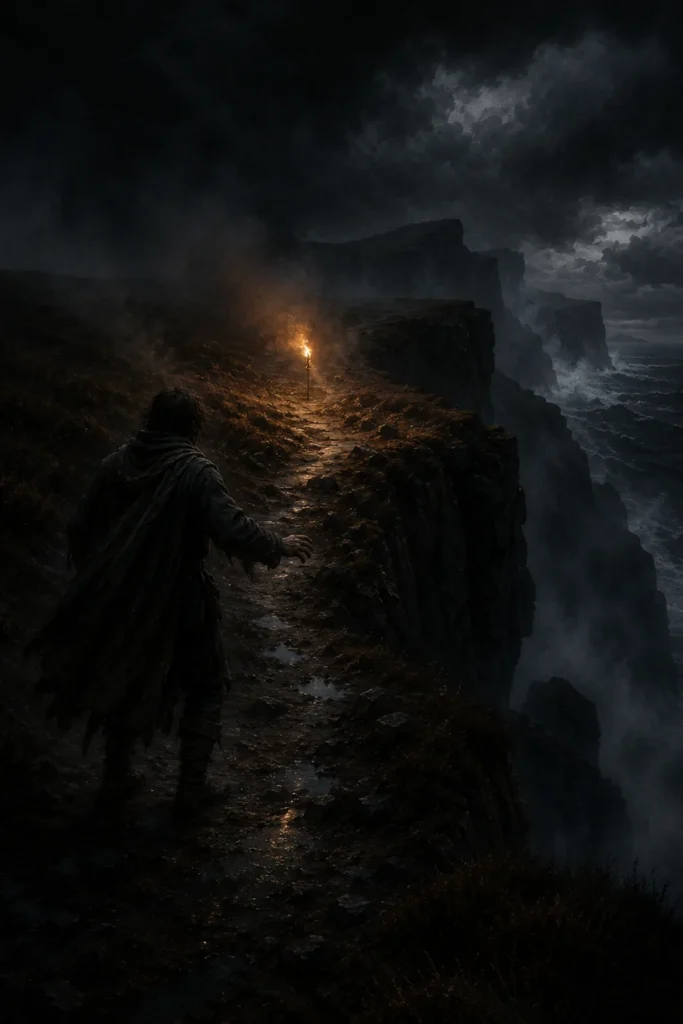
Spunkie often appears as a so-called linkboy, a torch-bearer who in earlier times would light the way for payment. The tradition is folkloric and itself serves as a warning.
Type: Malevolent will-o’-the-wisp, in some traditions a spirit of the dead and omen of death
Origin: Scottish folk belief
Texts: Scottish folklore, collected in the 19th and 20th centuries
Period: recorded in the 19th and 20th centuries
Appearance: a receding light, often in the role of torch-bearer
Context of the tradition
Period of the Texts
Scottish folk belief, collected in the 19th and 20th centuries; the tradition is folkloric and itself serves as a warning.
Area of Diffusion
Found throughout Scotland, in both the Highlands and the Lowlands; along the coasts the legend extends as far as the cliffs and harbour entrances.
Sources
Moderate: Scottish folklore, drawn from Katharine Briggs and John Gregorson Campbell’s collection of Highland material.
Name and variants
Scottish: spunk, also used in Northern England, means tinder, spark or fire; Spunkie means little spark or little fire. Alongside this stands the spelling Spunky. The name should be distinguished from the modern slang word spunky in the sense of brave.
Appearance and behaviour
Appearance
Spunkie appears as an apparently helpful bearer of light, a torch-bearer, or simply as a light that always recedes. Its hallmark is the deceptive, alluring light that leads to ruin.
Effect
Spunkie is clearly malevolent: it pretends to show the way but lures travellers into bogs and deep water. Spunkies sighted along the coast are said to have lured ships onto the cliffs as apparent harbour lights, causing shipwrecks. In some traditions it is interpreted as an omen of death.
Profile: Spunkie
The key aspects of the Scottish ghost light at a glance.
Scottish folk belief of both the Highlands and the Lowlands; the linkboy motif of the false torch-bearer is the Scottish peculiarity.
Night-time travellers in dangerous terrain, and in some cases sailors deceived by a false harbour light.
A light that always recedes, often taking the role of torch-bearer, seemingly lighting the way.
Lures travellers into bogs and deep water, and along the coast lures ships onto the cliffs; in some traditions interpreted as an omen of death.
No reliably documented ritualised defence exists; the traditional precaution is not to travel alone at night and not to follow the torch-bearer.
The East Anglian Lantern Man, likewise actively lethal, and Jack o’ the Lantern.
The torch-bearer who brings no one home
Scottish and Northern English spunk means tinder, spark or fire; Spunkie means little spark or little fire. The being is attested throughout Scotland, and it often appears as a so-called linkboy, a torch-bearer who in earlier times would light the way for payment.
It is precisely this familiar, everyday figure that gives the legend its power: whoever follows the supposed torch-bearer does not end up at home, but in a bog or deep water. The tradition is folkloric and itself serves as a warning; along the coast it escalates into a false harbour light that draws ships onto the cliffs.
Interpretation and legacy
Spunkie is firmly rooted in Scottish folklore and is passed on in collections of legends and modern storytelling tradition with a pronounced warning function. The name should be distinguished from the modern slang word spunky in the sense of brave.
From the perspective of religious studies, Spunkie is a prime example of the malevolent will-o’-the-wisp as a figure of warning and an omen of death. As always, the light is naturally to be explained as marsh gas; the interpretation as an omen of death and destroyer of ships is folk belief that processes the real danger of bogs and coasts.
Warning rather than protective means
A ritualised defence against Spunkie is not reliably documented; the legend itself functions as a warning. The traditional precaution is not to travel alone at night through dangerous terrain and not to follow the supposed torch-bearer. No specific protective means have been handed down.
Lantern Man, Jack and the deadly kin
Spunkie is closely related to the East Anglian Lantern Man, likewise actively lethal, and to Jack o’ the Lantern. The linkboy motif, the false torch-bearer, is the Scottish peculiarity. Within its Celtic neighbourhood it is joined by the Welsh Ellylldan and the Irish Tine Ghealáin, both of which are portrayed as markedly less murderous.
Frequently asked questions about Spunkie
Is Spunkie dangerous?
Yes. It is regarded as malevolent, lures travellers to their ruin, and is in some traditions interpreted as an omen of death.
What is a linkboy?
A torch-bearer who in earlier times lit the way for payment; Spunkie often appears in this deceptive role.
What does Spunkie have to do with shipwrecks?
Along the coast it is said to have lured ships onto the cliffs as a false harbour light.
Further links
Further reading:
- Celtic – all beings of the Celtic cultural sphere
- Lantern Man – the actively lethal ghost light of East Anglia
- Hinkypunk, Joan the Wad – further ghost lights of the British Isles
- Salt, Iron, Amulet – traditional protective means
- Protection Compass – protective means at a glance
Literature (selection)
Further standard works in the bibliography.
As Scotland’s will-o’-the-wisp, Spunkie has taken on the darkest role among its kin: it lures walkers and ships alike to their ruin and is in some traditions regarded as an omen of death across both the Highlands and the Lowlands.