Desert Spirits, Jinn and Beings of the Desert Worldwide
By Ralf Ittermann · last reviewed on
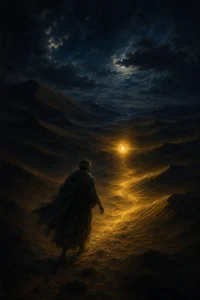
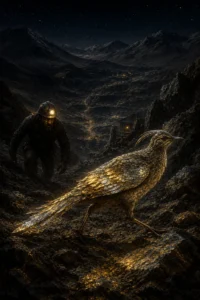
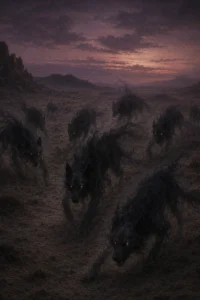
Desert spirits are beings associated with the vastness, deception and danger of the desert, from sandstorms and mirages to figures that lead lone travellers astray.
The Arabian world of the jinn with Jann and Hinn, the desert demons of Egypt and Mesopotamia, beings of the steppe and the Gobi, and narrative traditions from the desert regions of Australia passed down with due respect show how different cultures have interpreted the same hostile vastness.
The desert deceives more than it reveals. This overview gathers Desert Spirits Worldwide, showing how different cultures have interpreted the same hostile vastness.
Quick Overview (Definition List)
Type: Spirit Class: Desert spirits Distribution: Cross-cultural (Middle East, North Africa, Central Asia, Australia) Main characteristics: Bound to desert, steppe or sandstorm, mirage and deceptive character, danger to travellers, shifting form Related subcategories: Jinn, sandstorm spirits, steppe beings, desert demons
Term and Delimitation
The term desert spirit denotes a being bound to the desert, the steppe or the sandstorm as its habitat, whose effects are usually connected with the dangers of the vastness (disorientation, mirage, exhaustion, drought). It differs from mountain spirits, which are bound to peaks and rock, and from wind spirits, whose effects are not specifically tied to dry wasteland.
The Arabian Jann and Hinn are considered in some traditions to be older or wilder relatives of the jinn, bound to uninhabited desert regions rather than to towns and houses. The sandstorm itself is interpreted in many cultures as the work of a spirit, not merely as a weather phenomenon.
Classification
In the iWell Guard classification, desert spirits are the subclass of spirits bound to the uninhabited, hostile vastness.
They differ from demons with an established cult status, such as the Mesopotamian storm demons, who were also venerated or feared outside the desert, and from pure mirage phenomena without the character of a being. The idea of a deceptive being dwelling in the desert arose independently in practically every culture bordering a dry region, from the Middle East across North Africa to the Central Asian steppe belt and the deserts of Australia.
Cultural-Historical Examples
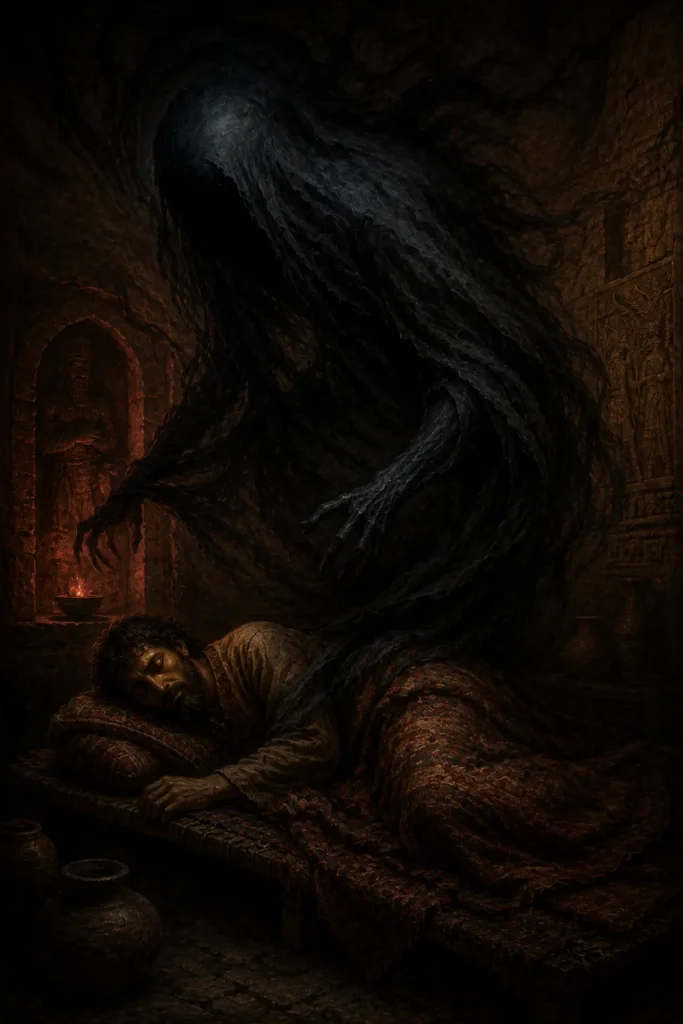
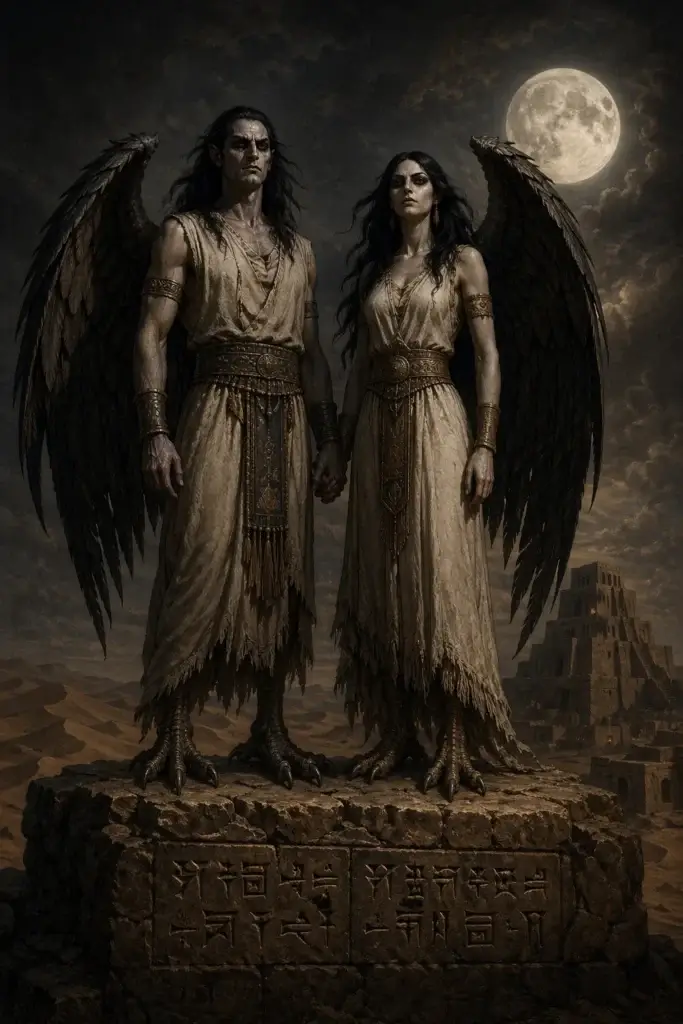
In Arabian tradition, Jann and Hinn are considered wild, barely controllable relatives of the urban jinn, feared above all at night and in uninhabited desert regions. Travelling caravans traditionally protected themselves with formulas and rituals before entering unpopulated territory.
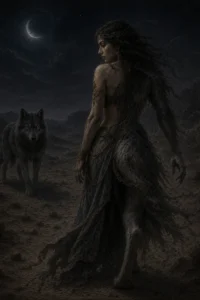
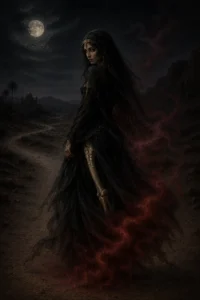
In the Maghreb, stories are told of Aisha Qandisha, a powerful female spirit figure with goat’s hooves who holds lone men in thrall at the wells and watering places of the arid regions. On the Arabian Peninsula, the tale of Umm al-Duwais warns of a beautiful stranger who reveals herself to travellers in the wilderness as a deadly figure, and the Ghaddar lures wanderers off the safe path with familiar voices.
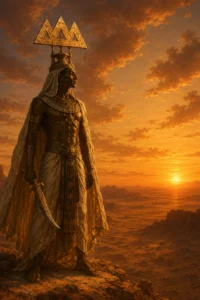
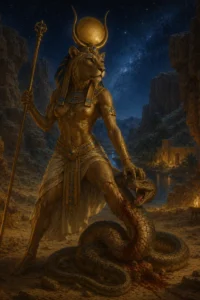
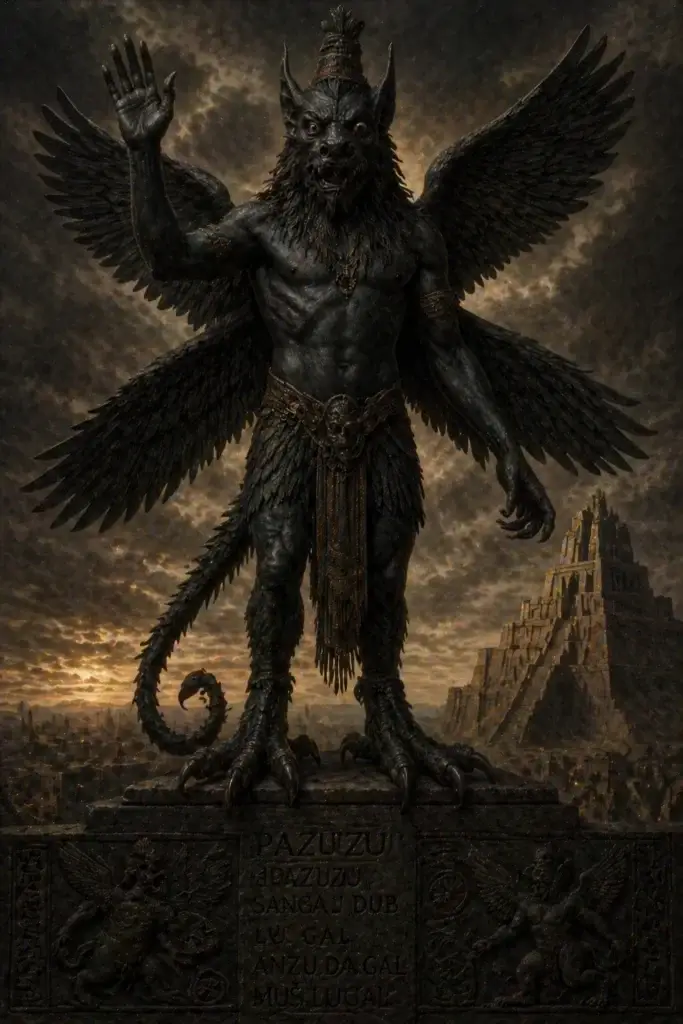
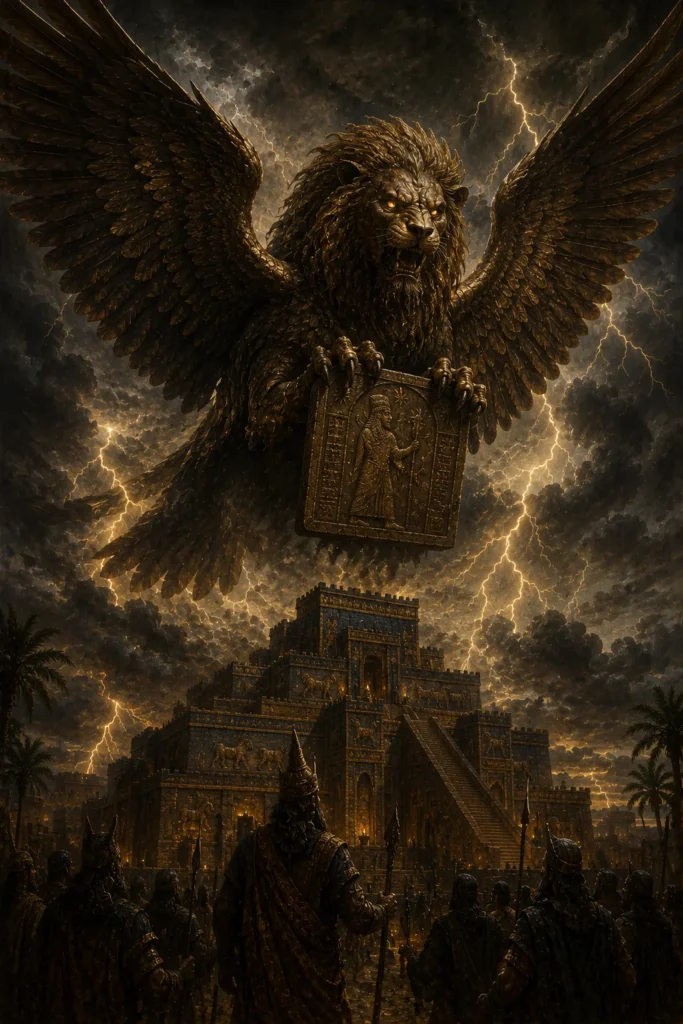
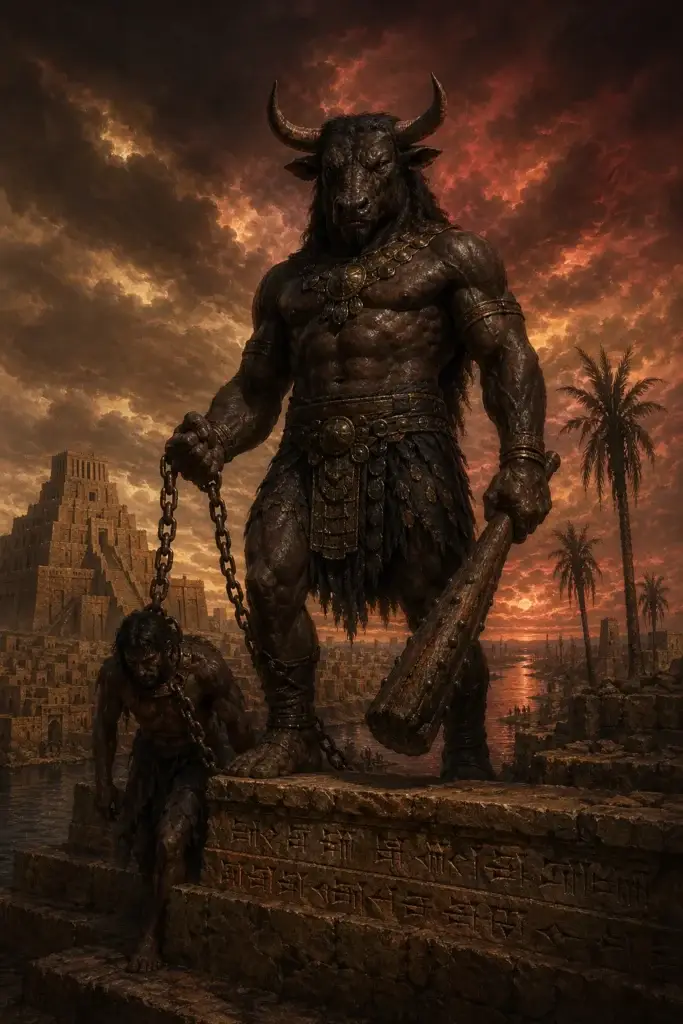
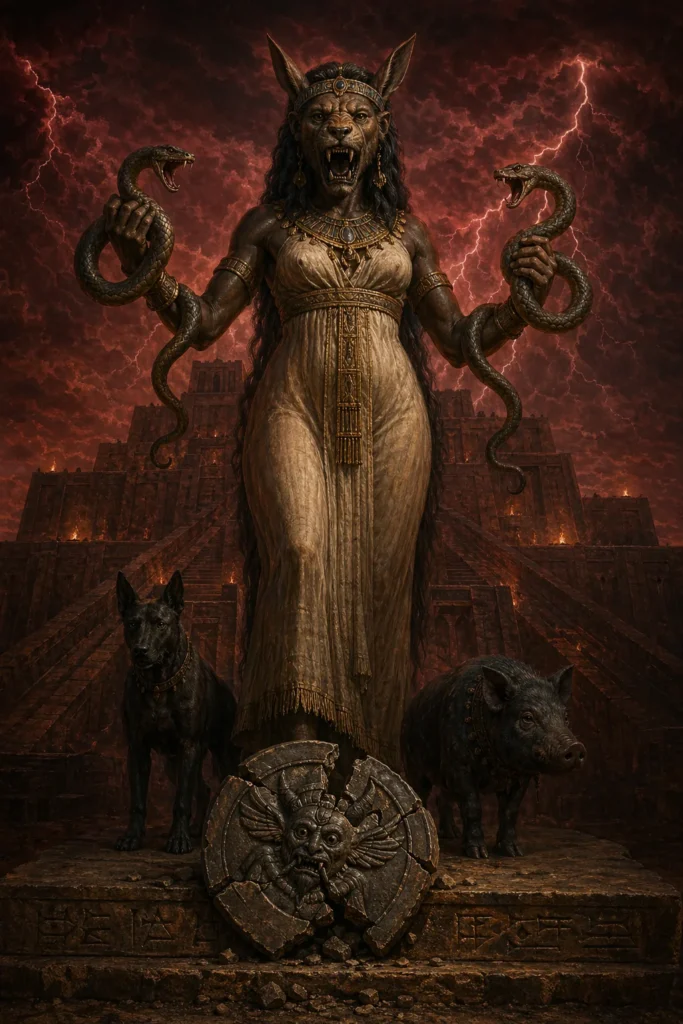
In ancient Egypt, the edge of the desert was considered the realm of hostile powers. The lion-headed Pakhet ruled over the desert ravines along the Nile bank, while Sopdu was invoked as guardian of the eastern desert borderland against Bedouins and foreign influences. In Mesopotamia, the demon Asag embodied the destructive force of drought and devastated land.
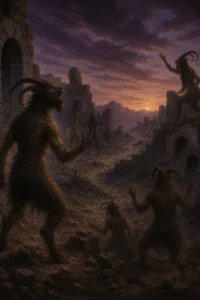
Jewish tradition knows the Se’irim, goat-like desert spirits of the Hebrew Bible, as well as the Ketev Meriri, a terror being associated with the midday heat of the desert. In Arab-Persian demonology, the Qutrub haunts graveyards in the desert at night.
In the southwestern United States, the Diné (Navajo) tell respectfully preserved stories of the Chiindii, the residual aspect of a deceased person in the desert landscape, while the Cahuilla tradition of California links the guardian spirit Tahquitz to a specific desert mountain. In the Gobi Desert of Central Asia, Mongolian tradition warns of the Olgoi-Khorkhoi, a worm-like being to which lethal power at a distance is attributed.
Examples from Different Traditions
In the traditions of several peoples of the Australian desert regions, ethnographers report figures such as the Mamu, a collective term for threatening, often shape-shifting desert beings, and the gigantic Pangkarlangu, linked in oral tradition to remote desert regions. Reports about the Ngayurnangalku belong to the narrative and legal knowledge of individual communities and are deliberately referenced here only in general terms, without any claim to a complete or authentic representation of individual local traditions.
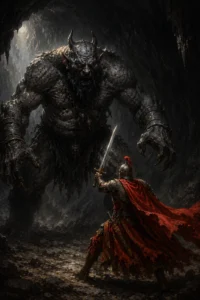
In Persia and Central Asia, Zoroastrian tradition knows Apaosha as a demon of drought who fights the rain-bringing deity Tishtrya, as well as the Pairika, seductive female spirits associated with mirages and drought. The Perso-Indian Div appears in several traditions as a gigantic desert demon.
Sources
The jinn tradition is attested through the Quran, the hadith literature and pre-Islamic Arabic poetry, and was worked into medieval works such as the tales of the Thousand and One Nights. Mesopotamian desert demons such as Asag are documented through cuneiform texts, in particular the epic Lugal-e, and Egyptian desert deities through temple reliefs and tomb inscriptions.
For the North American and Australian traditions, the main sources are ethnographic field studies from the 19th and 20th centuries, along with more recent research conducted in collaboration with the respective communities. This source situation differs fundamentally from the written tradition of the Middle East and requires a correspondingly cautious, source-critical presentation.
Contemporary Significance / Related Beings
Desert Spirits in the iWell Guard Protective Field
Desert spirits fall under protective layers 2 and 3 of the iWell Guard mantra. Attempts by mirage and deceptive beings to lead the wearer off the safe path or to confuse them are rejected by the protective shield. The iWell Guard position follows the historical observation that, in practically every culture concerned, desert regions were understood as a border zone between inhabited order and untamed wilderness. The protection is directed against the traditional danger of deception and disorientation, not against the desert as a landscape or its inhabitants.Further standard works in the bibliography.
iWell Guard and Protective Traditions
The desert spirit concepts documented here are a scholarly classification of cross-cultural ideas.
iWell Guard draws on the millennia-old practice of protective objects accompanying travellers: amulets, protective stones and spoken prayers were regarded in several desert cultures as protection against mirage and disorientation. An overview of traditional protective approaches is offered by the Protection Compass.
A contemporary form of this, crafted in Germany, with a clearly documented material architecture (41 layers, genuine gold, platinum, silver). 30-day right of return.
Not a medical device. No promise of healing. Personal perceptions may vary.
Desert Spirits at a Glance