Salt as Protection: Purification and Boundary-Drawing
By Ralf Ittermann · last reviewed on
Salt is among the oldest and culturally most widespread protective substances known to folklore.
As a mineral that has served to preserve food since prehistoric times, salt acquired a symbolic charge early on: what keeps meat from spoiling, according to folkloric logic, can also protect the living from corruptive forces. The tradition of various cultures attributes purifying, banishing and boundary-protecting properties to salt.
Among the pages on Protective Substances and Protective Plants, salt forms the best-known and most widely distributed example: an everyday material that became a means of protection in nearly every household culture of the Old World.
A line of salt acts as a boundary that, according to tradition, harmful beings cannot cross. Salt serves as protection through purification and boundary-drawing, for example in the line of salt.
Quick Overview
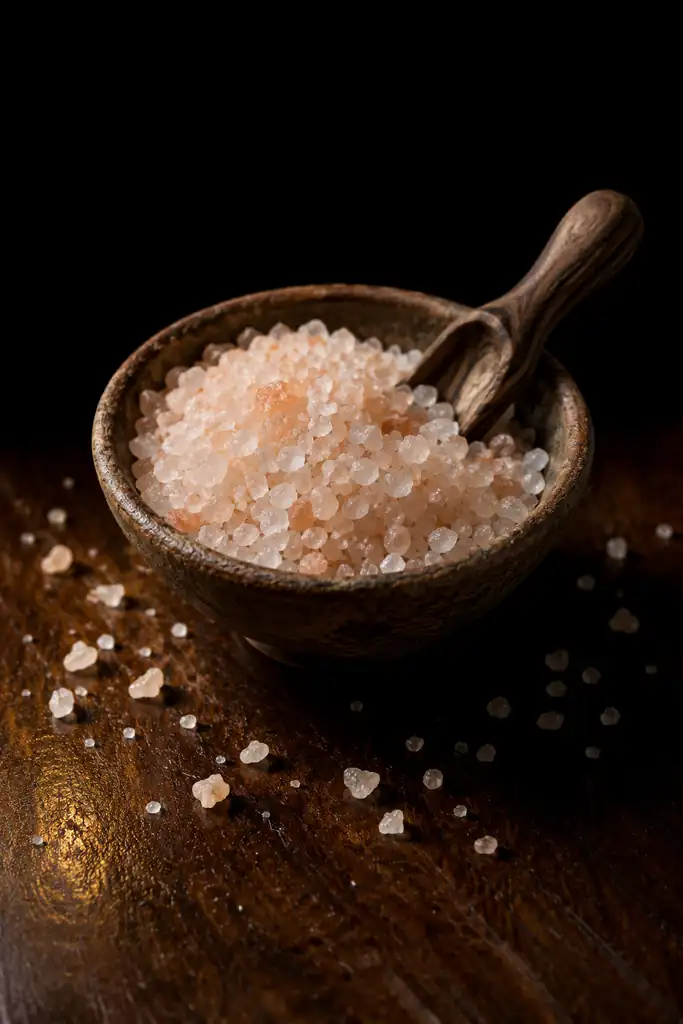
In tradition, salt counts as a means of purification meant both to ward off external threats and to drive out impurity that has already entered. It is strewn at thresholds, in the corners of rooms and over doorways.
Many traditions use salt when entering a new house or during baptismal rituals, in order to purify the space or the person. According to various traditions, sea salt or raw, unprocessed salt is considered especially effective.
Origin and Tradition
The protective use of salt is attested in written sources since antiquity.
In the Old Testament, salt is mentioned as a component of sacrifices and purification rites: according to 2 Kings 2:19-22, the prophet Elisha throws salt into a poisoned spring in order to purify it. In the Roman rite, infants were sprinkled with salt shortly after birth to keep evil influence away, a custom that passed in adapted form into the Christian baptismal liturgy.
In German folklore of the Middle Ages and the early modern period, salt appears as a means of protection in a great many contexts.
The Handwörterbuch des deutschen Aberglaubens records evidence for salt at the threshold, salt in cattle stalls against the bewitching of milk, salt in children’s beds against the risk of the changeling, and salt as a component of apotropaic mixtures together with other protective substances.
In Eastern European folklore, especially in regions with strong vampire traditions, salt belongs together with garlic to the basic equipment of protection.
In Japan, salt is strewn across the threshold after funerals to ward off the return of the dead; the same principle is found in other East Asian cultures. In Islamic folk piety, salt counts in North Africa and the Middle East as protection against jinn.
Working Principle According to Tradition
Why does tradition attribute this power to salt? The folkloric literature names several complementary explanations.
The preserving property of salt transferred symbolically into a general capacity to banish the corruptive. What rots, what dissolves and what seeks darkness and moisture cannot, according to this logic, withstand the drying and purifying effect of salt.
To this is added the boundary quality of salt: as a mineral of the sea, that is, of the great dividing expanse of water, salt counts in many cultures as a natural boundary substance.
A line of salt marks a boundary that harmful beings are said to be unable to cross. This idea is found particularly strongly in European witch defense, where lines of salt at door thresholds belong to the most frequently described protective measures.
Finally, in Christian-shaped cultures salt carries its own sacramental charge: as a component of holy water and the baptismal rite, it is a material sanctified by the church, which in folk-religious practice extended its effect to the domestic sphere.
Cross-Cultural Distribution
The protective function of salt is attested in a remarkably large number of cultural spheres:
In Europe, the line of salt at the door threshold runs through the tradition from Ireland across Germany and Poland to Bulgaria. In England it was a custom to place a pinch of salt on a newborn’s tongue before it left the house for the first time.
In the Middle East and North Africa, salt belongs to the oldest ritually used purifying substances. In some regions, rooms in which someone has died or where a serious illness prevailed are strewn with salt before the family returns.
In East Asia, the practice of strewing salt after funerals is widespread. In Japan (Shinto tradition) and in China (in Taoist folk belief), salt counts as one of the few means said to work even against especially strong bringers of misfortune or restless spirits of the dead.
In India, salt appears in defensive rituals against the evil eye and demonic influence, often in combination with other protective substances such as turmeric and red chili powder.
What It Is Used Against
According to folkloric tradition, salt was used primarily against the following categories of beings and influences:
Against witches and harmful magic: European witchcraft tradition attributes to witches an inability to touch salt or to cross a line of salt. Anyone wishing to protect butter or milk from bewitchment strewed salt into the stall or into the milk before the churning process.
Against threshold spirits and returning dead: in cultures where the boundary between the living and the dead was regarded as dangerous, salt marked the threshold as a barrier zone against unwanted return.
Against demons and general impurity: in the purification rituals of various religions, salt serves to free a space or a person from demonic attachment, even before a more specialized means of protection is used.
Against the evil eye: in Mediterranean and Near Eastern cultures, salt is, alongside garlic, a widespread means of warding off or dissolving the effect of the evil eye.
Use and Limits
The most common traditional forms of application are the line of salt at door thresholds and windowsills, the strewing of corners and the bases of walls in rooms, the admixture to purifying water, and use as a component of protective pouches or apotropaic mixtures.
Tradition frequently names raw or unprocessed salt as a condition of quality: sea salt or coarse rock salt are considered more effective than finely ground table salt. Some instructions for use require that the salt be blessed or spoken over before use, thus linking the means of protection with a ritual act.
Folklore describes a limit to the protective effect where the line or strewing is not complete: gaps in the line of salt are said to let the being pass through. Rain or ground moisture that dissolves the salt counts in some traditions as a weakening of the protective effect.
None of the traditional applications represents a proven guarantee of protection. The content presented here renders the folkloric tradition, not recommendations of our own.
Literature (Selection)
Related key terms: salt protection salt line threshold purification.
iWell Guard and Protective Traditions
Salt stands for one of the oldest and culturally broadest protective convictions of humankind: that certain natural substances carry within themselves a boundary-drawing and purifying force.
This basic idea, that materials from nature act as carriers of protection, finds a condensed form in the concept of the iWell Guard, which as a portable protective object brings together the threads of tradition from various cultures.
Personal experiences may vary. Not a medical device. No promise of healing.