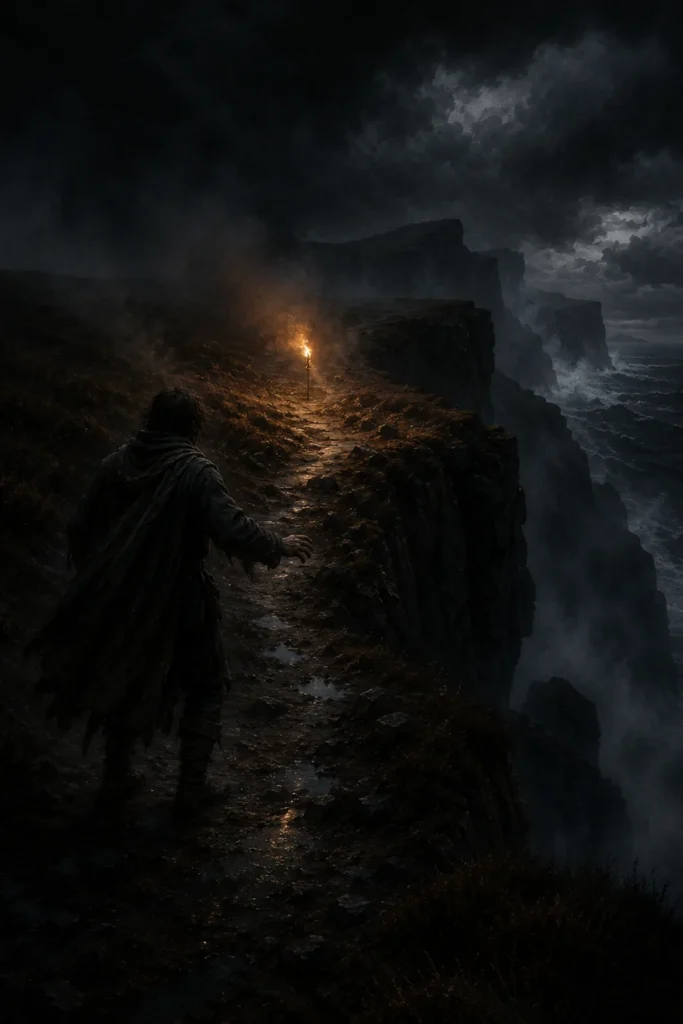
Each-uisge, the deadliest water horse of the lochs
By Ralf Ittermann · last reviewed on
Each-uisge is a demon of Scottish Gaelic tradition.
Sticky skin pulls riders into the depths, leaving only the liver behind. Each-uisge is considered the deadliest of the water horses in Scottish Gaelic tradition. The title of this article introduces Each-uisge as the water horse of the Scottish lochs.
The Each-uisge is the water horse of the Scottish lochs and is regarded as the most dangerous of all water horses. Recorded by Campbell 1900 and MacPhail 1896. The victim is devoured down to the liver.
Type: most dangerous water horse
Origin: Scottish Gaelic legendary tradition
Texts: Campbell 1900, MacPhail 1896
Period: from the late 19th century
Appearance: horse, also man or giant bird
Source Context
Period of the Texts
Fixed in writing from the late 19th century: MacPhail 1896 in the Hebrides, Campbell 1900 in the Highlands.
Area of Diffusion
Scottish Highlands and Hebrides, at lochs and sea inlets; the Irish counterpart aughisky lives on independently.
Sources
Good: extensive Highland collections, along with Katharine Briggs’ standard work on fairy beings.
Name and variants
Scottish Gaelic: each means horse, uisge means water: Each-uisge literally means water horse, the Irish form is aughisky.
Form and treachery
Appearance
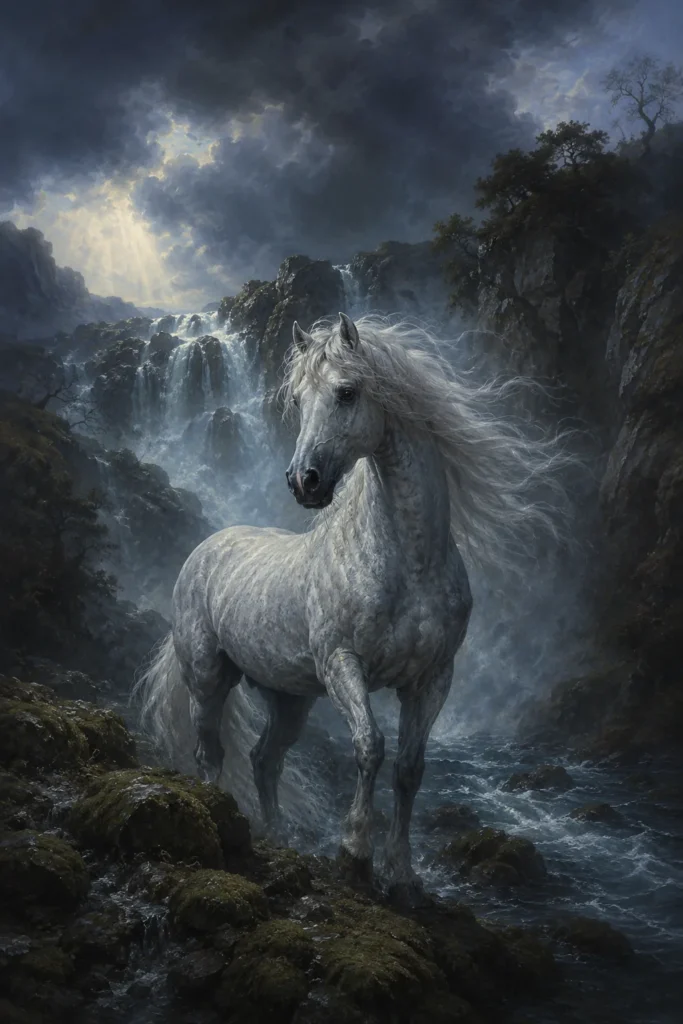
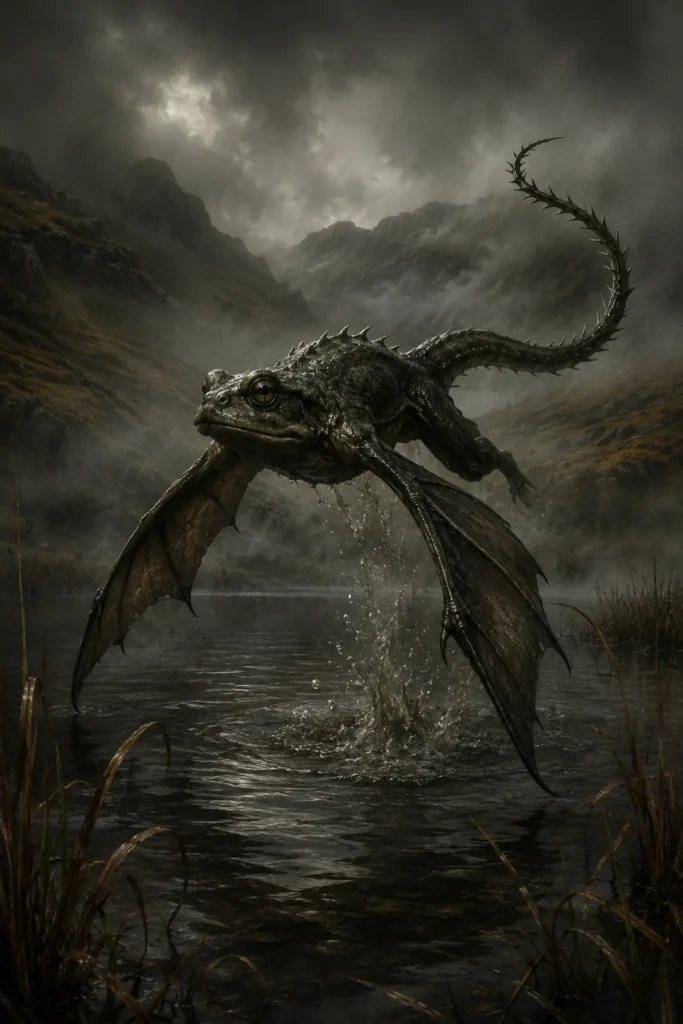
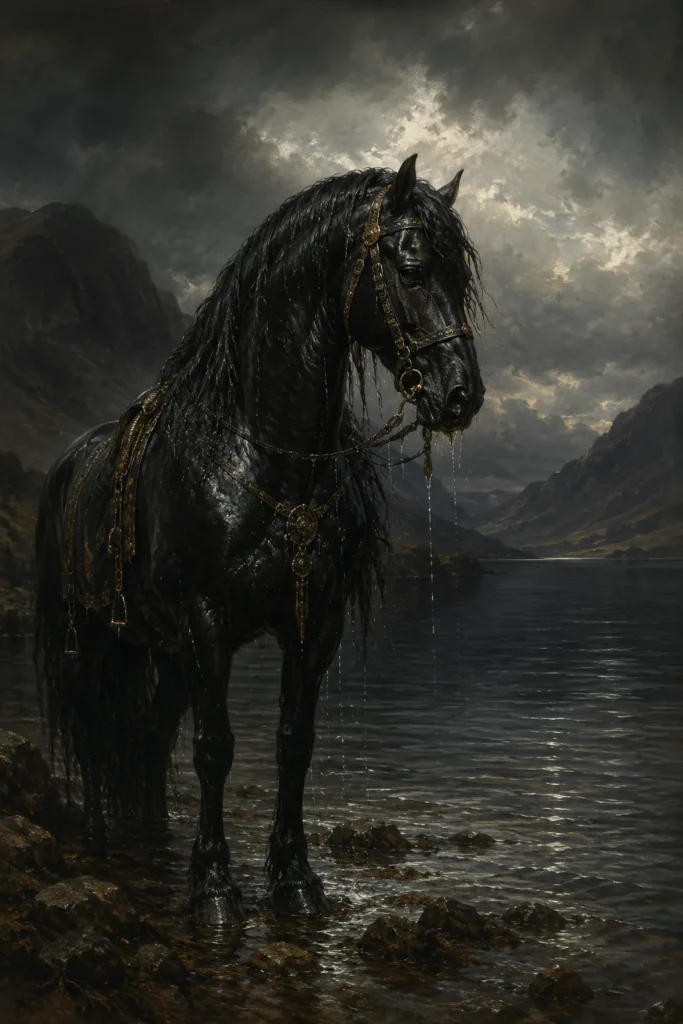
Usually a magnificent horse, it can change into a man, given away by water plants in his hair, or into a giant bird. Sticky skin: riders stick fast.
Effect
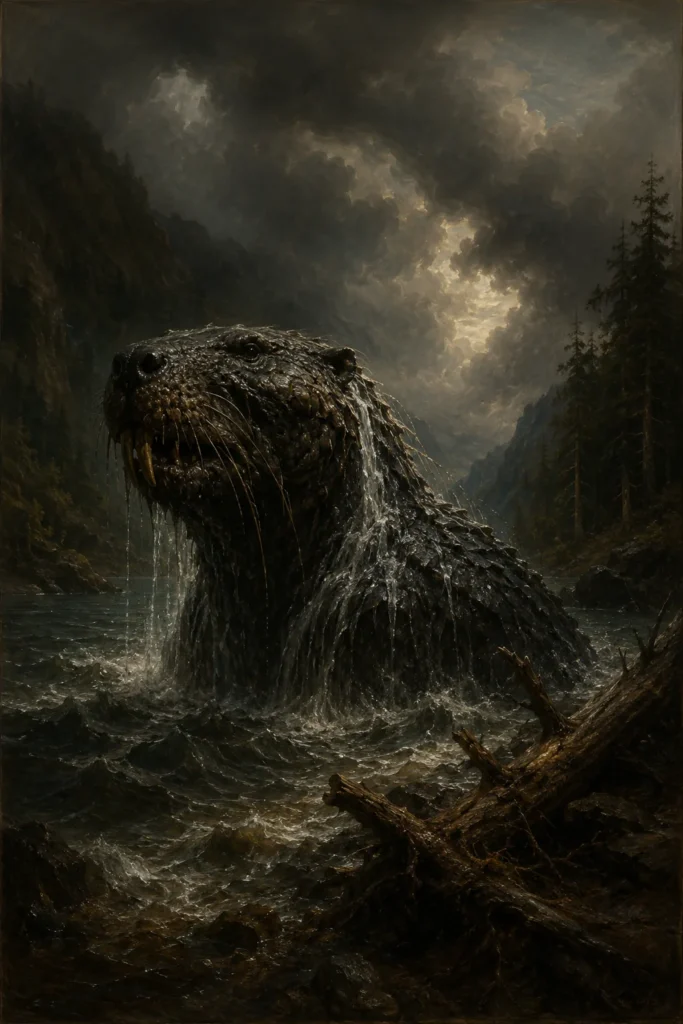
It drowns riders, devours cattle, pursues women; only the liver floats to the surface.
Profile: Each-uisge
The key characteristics of the water horse at a glance.
Scottish Gaelic legendary tradition, Irish counterpart aughisky.
Riders, women and cattle at lonely shores.
Magnificent horse, able to change into a man or giant bird.
Drowns victims down to the liver, a pure warning figure without a cult.
Do not mount a strange horse, iron, silver against the human form.
The Kelpie remains bound to rivers, the Ceffyl Dŵr shares the type, the Nuckelavee separates the rider form.
The trap of the Raasay blacksmith
Folklore distinguishes it from the Kelpie by the body of water: rivers for the Kelpie, lochs and sea for the Each-uisge, which is considered more deadly. Tale of the blacksmith of Raasay: father and son lured the creature with a sheep and killed it with iron hooks.
Between loch tourism and fantasy
The Each-uisge belongs to the core of Highland folklore, often blended with the Kelpie, and in religious studies explains drowning in lochs.
Do not mount a strange horse
The most important knowledge: do not mount a lone horse. Silver helped against the human form, cold iron against the animal. Horseshoes take up this motif, an amulet recalls the bridles.
Water horses of the British Isles
Closest relative: the Scottish Kelpie, distinguished by lake rather than river. The Welsh Ceffyl Dŵr shares the type, the Nuckelavee separates the rider form.
Frequently asked questions about the Each-uisge
What distinguishes the Each-uisge from the Kelpie?
Kelpie: rivers. Each-uisge: lochs and sea, more deadly.
Why does a liver float to the surface?
It devours the victim down to the liver.
Further links
Internal links:
Literature (selection)
Further standard works in the bibliography.
Searched for as the each uisge water horse, it remains a Scottish water horse regarded as the deadliest of its kind, devouring riders with sticky skin down to the liver.