Afanc, the beast of the Welsh mountain lakes
By Ralf Ittermann · last reviewed on
Afanc is a demon of Welsh tradition.
A sea monster of the mountain lakes, bringing floods and death. The entry names this beast of the Welsh mountain lakes as the bringer of floods and death.
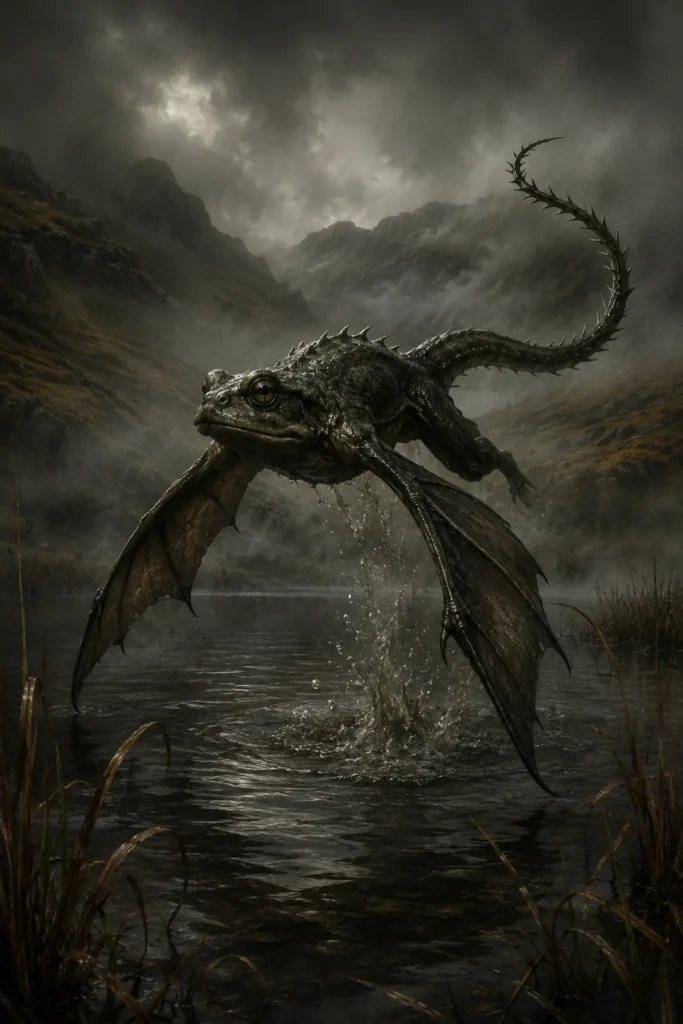
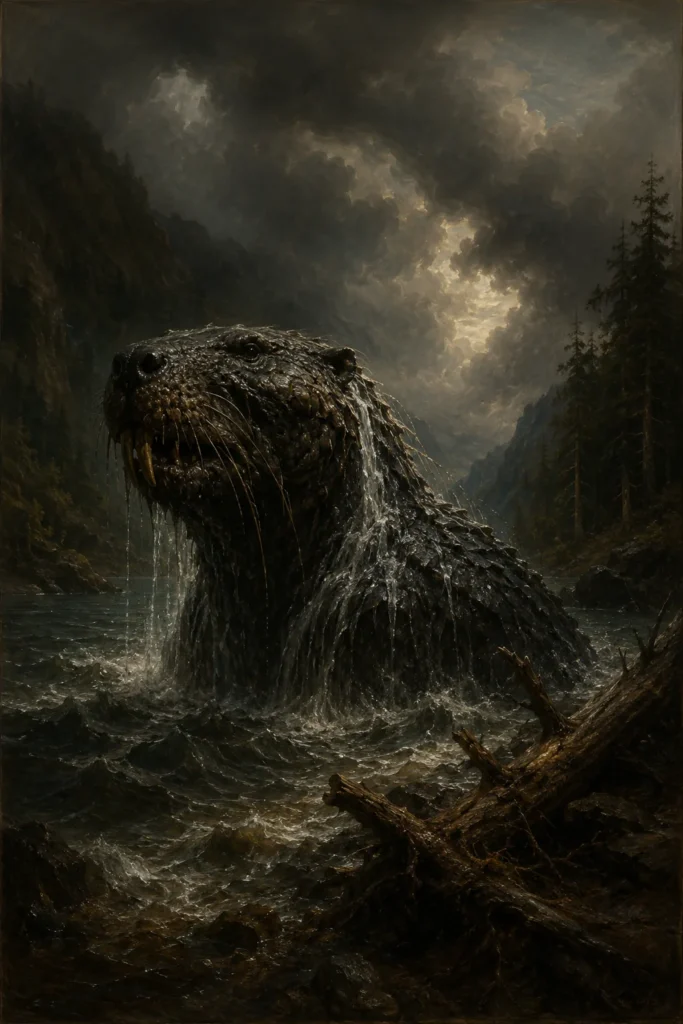
The Afanc is the sea monster of the Welsh mountain lakes: described inconsistently as a giant beaver, crocodile or demon, it devours whoever enters its waters and causes flooding through its thrashing. Its name lives on today in Llyn yr Afanc.
Type: Sea monster, described inconsistently as beaver, crocodile or demon
Origin: Welsh legendary tradition
Texts: Peredur in the Mabinogion
Period: Peredur (12th to 13th century) to the present
Appearance: inconsistent, sometimes invisible
Context of Tradition
Period of the Texts
Attested early in Arthurian tradition in Peredur (12th to 13th century), later by Lewys Glyn Cothi in the 15th century.
Area of Diffusion
Wales: mountain lakes and rivers, especially Llyn yr Afanc and the river Conwy.
Sources
Good: Mabinogion texts and 19th-century collections, plus the uncertain Iolo tradition.
Name and variants
Welsh: afanc means beaver today, while the Middle Welsh form addanc denoted the sea monster.
Form without a fixed appearance
Appearance
No fixed appearance: a giant beaver with claws and teeth, a crocodile-like monster, in the Peredur even invisible.
Effect
It devours anyone who falls into its lake and makes the water deadly; its thrashing causes the water to spill over the banks.
Profile: Afanc
The key features of the Welsh lake monster at a glance.
Welsh legendary tradition, first attested in Arthurian tradition in Peredur (12th to 13th century).
Swimmer and inhabitant of Welsh mountain lakes and rivers.
Inconsistent: giant beaver, crocodile or invisible demon.
Devours those who fall in, causes flooding.
Pull it from the water, bind it in its sleep, make it visible with a magic stone.
Ceffyl Dŵr and Llamhigyn y Dŵr, other Welsh water beings.
From rodent to flood legend
The Middle Welsh form avanc or addanc denoted the monster, likely a memory of large, lake-dwelling rodents. In the Peredur, a magic stone renders the invisible Addanc visible, before Peredur beheads it. A maiden binds it in its sleep, and oxen drag it ashore. The flood version derives from the Iolo tradition, which is considered partly invented.
From mountain lake to fantasy monster
The Afanc gave its name to the lake Llyn yr Afanc. In China Miéville’s The Scar, an avanc pulls a city, and the series Merlin also featured it.
From a religious-studies perspective, it is the personified natural danger of deep water; its flood version resembles widespread flood legends.
Pulling from the water instead of banishing
The legends know no invocation, only cunning and feats of strength: pulling the Afanc from the water, for on land it is powerless. Forged iron, a protective circle on the shore and salt against water demons were considered protective means.
A Welsh Loch Ness motif
As a Welsh lake monster, the Afanc is often compared to the monster of Loch Ness. Close to it, from the native water-horse tradition, is the Each-uisge. Unlike this being, the Afanc remains bound to changing lakes and receives no veneration whatsoever.
Frequently asked questions about the Afanc
Where does the Afanc live?
Located in various places, including Llyn yr Afanc, Llyn Llion and the river Conwy. The shifting dwelling place is part of the tradition.
How was it defeated?
Oxen dragged it ashore; in the Mabinogion, Peredur kills it after a magic stone has made it visible.
Further links
Further reading:
Literature (selection)
Further standard works in the bibliography.
Known as the Afanc of Welsh legend, the being remains a Welsh lake monster of the mountain lakes, one that loses all power on land.