Enji, the fire god inferred from Thursday
By Ralf Ittermann · last reviewed on
Enji is a god of the Albanian tradition.
The fire god whose name lives on in Thursday.
Enji is a fire god inferred from Albanian tradition. His name is reconstructed from the weekday e enjte, Thursday; he is linked to fire, Zjarri, and to the North Albanian figure I Verbti, the Blind One.
It is important to note from the outset: the divine name Enji is not attested in inscriptions but is a linguistic reconstruction. The weekday is attested since 1621, and the fire and hearth cult itself is widely documented; a god historically named as such remains a hypothesis.
Type: Inferred fire and hearth god, partly lightning and storm
Origin: Albanian tradition, name linguistically reconstructed
Texts: Budi 1621, Bardhi 1635, folklore records by Lambertz and Nopcsa
Period: weekday attested since 1621, folk belief 19th and 20th century
Appearance: personified fire, no surviving cult image
Source Context
Period of the Texts
Linguistic reconstruction: the weekday is attested since the early Albanian authors of the 17th century, and the associated folk belief was recorded in the 19th and early 20th century.
Area of Diffusion
North Albania, especially the regions of Zadrima, Dukagjin and Shala; there the fire figure I Verbti was documented in folklore.
Sources
Sparse: the name is inferred, and a cult image is lacking. The basis is the early weekday records, the fieldwork of Lambertz and Nopcsa, and the standard reference works of Albanology.
Name and variants
Albanian: zjarri means fire, e enjte Thursday. The weekday is linked, via a shared root meaning to shine, to the Vedic fire god Agni and the same Indo-European etymon; from this, linguists infer an old fire god Enji.
Being and effect
Appearance
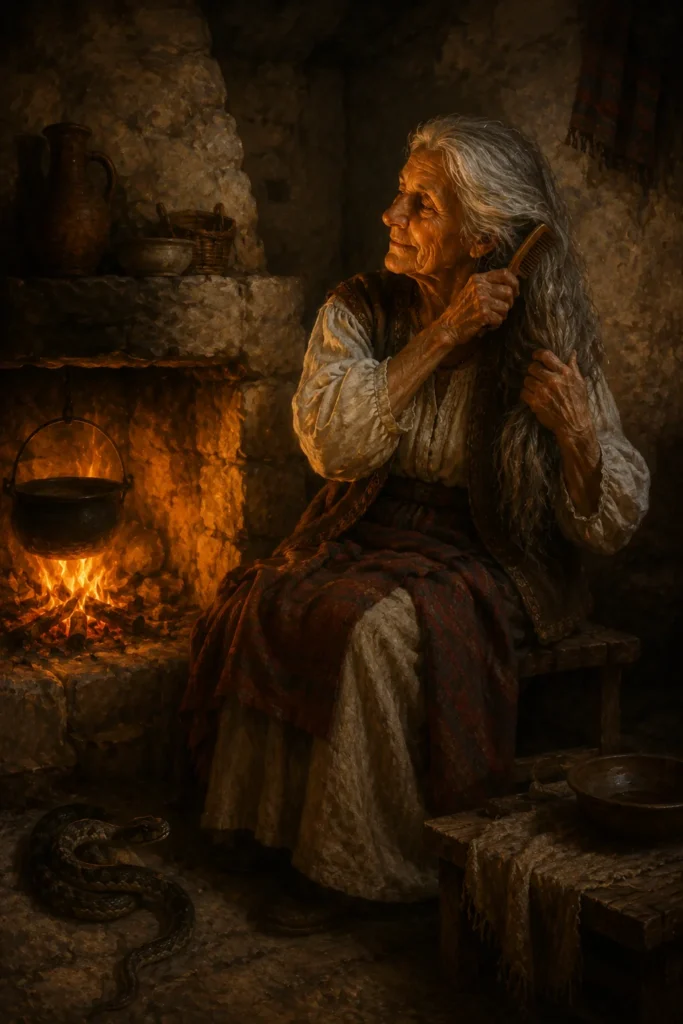
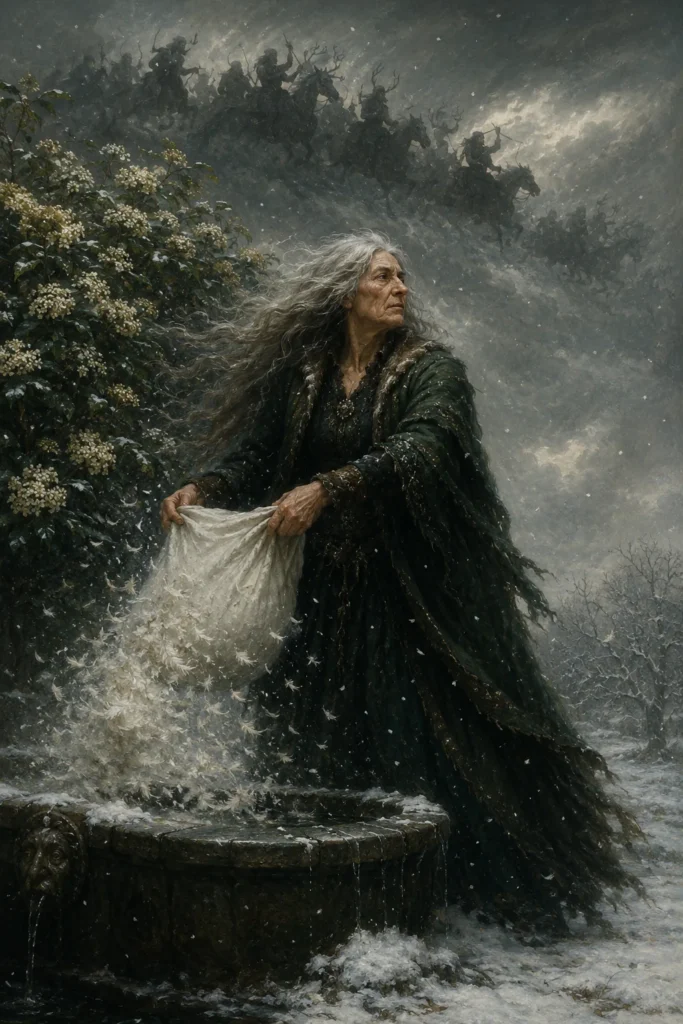
No cult image has survived. Enji stands for fire as light, warmth and purity; lightning is regarded as Zjarri i Qiellit, the fire of heaven. The interpretation of North Albanian tattoo and wheel patterns as signs of Enji is a later, unconfirmed reading.
Effect
As a fire god, Enji embodies warmth and purity; regionally he also appears as a god of wind or thunderstorms. As an enemy of filth, he punishes impurity.
Profile: Enji
The key aspects of the inferred fire god at a glance.
An inferred god of Albanian folk tradition; the associated fire figure I Verbti is documented in North Albanian folklore.
Fire, light, warmth and purity; regionally also wind and thunderstorm, with lightning as the fire of heaven.
No surviving cult image: Enji is personified fire itself. The interpretation of tattoo and wheel patterns as his signs is not confirmed.
Hearth and purity god: he warms and purifies, and as an enemy of filth punishes impurity.
The hearth cult is attested in general, though not by name for Enji: veneration of the hearth fire, oaths sworn by the fire, bonfires at the equinox and solstices.
Etymologically most closely related to Agni; functionally close to the Thursday god Jupiter. Expressly not to be equated with the sky god Perëndi.
From weekday to god: a reconstruction
Albanian zjarri means fire, e enjte Thursday. Because the weekday name and the term for fire go back to the same Indo-European etymon as the Vedic fire god Agni, linguists infer an old Albanian fire god Enji, after whom Thursday would have been named. The weekday is attested since the early Albanian authors Budi 1621 and Bardhi 1635.
The second pillar of the reconstruction is folkloric: the North Albanian fire figure I Verbti, the Blind One, was documented in the early 20th century by Lambertz and Nopcsa and linked by researchers to Enji. A god historically named as such nonetheless remains a hypothesis; what is attested is the linguistic trace, not the cult name.
Reception and classification
Enji is a standard entry in Albanological literature. In Albanian neopaganism, however, he is elevated as an Illyrian fire god, which goes beyond the sources.
From a religious-studies perspective, Enji shows how a god can be inferred from a weekday name and an old fire etymon. Three clarifications: the name is not attested in inscriptions but is a linguistic reconstruction. The Thursday and Agni etymology is well founded, but the leap to the existence of a god specifically named thus remains hypothetical. The fire and hearth cult itself, by contrast, is widely attested.
Hearth cult, oaths and bonfires
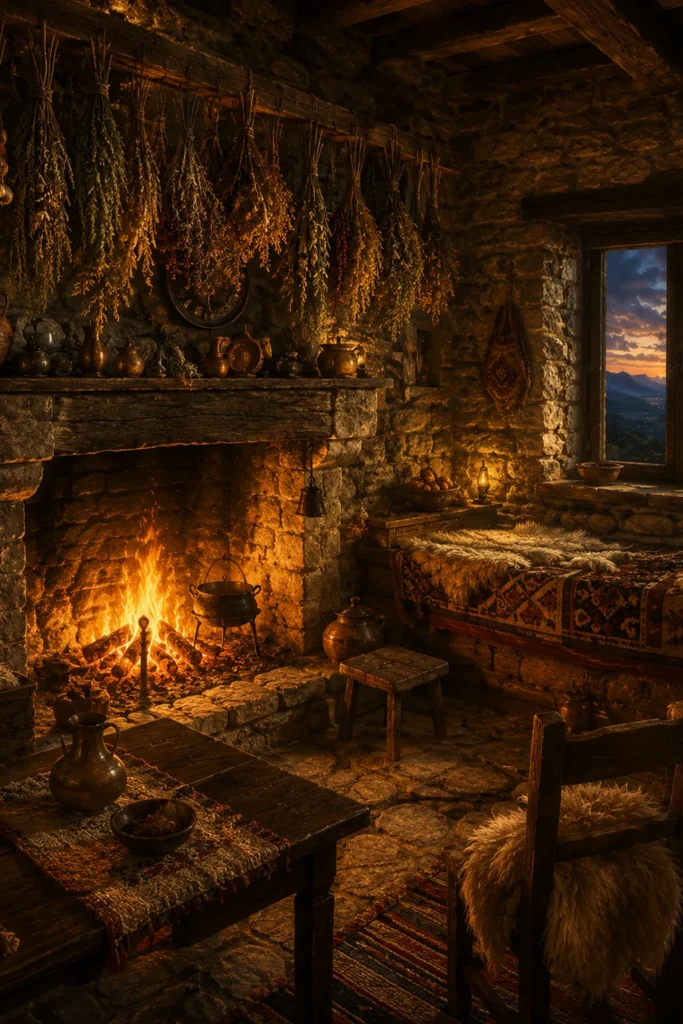
The hearth cult is attested in general, though not by name for Enji: veneration of the hearth fire, zjarri i vatrës, oaths sworn by the fire, and the grave curse that the hearth might go out. Spitting into the fire is taboo; food is offered into the hearth fire. Bonfires were lit at the spring equinox and the solstices, and against storms people carried fire or metal outdoors and made noise.
Agni, Jupiter and the hearth mother: parallels
Through the shared etymon, Enji corresponds most closely to the Vedic Agni; via Thursday as the day of the sky god, there is a functional closeness to Jupiter and Zeus. He is expressly not to be equated with the Albanian sky god Perëndi. Within the Albanian hearth world, he is accompanied by Nëna e Vatrës, the Mother of the Hearth: she is the watchful protective figure at the hearth, while Enji is the inferred divine fire itself. Typologically related is also the Baltic hearth fire figure Gabija.
Frequently asked questions about Enji
Is Enji a securely attested god?
No. The name is a linguistic reconstruction from the weekday e enjte; the fire and hearth cult itself, however, is well attested.
What does I Verbti mean?
The Blind One, a North Albanian fire figure that researchers link to Enji.
How is Enji connected to Agni?
The weekday name and the term for fire go back to the same Indo-European etymon as the Vedic fire god Agni.
Further links
Further reading:
- Nëna e Vatrës – the Albanian hearth mother of the same fire
- Agni – the Vedic fire god with the same etymon
- Gabija – the Baltic hearth-fire figure
- Protective Candle, Salt, Amulet – traditional protective means
- Protection Compass – an overview of protective means
Literature (selection)
Further standard works in the bibliography.
As an Albanian fire god, Enji links a reconstructed name with an attested world of belief: the hearth fire, oaths sworn by the flame and the tale of the Zjarri i Verbti, the fire of northern Albania thought of as blind.