Nuckelavee, the Skinless Terror of the Orkney Coast
By Ralf Ittermann · last reviewed on
Nuckelavee is a demon of the Germanic/Nordic tradition.
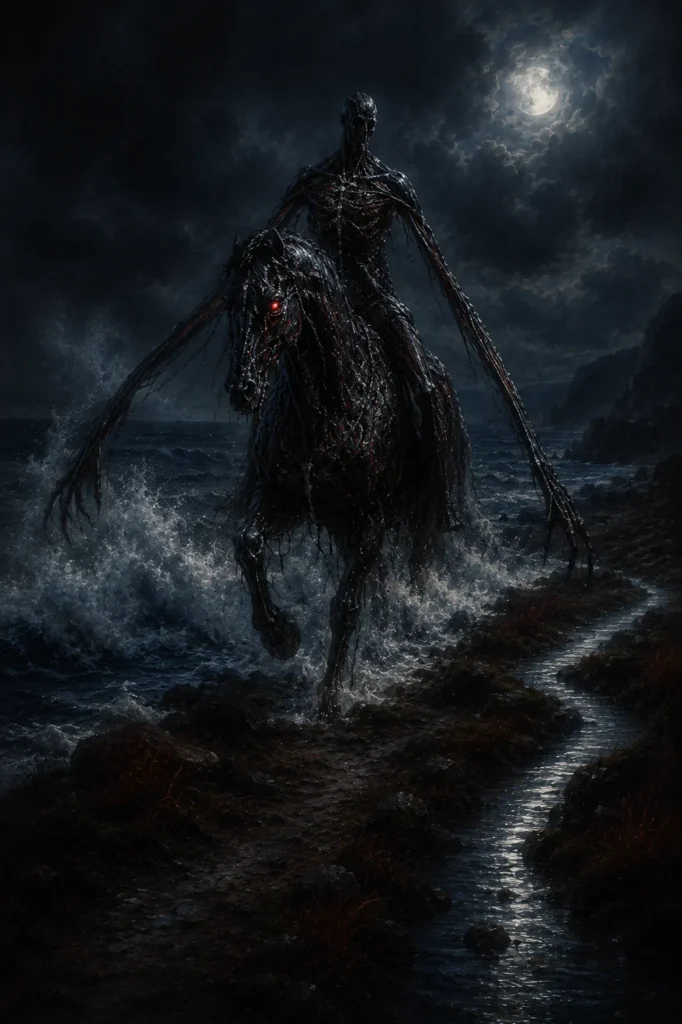
Skinless, fused with a horse, he brings plague and drought. The profile ties him to the Orkney Coast, where his fused horse-and-man form brings plague and drought.
The Nuckelavee is the terror of Orcadian tradition: skinless, horse and rider joined in a single body, held responsible for plagues and drought.
Its counter-remedy: flowing fresh water, which it cannot cross.
Type: skinless sea demon, horse and rider in one body
Origin: Orcadian tradition
Texts: Dennison 1891
Period: recorded in the late 19th century
Appearance: skinless, glowing red eye
Source context
Period of the Texts
Recorded in the late 19th century by Dennison; a possible early reference is a 16th-century description of the islands.
Area of Diffusion
The Orkney Islands, particularly coastal paths and the island of Stronsay.
Sources
Narrow: at its core a single first-hand account recorded by Dennison.
Name and variants
Norse: belongs to the word family around Old Norse nykr; broadly interpreted as a devil of the sea.
Form and effect
Appearance
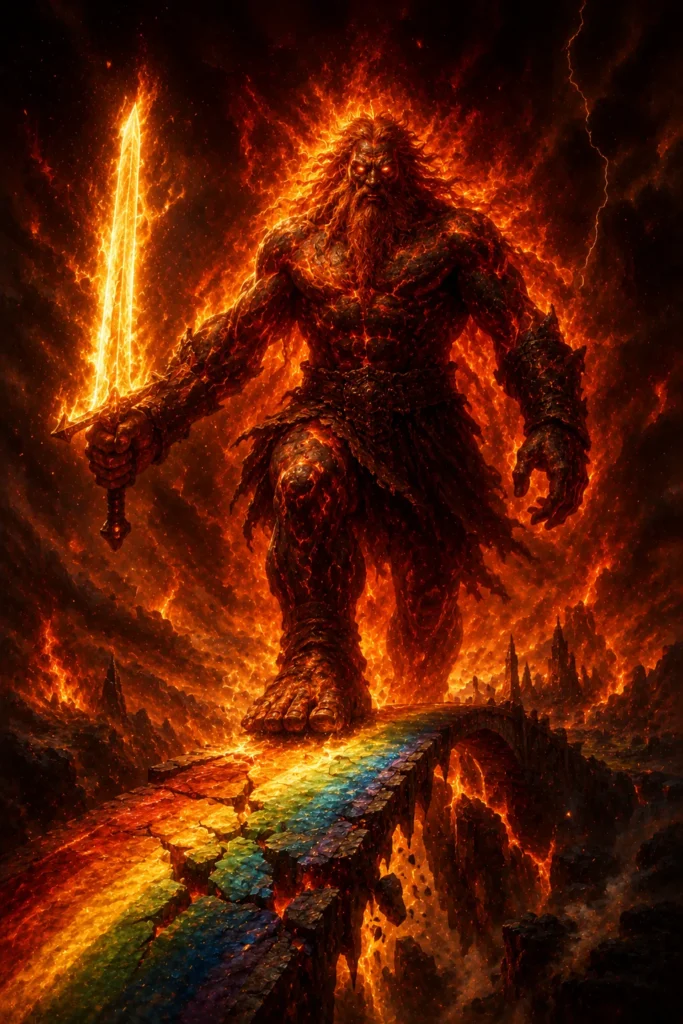
The lower body resembles a horse with a mouth as wide as a whale’s and a glowing red eye; the back carries a human torso without skin.
Effect
Poisonous breath; it was blamed for cattle plague and drought.
Profile: Nuckelavee
The key aspects of the sea demon at a glance.
Orcadian tradition belonging to the Norse nykr word family, attested only by Dennison.
Whole island communities: livestock, harvests and night-time travellers.
Skinless horse-and-rider being with a glowing red eye and overlong arms.
Bringer of plague and drought, a pure demon of harm without any cult.
Cross running fresh water, avoid coastal paths at night, speak its name only with a blessing.
Related through its equine nature to the Celtic Kelpie and Each-uisge, yet clearly set apart from both by its rider form.
Dennison's record of 1891
The folklorist Dennison recorded it in 1891 following the account of the informant Tammas, the only eyewitness report.
It is subdued only by the Mither o’ the Sea, who keeps it captive in summer.
From island terror to legend
Katharine Briggs and Ernest Marwick brought it to wider attention beyond Orkney as the epitome of the repulsive demon, and in 2016 it also appeared in the series RWBY.
It embodies collective catastrophe; caution is warranted, since everything rests on a single informant.
Fresh water as a boundary
It cannot cross running fresh water, or, figuratively, holy water. A protective circle carries the same principle, and the sound of bells marks warded space. In summer it is kept bound by the Mither o’ the Sea.
Related water horses
The horse motif links the Nuckelavee to the Celtic Kelpie and the closer Each-uisge; as a bringer of plague it resembles the Babylonian Pazuzu more closely.
Frequently asked questions about the Nuckelavee
Why can it not cross fresh water?
The legend simply assumes this: it belongs to the salt sea, and fresh water is alien to its nature.
Does it exist elsewhere too?
Not as a figure; the Shetland Nuggle belongs to the same word family, but is milder.
Further links
Further reading:
Literature (selection)
Further standard works in the bibliography.
In the Nuckelavee Orkney legend, it remains the worst Nuckelavee demon of the islands, skinless and powerless only before running fresh water.