Mojo Bag: the Protective Pouch of the Hoodoo Tradition
By Ralf Ittermann · last reviewed on
The mojo bag is a small protective pouch from the North American Hoodoo tradition. It holds a carefully chosen assembly of ingredients and is worn on the body.
Classification
The mojo bag is a small pouch worn as a means of protection. It belongs to the Hoodoo tradition of North America, which has its place within the African-Caribbean traditions.
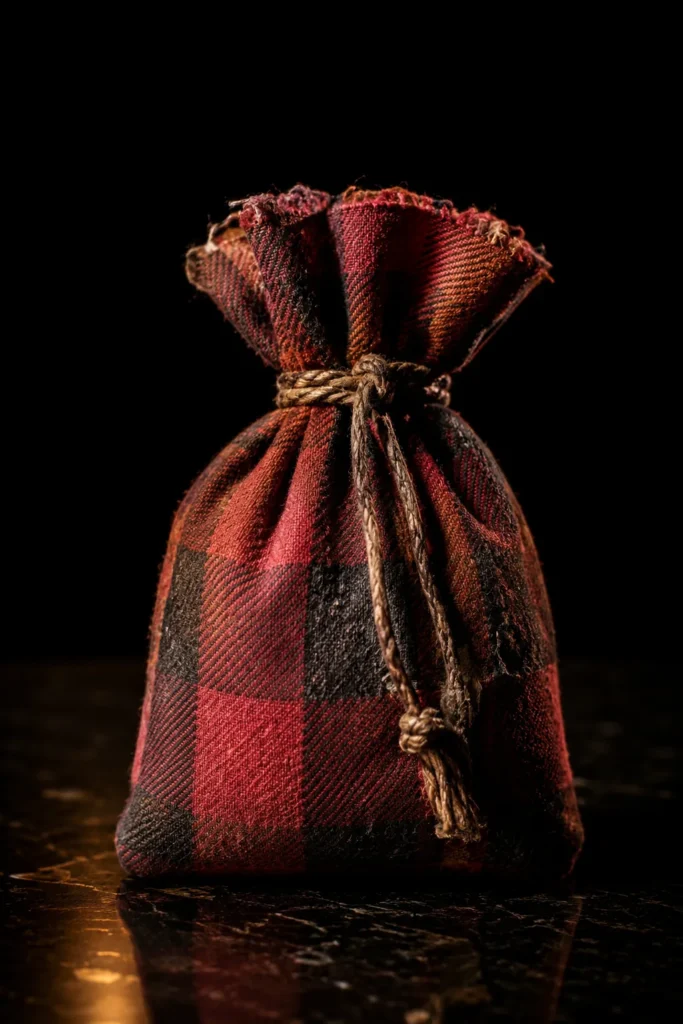
A mojo bag consists of a small fabric casing, usually of flannel, in which several ingredients are brought together. The casing is tied shut and worn on the body.
The pouch goes by various names. Alongside mojo bag, designations such as mojo hand, conjure bag or toby are common. They refer to the same object.
The mojo bag serves protection and other purposes. It is meant to ward off misfortune, to preserve its bearer and to bring them good fortune in certain areas of life.
In religious studies the mojo bag is a good example of a protective pouch whose power lies in the selection and combination of its contents. The casing holds, the contents act.
This page treats the mojo bag as a protective object with African roots. It places it within the Hoodoo tradition and presents its structure and its use.
The Hoodoo Tradition
The mojo bag belongs to the Hoodoo tradition. Hoodoo is a practice that developed among the African American populations in the South of what is today the United States.
Hoodoo is not a religion with a conception of its own deity. It is a practice concerned with protection, with healing and with coping with the questions of life.
The roots of Hoodoo lie in the conceptions that enslaved people brought with them from various parts of Africa. These conceptions combined in North America into a new practice.
Beyond its African roots, further influences flowed into Hoodoo. The Bible and Christianity in particular play an important role in the practice.
Hoodoo is thus a practice of mixed origin. It combines African heritage with the Christian piety of the American South and with local knowledge of plants.
Within this practice, the mojo bag is the best-known protective object. It is, as it were, the worn core of the Hoodoo tradition, the object with which Hoodoo is most often associated.
African Roots
The mojo bag has African roots. The worn protective pouch is a familiar means of protection in numerous African societies.
Over the course of the transatlantic slave trade, millions of people were deported from Africa to North America across the centuries. The knowledge of how to make protective pouches traveled with them.
The deported could scarcely carry objects with them. Yet the knowledge of the ingredients, of their selection and of their combination remained preserved in memory.
In North America this knowledge was passed on and adapted to the new conditions. Out of the various African origins a shared practice took shape.
The mojo bag is thus closely related to the gris-gris, the protective pouch known above all in Louisiana. The page on the gris-gris presents this related form.
Gris-gris and mojo bag share their West African origin. They differ in details of their making and in their regional character, the one rooted more strongly in Louisiana, the other in the broader Hoodoo tradition of the South.
Structure and Ingredients
A mojo bag is a small pouch with contents. The outer casing is usually of flannel, a soft fabric that can be chosen in a particular color.
The color of the pouch carries a meaning. Depending on the purpose, a particular color is preferred. Red, white and other colors are associated with different aims.
The contents are the actual core. They are assembled from several ingredients, each of which carries its own meaning and is oriented toward the purpose of the pouch.
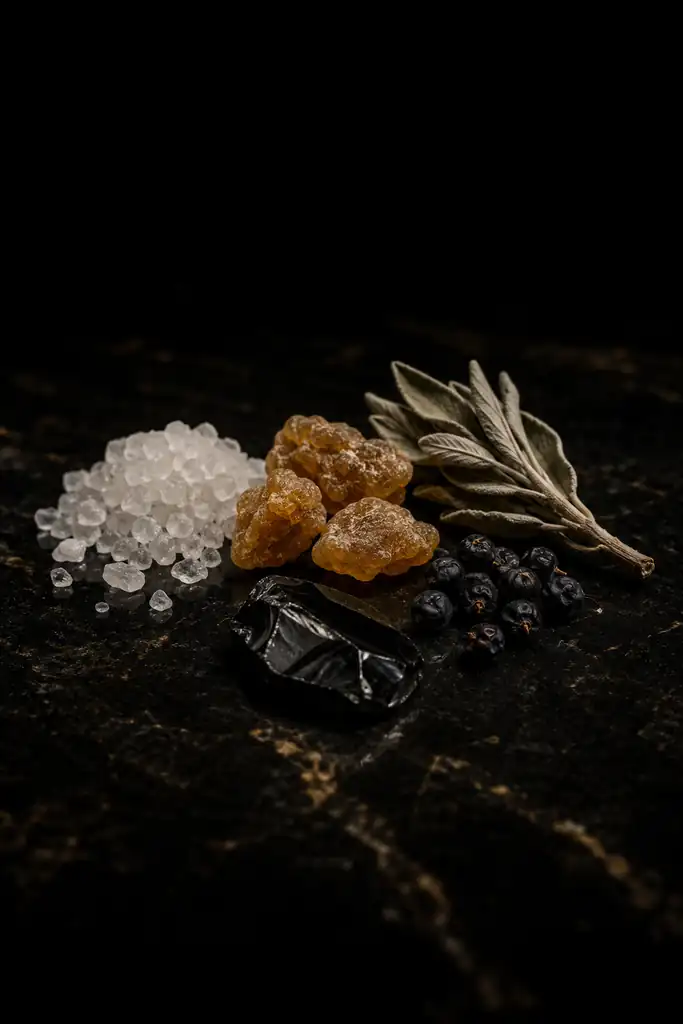
Among the ingredients are roots and herbs, small stones and minerals, coins, bones, personal objects and inscribed slips of paper bearing Bible verses or names.
The number of ingredients often follows a pattern. In the Hoodoo tradition an odd number is regarded as favorable; frequently three, five, seven or nine ingredients are brought together.
The structure of the mojo bag shows that the deliberate combination is what makes the means of protection. The pouch is the casing, yet its value lies in the targeted selection of the contents.
Making and Use
A mojo bag is not assembled arbitrarily. Its making follows a body of knowledge passed on within the Hoodoo tradition.
As a rule, a knowledgeable person makes the pouch. They know the ingredients, their meaning and the order in which they are brought together.
The making can be accompanied by spoken words. Prayers and Bible verses belong in many cases to the process and direct the pouch toward its aim.
It is a widespread notion that the finished pouch must be tended from time to time. It can be moistened with a liquid or smoked over incense so that it remains effective.
The mojo bag is worn on the body, usually hidden beneath the clothing. It is meant not to be seen or touched by others, since being touched by strangers is held to be harmful.
The use of the mojo bag is thus closely bound to everyday life. The pouch accompanies its bearer over a long period and is treated as a personal object.
Protection and Other Purposes
The mojo bag does not serve a single purpose. Depending on its composition, it is oriented toward various aims.
One important purpose is protection. A mojo bag is meant to ward off misfortune from its bearer, to preserve them from harm and to give them security.
Other pouches are directed toward good fortune in particular areas of life. There are pouches for matters of earning, of work or of other everyday concerns.
Still other pouches concern health or the coexistence of people. The range of purposes is wide, and for each purpose the pouch is specially assembled.
In the history of the American South, the mojo bag also held a social significance. Under conditions of bondage and disadvantage, it gave a sense of support and of agency.
The mojo bag is thus a versatile object. Protection is one of its functions, yet it can equally be directed toward other concerns and hopes of daily life.
Protection Through the Gathered Contents
The mojo bag follows a principle of its own. It does not ward off through a frightening image and is not a sacred image. Its power lies in the gathered contents.
The idea is that of a collection. Several ingredients, each carrying its own meaning, are brought together in a casing and act jointly within the pouch.
Selection and combination are decisive here. The pouch is not a random accumulation but a targeted union of things regarded as suited to the respective purpose.
By holding and enclosing the contents, the casing keeps the gathered power together. The tied pouch preserves what has been brought together within it.
In this the mojo bag resembles the gris-gris and other protective pouches. They all rest on the idea that a deliberate selection of ingredients, gathered within a casing, unfolds a protective power.
Within this family the mojo bag is the form belonging to the North American Hoodoo tradition. It shares the basic principle with the related pouches and at the same time bears the particular features of its tradition.
The Mojo Bag in Commerce and Literature
Over the course of the twentieth century the mojo bag became known beyond the handed-down practice. Commerce and literature played a part in this.
In the Southern states, shops arose that offered ingredients for Hoodoo pouches. Roots, herbs, oils and finished pouches were distributed through mail order.
This distribution made the mojo bag better known, but it also changed it. The personally made pouch became in part a commodity, produced in series.
Literature and music too carried the mojo bag into a wider public. In the blues in particular, the music of the African American South, the mojo is sung of many times.
In this popular usage the mojo bag became a familiar image, often detached from its religious and cultural meaning. The term mojo acquired a further, more general meaning.
A factual account distinguishes these levels. The mojo bag of the popular image and the mojo bag of the handed-down Hoodoo practice are related, yet they are not the same.
Reception Today
The mojo bag has remained known into the present. In the Hoodoo tradition the protective pouch continues to be made and used.
Among the African American populations of the United States, the Hoodoo practice has endured. It is passed on partly within families, partly cultivated through books and through commerce.
Beyond the handed-down practice, the term mojo has entered everyday language. In popular usage it often designates in general a special potency or a sense of good fortune.
This popular usage has made the mojo bag widely known, but it has also detached it from its origin. It is frequently presented without reference to its African roots and to the Hoodoo tradition.
A factual consideration names the mojo bag for what it is: a protective pouch with African roots that found its form within the North American Hoodoo tradition.
The mojo bag thus remains a striking example of a worn protective pouch. In it African heritage, the history of the American South and a practice still alive today come together.
Literature (Selection)
Related key terms: Mojo Bag Hoodoo protective pouch conjure bag African American tradition Southern states gris-gris blues.
iWell Guard and Protective Traditions
iWell Guard stands in the cultural-historical line of wearable protective objects, to which the mojo bag also belongs. A modern companion for people who live with protective symbols: made in Germany, 41 layers of solid gold, platinum and silver, with a 30-day right of return.
Personal experiences may vary. Not a medical device. No promise of healing.