The Talisman: the charged protective object
By Ralf Ittermann · last reviewed on
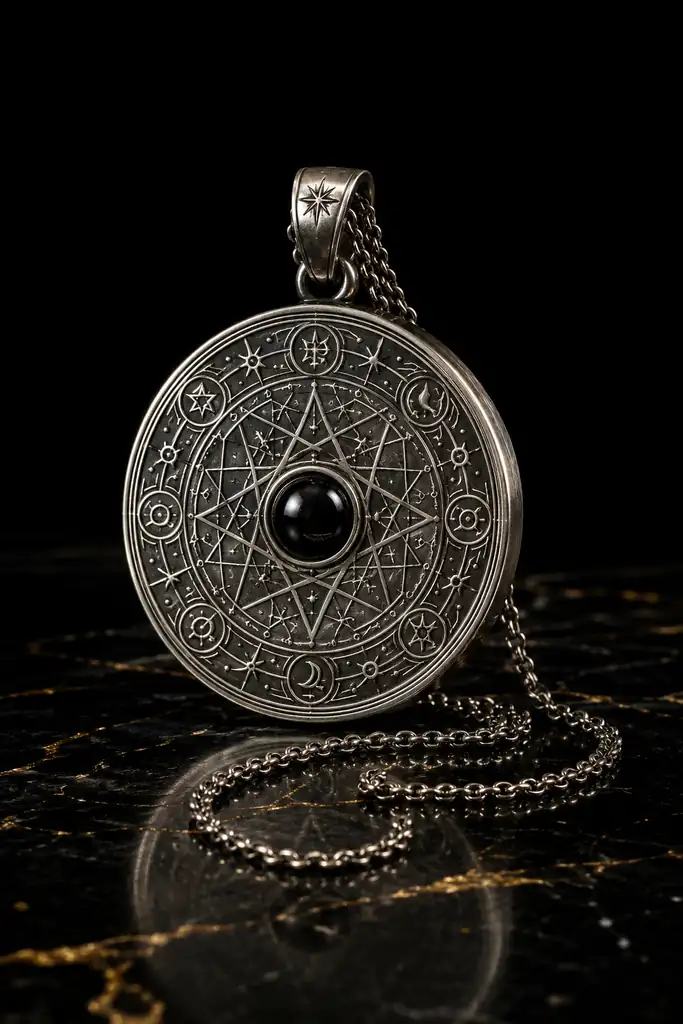
The talisman is an object endowed with a specific intended effect through a deliberate act, often at an astrologically or ritually determined moment.
It differs from the amulet through this intentional component: where the amulet works of its own accord through its material or its form, the talisman is made or prepared so that it brings about something specific. The distinction is sharp in theory, but in practice the two forms often overlap.
The word “talisman” comes from the Arabic tilasm, which in turn goes back to the Greek telesma: the completed thing, the thing accomplished through rite.
This etymological connection is revealing. The talisman is an object that has been given completion through ritual; it has, so to speak, been finished for a task.
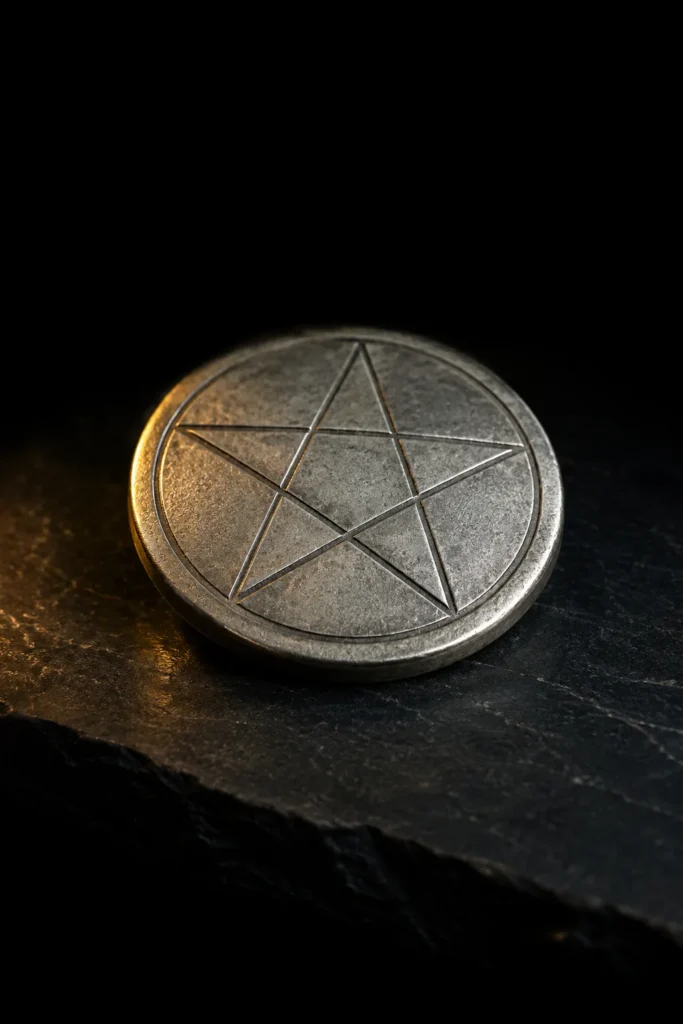
In the learned European magic of the Middle Ages and the early modern period, talismans were engraved according to precise astrological specifications.
Which metal, which sign, which planet stood favorably, when the ruler of the hour was right, which angel or spirit was to be addressed: these questions filled entire handbooks, from the Picatrix through the Heptameron to Cornelius Agrippa’s De Occulta Philosophia.
The result was an object that not only protected but actively acted upon the world.
The talisman belongs to the category Amulets and protective objects.
The talisman is the charged protective object of folk magic, a carrier deliberately charged with a particular power.
Quick overview
The talisman is a protective object that is directed toward a particular purpose through deliberate making and charging. It works not through material properties alone, but through the intention and the procedure of its creation.
In the learned European and Arabic understanding it is tied to planetary or spiritual influences. In folk-religious contexts the astrological system recedes into the background, while the basic idea of deliberate charging remains. It protects against harmful influences and can also unfold positive effects for the wearer.
Origin and transmission
The notion that an object can be furnished with powers through deliberate action is very old. Babylonian texts already know objects that were activated by particular rituals and then took on protective functions.
In the ancient world the transition between amulet and talisman was fluid: the recommendations of the Greek magical papyri, a collection of spell texts from Hellenistic Egypt, often describe both in one, treating a particular material at a particular time in a particular way.
The Arabic tradition, which became known in Europe in the 8th to 12th centuries, brought with it a systematized doctrine of talismans. The Picatrix, an Arabic-Latin compendium, describes for each planet the right metal, the right form, the right image and the right hour.
This system was taken up and developed further in learned European magic. Heinrich Cornelius Agrippa von Nettesheim summarized it in the early 16th century in his De Occulta Philosophia.
Alongside this, more popular forms lived on that managed without astrological expertise.
A stone picked up at a special place at the new moon, a slip of paper bearing a saying written by a “knowing” person, a snakeskin laid down at a crossroads: all of this belonged to the folk-religious doctrine of talismans, which the learned texts scarcely captured.
Operating principle according to tradition
According to the learned tradition, the operating principle of the talisman rests on the idea of correspondence: every planet, every spiritual power, every kind of influence has an earthly correspondence in particular metals, stones, plants, numbers and signs.
A talisman engraved at the right hour, under the right planet, from the right metal, with the right sign, draws the power of that planet into itself and passes it on to the wearer.
In folk-religious practice the idea is similar but less systematic: the charging person, the “wise woman,” the smith, the priest, the herbalist, transfers a power to the object through their action that benefits the wearer.
Here the power comes less from the stars than from the competence and the knowledge of the person who makes it.
Both conceptions share the idea that the talisman does not merely set a protective boundary passively, but actively introduces a quality into the cosmic information field that benefits the wearer: health, luck, strength, protection against concrete enemies.
Cross-cultural spread
The notion of the intentionally charged protective object is found in many cultures.
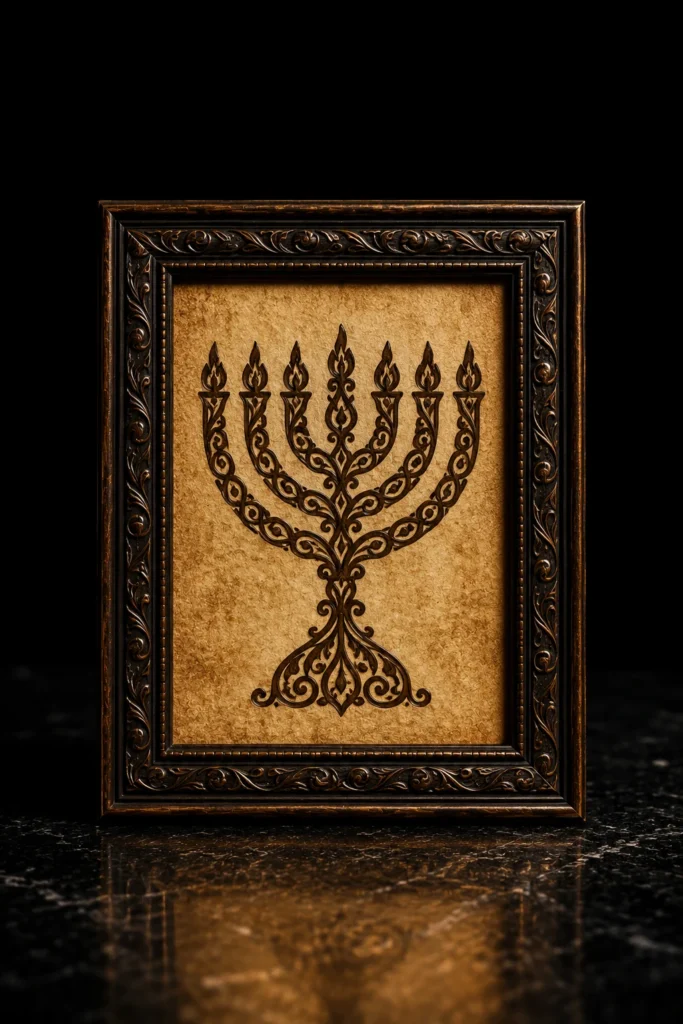
In the Islamic world, talismans with Quranic verses or names of God are widespread; the Kabbalah knows objects made effective through names of God or names of angels; in the Hindu sphere, yantras, geometric diagrams with mantric charging, are a form of talisman.
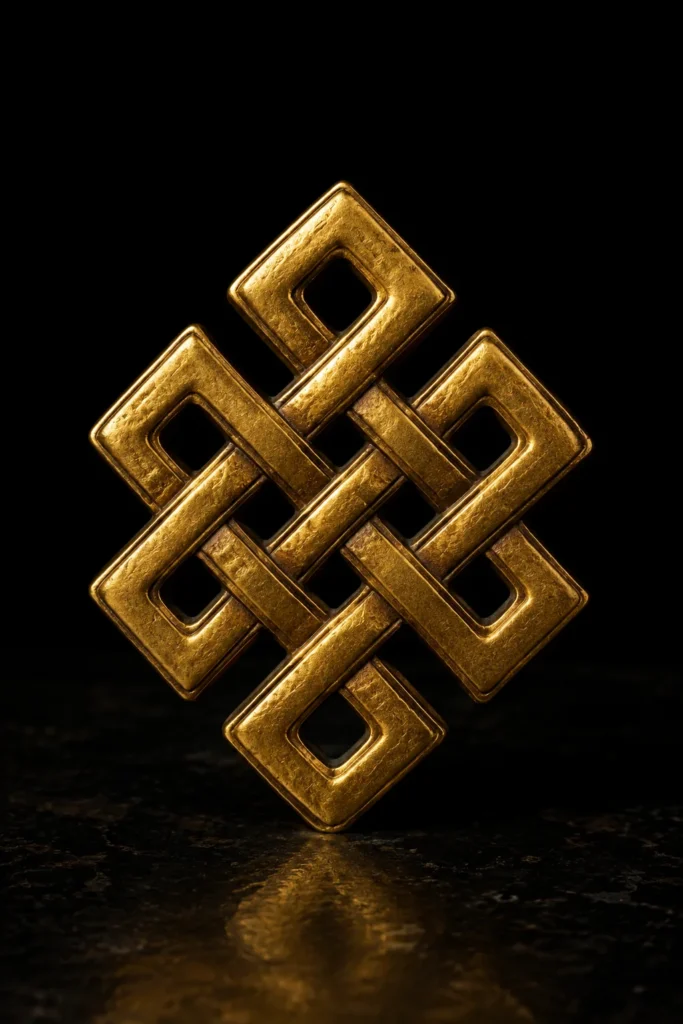
The Tibetan Buddhist tradition knows consecrated objects that are activated through rituals and the intention of a teacher.
In the African and Afro-American context, the deliberately made protective object, whether gris-gris, nkisi or mojo, belongs to the core stock of the protective tradition. Here too the effect is not intrinsic but is produced through the making ritual and intention.
In Japan, alongside the passive omamori, there exists the category of the blessed object, which receives its effect through a particular ritual in a temple or shrine. The transition to the talisman in the European sense is fluid here as well.
What it is used against
Tradition employs talismans against a broad spectrum of harmful influences. The learned European tradition knows talismans against the evil eye, against enemies, against illnesses, against harm-causing spirits and against accidents on journeys.
In the Protection Compass, talismans are linked with concrete beings against which, according to tradition, they were employed.
In folk practice they were frequently directed against categories of influence: general harmful magic, nocturnal attacks by harm-causing beings, or the ill will of other people, which can manifest through the evil eye or targeted magic.
Unlike the amulet, which often works automatically, the talisman is conceived in many traditions as an active means: it is meant not only to ward off what comes, but also to improve the conditions for the wearer’s well-being.
Application and limits
From tradition there follows for the talisman a particularly important rule: the intention behind the making must be clear and specific.
A talisman that is supposed to be good for everything is, according to many traditions, specifically good for nothing. The precision of the intention is held to be the precondition for the precision of the effect.
Equally important is the competence of the person who makes it. Learned magic describes in detail what knowledge and what inner preparation are needed to make an effective talisman. Whoever acts without this knowledge risks, by this logic, at best an ineffective object, at worst a wrongly directed one.
The limits of the talisman lie where the intention is too general, where the making does not conform to the transmitted procedure, or where the purpose becomes morally questionable. Tradition also knows the reverse talisman, an object that does not protect but harms. This side of protection lies outside the object described here.
A talisman meant to be effective against a particular form of harmful influence does not, by the logic of tradition, automatically protect against other forms. Whoever wears a travel-protection talisman is not thereby secured against the evil eye.
Literature (selection)
Related key terms: talisman meaning amulet difference.
iWell Guard and protective traditions
The iWell Guard unites elements of the passive amulet and the intentionally directed talisman. Its design is not arbitrary, but carries a formal language and symbolism that express the protective intention.
It thus stands in the long tradition of the cultures that have understood worn objects not merely as material, but as carriers of a directed intention.
The breadth of this tradition, from Babylon through Arabic learned magic to Tibetan amulet culture, shows that this idea belongs to the most stable basic patterns of human protective practice.
Personal experiences may vary. Not a medical device. No promise of healing.