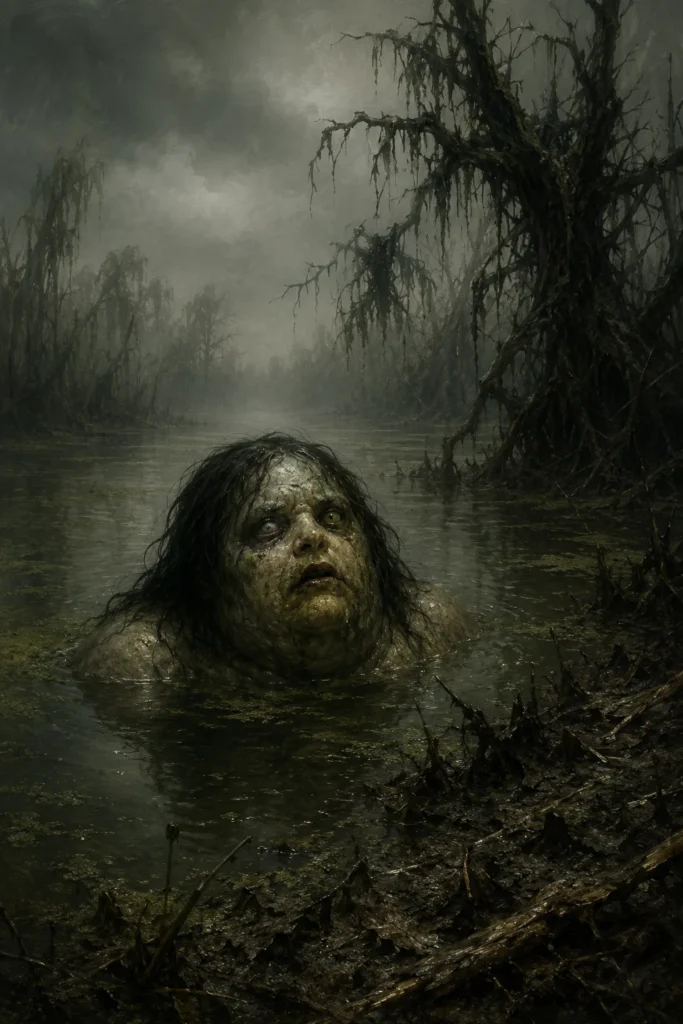
Bolotnik, lord of the treacherous bog ground
By Ralf Ittermann · last reviewed on
Bolotnik is a demon of the Slavic tradition.
The lord of the swamp, who lures with will-o’-the-wisps into the morass. The profile examines how the treacherous ground of the bog shapes his legend.
The Bolotnik is the male swamp spirit of East Slavic tradition, lord over swamps and bogs in Russia, Belarus and Ukraine. He lures wanderers with will-o’-the-wisps into the morass; the treacherous in-between land belongs to him alone. Attested since the 19th century, without cult worship.
Type: swamp spirit, male lord of the bog
Origin: East Slavic folk tradition
Texts: regional legends, 19th/20th century
Period: 19th to early 20th century
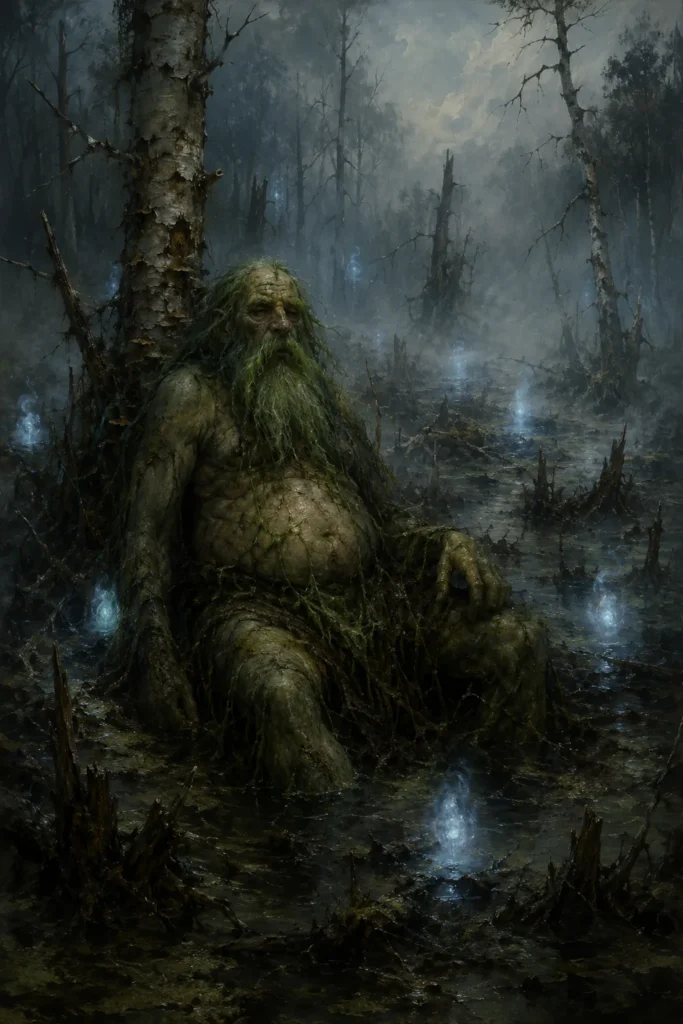
Appearance: old man, green beard, algae, scales
Source context
Period of the Texts
19th and early 20th century: attested only through ethnographic collections of this period, without an older textual trace.
Area of Diffusion
East Slavic region: Russia, Belarus and Ukraine, tied to swamp and bog landscapes.
Sources
Inconsistent: regional legends without a canonical core, mainly through Afanasyev.
Name and variants
East Slavic: boloto means swamp or bog, nik means dweller: Bolotnik literally means the swamp dweller.
Appearance and effect
Appearance
Old man with a green beard, covered in algae and scales; some legends depict him as eyeless and motionless at the bottom of the bog.
Effect
He draws people and livestock into the morass with will-o’-the-wisps: personified danger of the terrain.
Profile: Bolotnik
The key characteristics of the swamp spirit at a glance.
East Slavic circle of nature spirits alongside Leshy and Vodjanoj.
Careless wanderers and livestock near swamp and bog.
Green beard, algae and scales, regionally eyeless and motionless.
Personified danger of the bog, drawing the careless into the depths.
Avoidance: do not enter swamps at night, do not follow will-o’-the-wisps.
Unlike the river-bound Vodník: only the bog belongs to him.
The lord of the swamp between Leshy and Vodjanoj
The name reveals his domain: boloto, swamp or bog, with the suffix nik, dweller, yields the swamp dweller. Attested only through inconsistent legends of the 19th/20th century. He is considered a relative of Vodjanoj and the forest spirit Leshy, but does not share their domains. In some legends, the Bolotnitsa stands at his side, his female counterpart.
Minor figure of Slavic folklore
The Bolotnik lives on mainly in blogs, fantasy and games; unlike the Rusalka, he lacks a canonical text. From a religious-studies perspective, he is a local place demon: the personification of a dangerous landscape, cautionary rather than cultic.
Caution instead of a warding ritual
Well-attested are avoidance strategies: do not enter swamps at night, do not follow will-o’-the-wisps. Only the general Slavic warding practices using iron, salt and a protective circle are handed down.
Lord of the bog alongside forest spirit and water woman
Frequently asked questions about Bolotnik
Is the Bolotnik the same as the Vodník?
No. The Vodník rules over rivers, the Bolotnik over swamps.
Can he be appeased?
Tradition knows only avoidance, no cult of offerings.
Literature (selection)
Further standard works in the bibliography.
As Bolotnik swamp spirit, the figure remains closely tied to his domain: not a wandering demon, but a Slavic bog spirit embodying the danger of the terrain itself.