Dragon King Longwang, rain official acting on heaven's mandate
By Ralf Ittermann · last reviewed on
Dragon King is a god of Chinese tradition.
Lord of the four seas, gives rain on heaven’s mandate. The profile depicts him as a rain official acting strictly on heaven’s mandate.
Longwang, the Dragon King, is the ruling figure of the Chinese aquatic cosmos: he governs the four seas, distributing rain on heaven’s mandate.
He arose from the fusion of the dragon with the Buddhist Nagaraja.
Type: Dragon King, ruler of the seas
Origin: ancient Chinese dragon, Nagaraja influence
Texts: classical texts, Ming novels
Period: antiquity, expanded from the Tang era
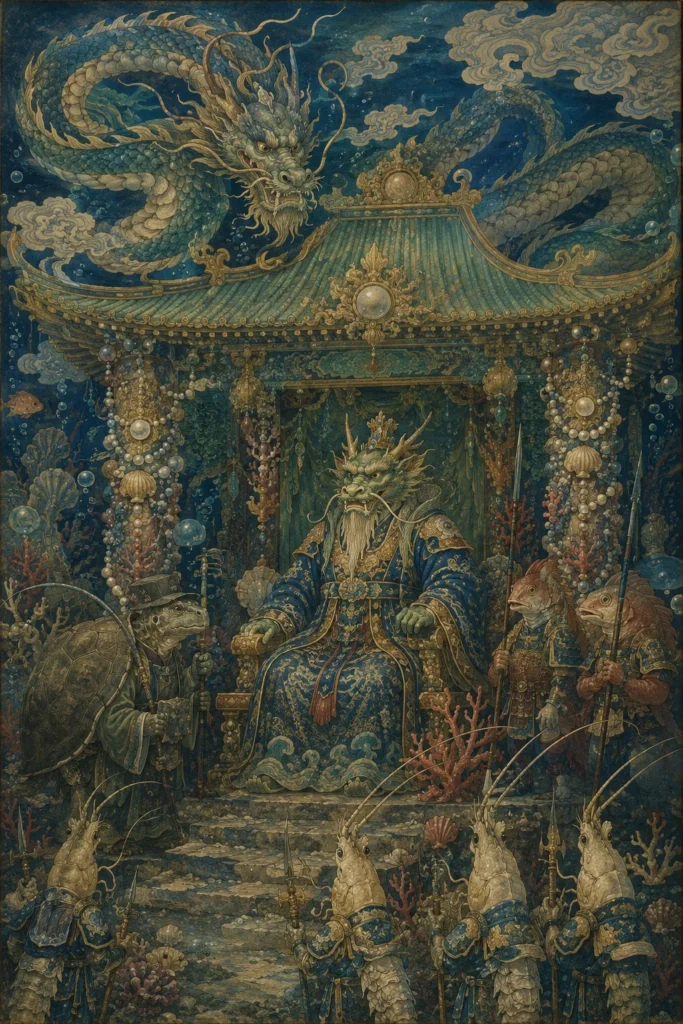
Appearance: celestial dragon, dragon-headed king in the palace
Area of origin and sources
Period of the Texts
Dragon beliefs reach back into antiquity, with the cult expanded from the Tang era.
Area of Diffusion
China, with influence extending to Korea, Japan and Vietnam.
Sources
Very good: classical texts, Ming novels and local cults still active today.
Name and variants
Chinese: long dragon, wang king: Longwang literally means Dragon King, more of an office than an individual deity.
Form and effect
Appearance
As a natural force, a serpentine body with antlers and carp scales, in the palace a human with a dragon head and imperial robe.
Effect
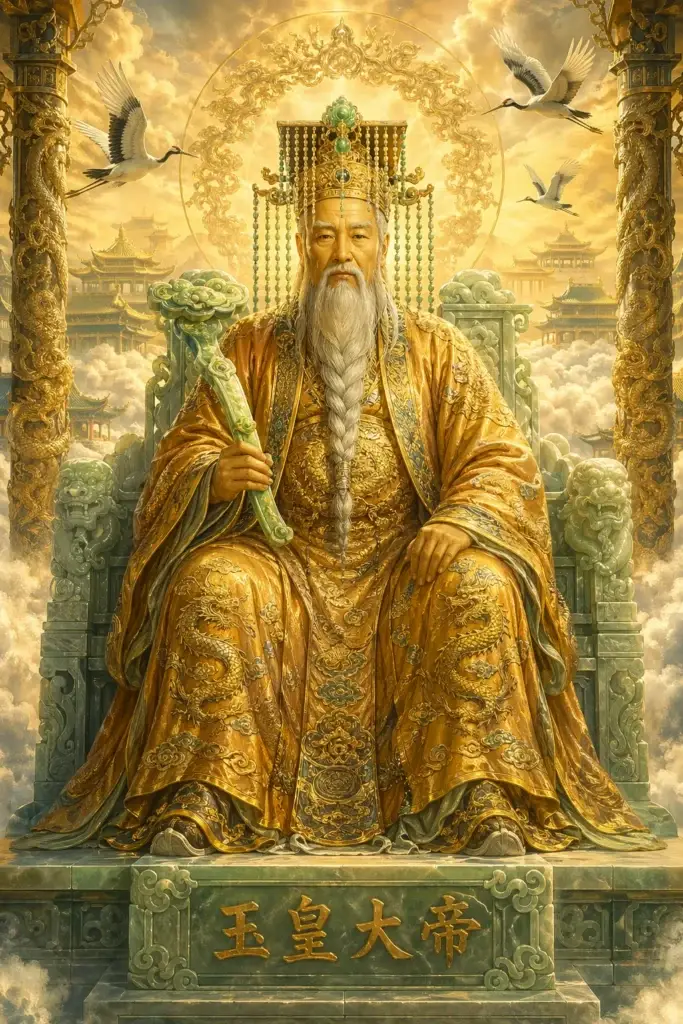
In China the dragon is regarded as a sign of good fortune; it gives rain by order of the Jade Emperor.
Profile: Dragon King
The most important aspects of the Dragon King at a glance.
Ancient Chinese dragon belief, with Nagaraja influence since the Tang era.
Rain and every body of water, from great rivers to village wells.
Serpentine body with antlers; in the palace a dragon-headed king in imperial robe.
Giver of rain by order of the Jade Emperor, guardian between drought and flood.
Incense and processions at the temple, along with the dragon dance at the New Year festival.
The Japanese Ryujin, along with the Chinese He Bo and the Korean Imugi.
From nature dragon to official of heaven
The dragon is among the oldest figures of Chinese tradition. The Buddhist Nagaraja merged with it from the Tang era onward, and emperors granted titles and temples.
Sun Wukong retrieves his weapon from Ao Guang’s palace treasury.
From the imperial era to the animated film
The novels of the Ming era turned the Dragon Kings into folk figures; Dragon King temples still stand on China’s rivers today. Modern animated films also feature Ao Guang.
From a religious-studies perspective, he is less an individual deity than an office title.
Cult maintenance instead of banishment
Dealing with the Dragon King is cult maintenance: incense, food offerings, processions with the cult image during times of drought.
Means of veneration: amulet, salt, holy water.
Dragon Kings in comparison
The Japanese Ryujin is the direct counterpart, with his own sea palace; Poseidon and Neptune resemble him without his role as an official.
In East Asia, he stands alongside He Bo and Imugi, with reach extending to Lạc Long Quân.
Frequently asked questions about the Dragon King
How many Dragon Kings are there?
The best-known count names four, one for each cardinal direction.
Is he still venerated today?
Yes, Dragon King temples continue to exist in China to this day.
Further links
Internal links:
Literature (selection)
More in the bibliography.
Longwang is regarded as the Chinese Dragon King of the four seas, an official of heaven: he grants rain not on a whim but on behalf of cosmic order.