Finnish Mythology, Tapio's Forest and the Water World of Ahti
By Ralf Ittermann · last reviewed on
Kalevala mythology thus combines sung pre-Christian tradition with a world of forest, water and house spirits that lives on to this day.
Kalevala mythology divides the pantheon into the forest family around Tapio, the water world around Ahti and the many Haltija spirits of everyday life. These figures still shape Finnish storytelling about the forest and the sauna today.
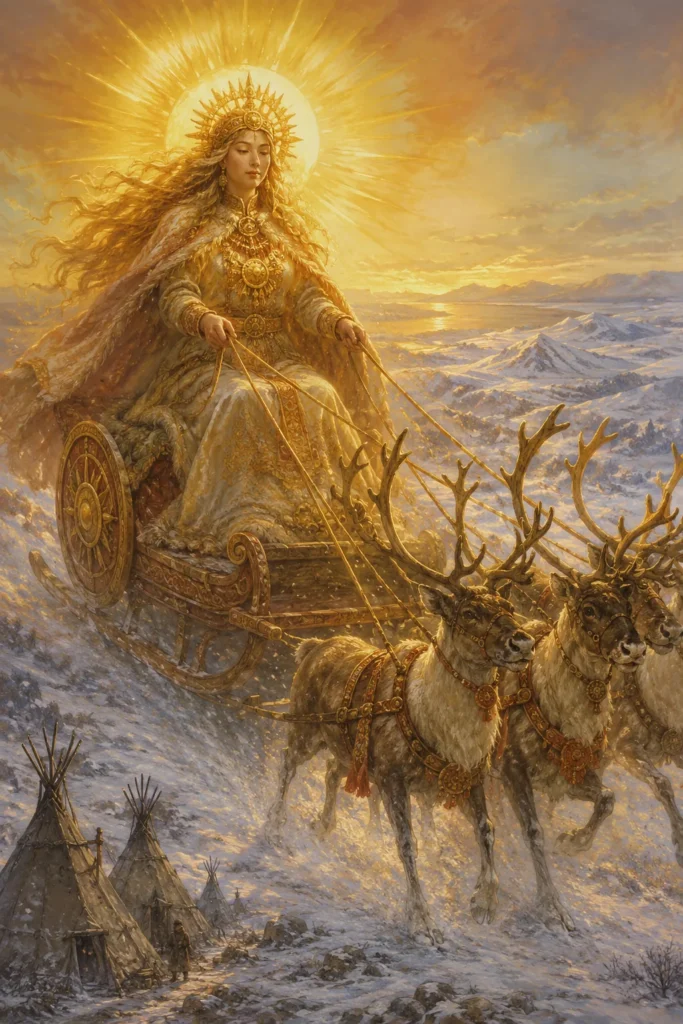
The Kalevala and the Karelian Rune-Singing Tradition
The Kalevala is therefore a literary compilation, not a direct transcription of a pre-Christian belief system. Scholars of religion such as Anna-Leena Siikala and Juha Pentikäinen point out that Lönnrot’s editing imposed its own narrative order on what was originally a more varied, regionally differing body of song.
Despite this literary editing, Kalevala mythology is regarded as the most important source for figures such as Tapio, Ahti and the forest deities of Tapio’s family.
The Forest Family: Tapio, Mielikki, Nyyrikki, Tuulikki, Tellervo
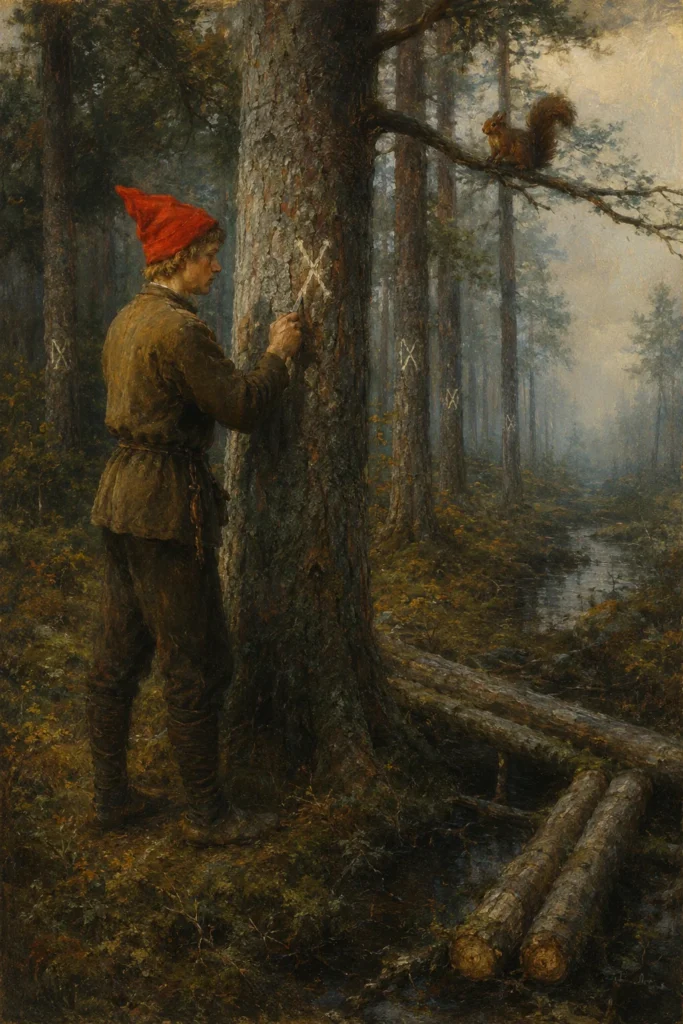
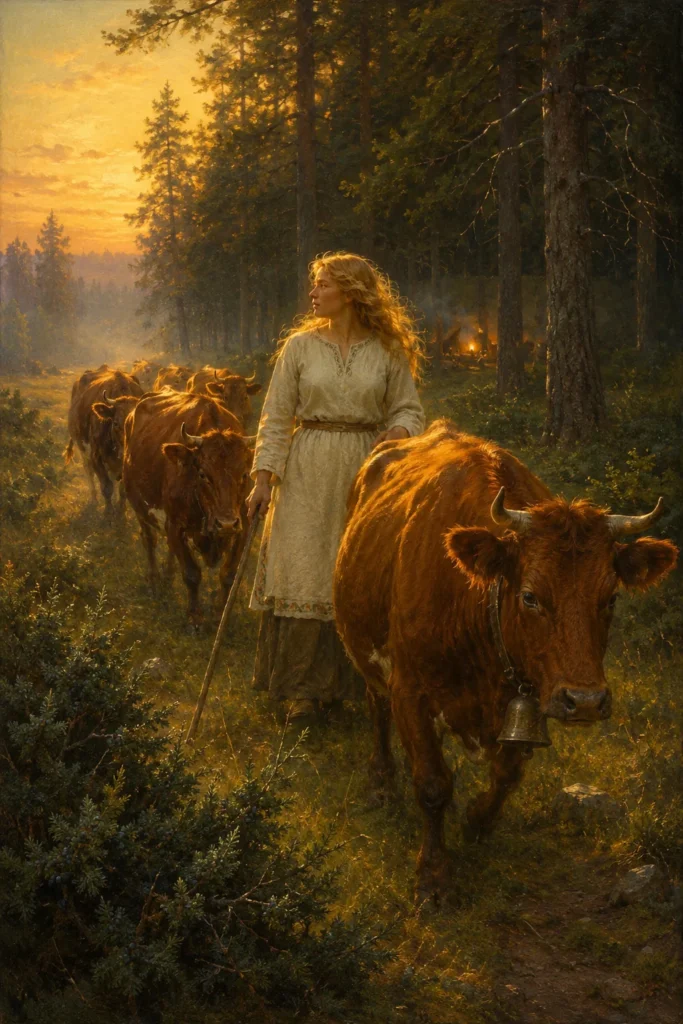
Tapio is regarded as lord of the forest and wild animals, whom hunters would ask for game before the hunt. At his side stands Mielikki, often described as his wife, mistress of the forest and protector of wildlife. Their shared son Nyyrikki is regarded as patron of hunters and pathfinder in the forest.
The forest family also includes the daughters Tuulikki and Tellervo, who in different variants of the rune songs are described, sometimes overlappingly, as guardians of forest animals and herds. This ambiguity is typical of orally transmitted figures, whose roles could shift slightly from singer to singer.
The Water World: Ahti, Vellamo and Iku-Turso
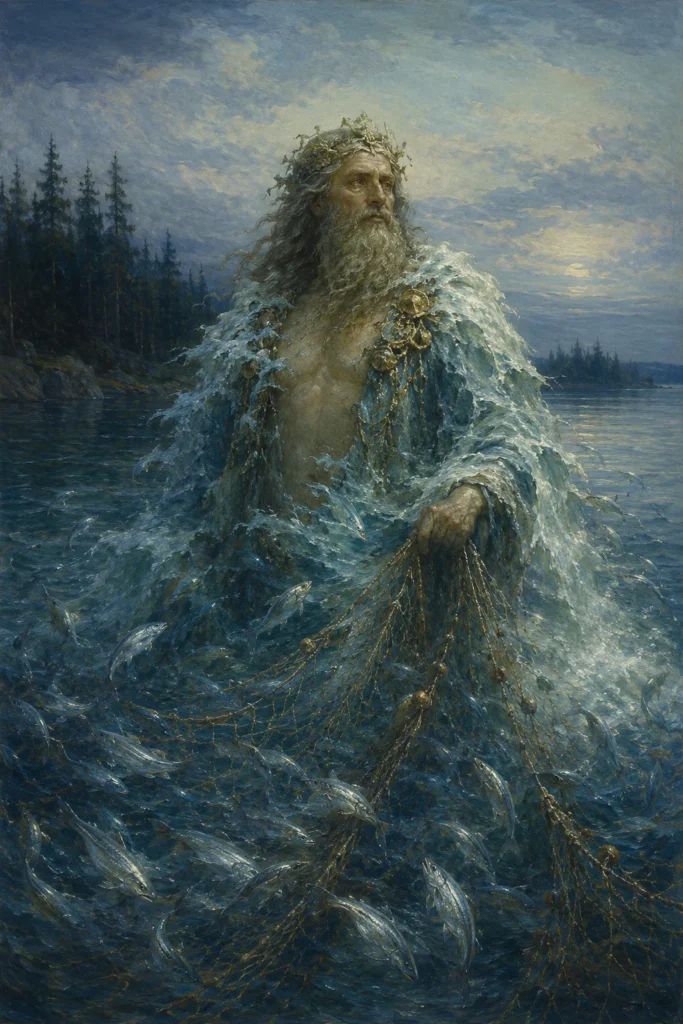
In folk belief, Ahti is regarded as lord of the waters and of fish abundance, whose realm Ahtola lies at the bottom of lake and sea; in the Kalevala itself, Lönnrot also uses the name Ahti as an epithet of the hero Lemminkäinen, which has led scholars to distinguish between the older water god and the literary figure. His wife Vellamo rules over the water world as goddess of the sea.
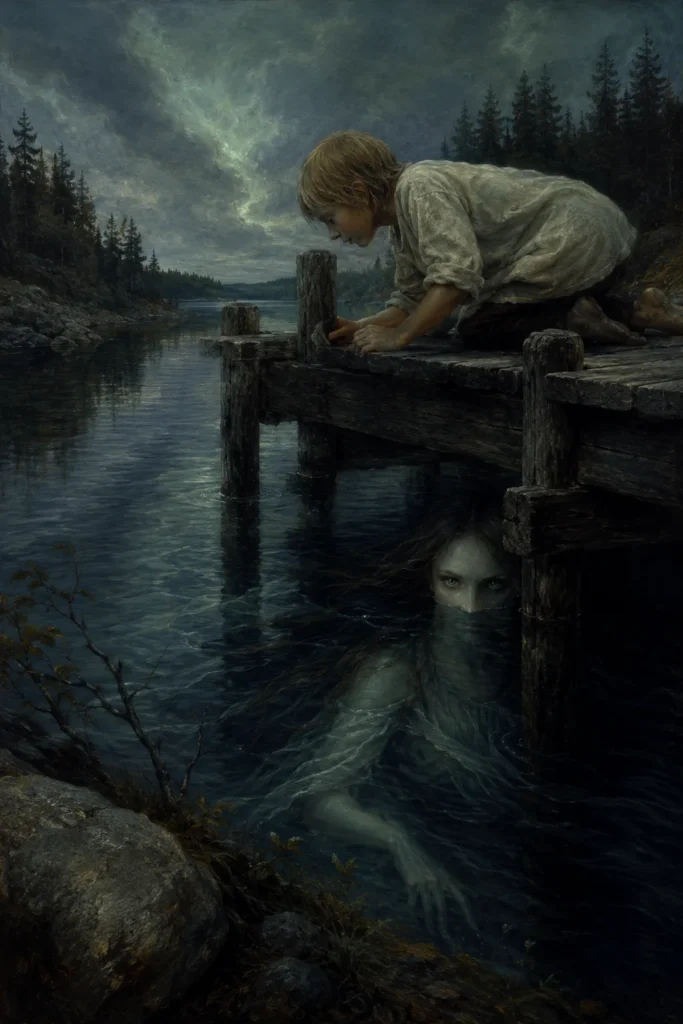
A more threatening figure of the depths is Iku-Turso, a sea monster whose name some researchers link to the walrus. The Vesihiisi, a water-dwelling Hiisi spirit, and the warning Näkki complete this water world as more sinister counterparts to Ahti and Vellamo.
Sauna and Löyly: A Distinct Ritual-Religious Space
The sauna held a special place in traditional Finnish daily life that went beyond mere bodily care. It was considered a place of ritual purity where births took place, the sick were cared for and the dead were washed before burial. The Löyly, the steam produced when water is poured on the stove, was itself thought to be animate or inhabited by its own Haltija, to whom respect was owed, for example through quiet and proper conduct.
According to folk belief, anyone who became loud, cursed or behaved disrespectfully in the sauna could anger the sauna spirit and bring illness or misfortune upon themselves. This close connection between cleansing, healing and belief in spirits shows how deeply the Haltija concept was embedded in Finnish daily life, far beyond forest and water.
Frequently Asked Questions about Finnish Mythology
What is the Kalevala?
The Kalevala is the Finnish national epic that Elias Lönnrot compiled from orally transmitted Karelian rune songs, publishing it in 1835 and in an expanded edition in 1849. It is the most important, but literarily edited, source of Finnish mythology.
Who is Tapio?
In Finnish folk belief, Tapio is the lord of the forest and wild animals. Hunters addressed requests to him before a hunt, and at his side stand his wife Mielikki and several children, including Nyyrikki.
What is a Haltija?
Haltija is an umbrella term for protective and place spirits in Finnish folk belief that inhabit houses, forests, bodies of water or the sauna. The Tonttu, a house spirit, is regarded as a well-known form within this Haltija spirit world.
What happened to pre-Christian Finnish religion?
With Christianisation from the 12th century onwards, the old world of gods and spirits was pushed back, but it remained alive in folk belief, incantations and Karelian rune singing into the 19th century, before Lönnrot recorded it in literary form in the Kalevala.
The Haltija Spirit World: Tonttu, Maahinen and Hiisi
The Haltija is the umbrella term for protective spirits bound to a particular place or object. The best known is the Tonttu, a farmstead and house spirit who protects homesteads as long as it is treated with respect; only in the 20th century did this figure increasingly merge in popular culture with the Christmas gnome motif.
Beings thought to live underground, such as the Maahinen, were considered sensitive to disturbances of their dwelling place, for example through building work. The term Hiisi originally referred to a sacred grove or sacrificial site and only came to denote an eerie spirit or troll under Christian influence.
Wind, Smithcraft and the Creation of the World: Tuuletar and Ilmarinen
The Tuuletar, literally Wind Daughter, appears in weather-magic songs of the Kalevala. Ilmarinen, whose name is related to the Finnish word for air and sky, is regarded as the eternal smith who, according to the narrative, forged the vault of the sky and made the magical Sampo; scholars discuss whether an older sky deity originally lies behind the Kalevala hero.
Christianisation, Lönnrot's Kalevala and contemporary reception
The Christianisation of Finland, driven from the 12th century onwards by Swedish mission in the west and Orthodox mission in eastern Finland, pushed back the old world of gods and spirits without erasing it entirely. Spells, rune songs and folk belief in Tonttu, Haltija and water spirits remained alive, particularly in Karelia, into the 19th century.
Elias Lönnrot’s Kalevala of 1835 and 1849 made this oral tradition accessible to a wide audience for the first time and became a central pillar of the Finnish national movement. Later researchers such as Martti Haavio and Anna-Leena Siikala showed how strongly Lönnrot’s literary editing smoothed and ordered the originally more regionally diverse material.
Today, Kalevala mythology survives mainly in literature, art and a folkloric interest in sauna customs and nature spirits, less as a practised religion.
Oral rune song rather than a closed pantheon
Unlike Norse mythology, for instance, with its medieval prose and verse sources, Finnish mythology rests on an oral song tradition, rune song, that remained alive into the 19th century and was cultivated above all in Karelia, the eastern border region with Russia.
These songs were not uniform but varied from singer to singer and village to village. Elias Lönnrot, who travelled to Karelia several times between the 1820s and 1840s, selected, combined and arranged this material into the national epic Kalevala, first published in 1835 and in expanded form in 1849.
Kalevala mythology is thus a compromise between oral diversity and literary order. Researchers such as Anna-Leena Siikala emphasise that Lönnrot’s Kalevala created a coherent narrative that did not exist in this form within the original body of songs.
For the study of religion, this means: figures such as Tapio or Ahti are well attested through numerous independent song variants, but their precise hierarchical order in the Kalevala owes more to Lönnrot’s shaping than to an original system.
Forest, water and home: the three spheres of the spirit world
The Finnish folk worldview divides, from a religious-studies perspective, into several spheres, the most important of which are the forest, the water and one’s own homestead. Tapio rules over the forest together with his family, Mielikki, Nyyrikki, Tuulikki and Tellervo, to whom hunters offered requests and small gifts before a hunt to secure success and a safe return.
The water world falls under Ahti and his wife Vellamo, whose realm Ahtola lies at the bottom of lakes and seas. Fishermen addressed requests to them, while threatening beings such as the Vesihiisi or the lake monster Iku-Turso embodied the dangers of the water.
The homestead itself stood under the protection of a Haltija, often in the form of the Tonttu, who guarded house and livestock provided the inhabitants treated him with respect, for instance through small food offerings. Related but rather uncanny figures such as the Maahinen, by contrast, inhabited the underground and reacted sensitively to disturbances.
These three spheres, forest, water and home, gave religious order to the daily life of the Finnish rural population and remain to this day the central framework researchers use to describe Finnish mythology.
The sources: Lönnrot's collections and the Karelian singer tradition
The most important source of Finnish mythology is the Kalevala, which Elias Lönnrot compiled from oral rune songs that he himself recorded from Karelian singers. Famous bearers of this tradition included singers such as Arhippa Perttunen, whose songs supplied a large part of the material.
However, Lönnrot was not merely a collector but also an editor: he joined individual songs into a continuous narrative and reconciled contradictions between different singers’ variants. The Kalevala he published in 1835, and in expanded form in 1849, is therefore a literary work with a folkloric basis, not a direct transcript of a uniform belief system.
Later researchers such as Martti Haavio, in his Suomalainen mytologia (1967), and Anna-Leena Siikala, in her studies on shamanism and myth formation, added further material from spells, laments and ethnographic accounts, deepening the picture of Finnish folk religion beyond the Kalevala.
This state of the sources makes clear that a distinction must be drawn between the original oral diversity of Karelia and the literarily ordered Kalevala mythology.
Christianisation, national movement and contemporary reception
The Christianisation of Finland began in the 12th century, in the west through Swedish mission and in the east through Orthodox mission, and continued over centuries. In remote areas, especially in the Russian-Karelian border region, elements of the old religion, rune songs, spells and belief in Haltija spirits remained in use into the 19th century, often alongside rather than instead of Christianity.
It was precisely in these border regions that Elias Lönnrot found the foundation for his Kalevala. The epic’s publication in 1835 and 1849 coincided with a period of awakening Finnish national consciousness within the Russian Grand Duchy of Finland and became a central text of identity for the Finnish national movement.
In the 20th century, researchers such as Martti Haavio, Juha Pentikäinen and Anna-Leena Siikala examined more closely the relationship between Lönnrot’s literary editing and the original oral diversity, situating Kalevala mythology more firmly within the context of Finnish folk belief and, for parts of eastern Finland, shamanic practice.
Today, Kalevala mythology survives mainly as literary and cultural heritage, visible in art, naming customs and a continuing connection to sauna culture and closeness to nature, less as a practised religion in the strict sense.
Beings of this tradition (16)
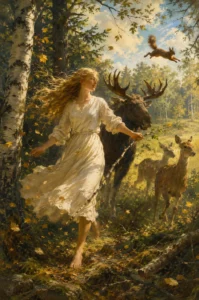

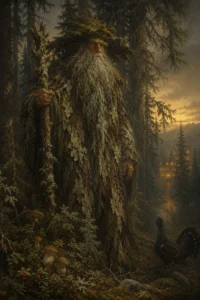


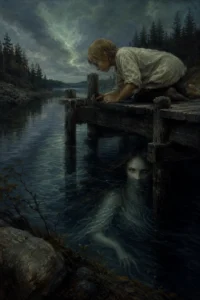
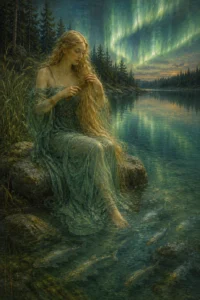
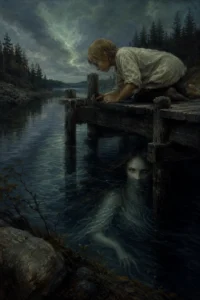

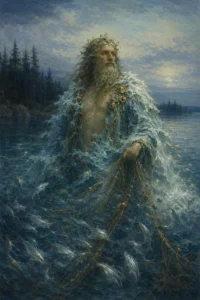
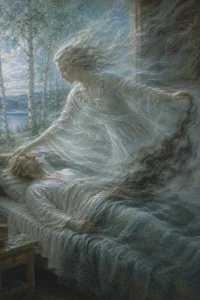
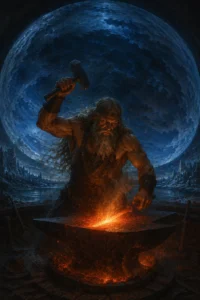
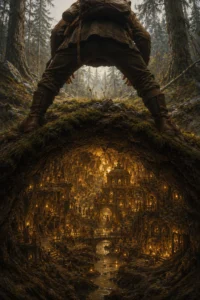
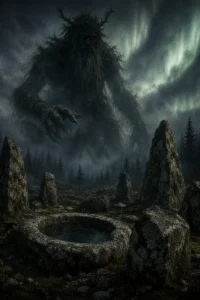
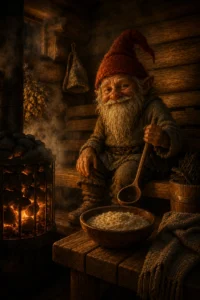

Kalevala mythology combines rune song, the Haltija spirit world and the forest deities of Tapio into a distinct protective practice, in which hunters, fishermen and homestead dwellers sought the goodwill of Tapio, Ahti and Tonttu with small offerings.
Related key terms: Kalevala, Tapio, Ahti, Vellamo, Mielikki, Haltija, Tonttu, Hiisi, Karelia, Lönnrot.
Protective objects in this cultural tradition
Finnish tradition includes small food offerings for the Tonttu as house spirit, spells and rune songs for protection against water and forest spirits, and the sauna as a ritually cleansed protective space with its own Löyly spirit; portable amulets are less well attested than place-bound customs. An overview of protective forms across different cultures is offered by the Protection Compass.
iWell Guard fits into this cultural-historical line of portable protective objects, in contemporary material architecture, crafted in Germany. 41 layers, genuine gold, platinum, silver. 30-day right of return.
Personal experiences may vary. Not a medical device. No promise of healing.