Home Protection and Threshold Ritual
By Ralf Ittermann · last reviewed on
By home protection, folklore studies understand a group of practices that are directed not at a single person but at the dwelling as a whole: the house as a living space, with its boundary points where inside and outside meet.
These house rituals often combine several types of means: they may include a banishing formula, a guarding symbol above the door, a material substance at the entrance and an invocation of a guardian being. The home as a whole is thereby meant to become a sheltered, sacred space.
What distinguishes home protection from other protective practices is its permanence. Whereas a protective circle is drawn for a particular procedure, home protection is meant to create or maintain a lasting state.
The means of protection are put in place once, the rituals are performed once or repeated seasonally, and the house is then considered to be under lasting protection. This logic makes home protection one of the most everyday protective practices in the tradition.
Home protection belongs to the category of protective rituals and invocations. Door, hearth and threshold act as safeguards of the home in this tradition.
Quick overview
In the tradition, home protection encompasses rituals and means intended to protect the house and its inhabitants from hostile influence from outside. The central points are the door and threshold as transitions, at which protective signs, healing plants or blessing formulas are placed.
In many cultures the hearth is regarded as the seat of the house spirit, whose care secures the protection of the house. Seasonal rituals, especially at turning points such as Walpurgis Night, midsummer or New Year’s Eve, renew the protection. The tradition is well attested in Germanic, Slavic, Celtic, Greek and Asian traditions.
This page follows home protection as the ritual renewed through the course of the year, from seasonal blessings to the ongoing care of the household. The doorsill, window charms and other protective objects at the entrance are covered on the dedicated threshold protection page.
Origin and Tradition
The idea of protecting the house through special acts and signs is as old as building itself.
Archaeological findings from Neolithic settlements in Europe point to ritual acts at the laying of foundations: animal bones, coins or other objects buried in the foundations in order to place the house under protection. This practice, known as building offerings, is documented well into the 19th century.
In Greco-Roman antiquity, the protection of the house was religiously institutionalized. The Lares and Penates of the Romans were household gods who were honored daily with small offerings. A lararium, a small household altar, was part of the basic furnishings in many Roman houses.
Neglecting this care was considered a cause of misfortune. In Greece, Hecate as goddess of thresholds and transitions fulfilled a similar function; her image was frequently found at house doors.
In the Germanic and Nordic sphere the house tomte or nisse is known, a small spirit being that lives in the house or stable and helps its inhabitants as long as it is treated respectfully.
The regular setting out of milk or porridge for the tomte is a practice derived from popular religious custom that was still practiced in the 20th century. The house spirit is not a power invoked from outside, but a being resident in the house, whose care simultaneously secures the protection of the home.
In the Slavic sphere this figure corresponds to the domovoi, a house spirit said to live near the hearth or beneath the threshold. He too wishes to be cared for, and his absence or his anger is considered a bad sign for the inhabitants.
Working Principle According to Tradition
The working principle of home protection rests on a combination of boundary marking and a relationship of care. The boundary marking is directed especially at the weak points of the house: doors and windows, chimney and hearth, the cellar entrance.
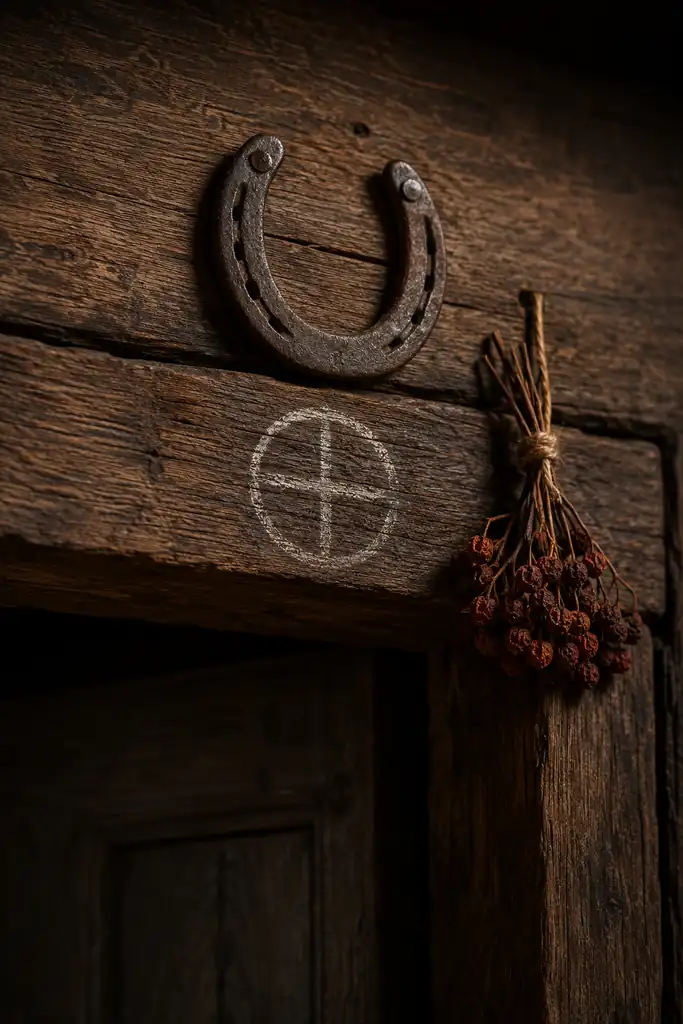
These points are regarded as transitions through which not only people and things but also harmful forces and beings can enter. Protective symbols above the door, strips of salt at the threshold, or attached means of protection such as a horseshoe or a sprig of St John’s wort mark these points as secured.
The relationship of care applies to the house spirit or protective god: it must be renewed regularly, through offerings, cleansing or seasonal rituals. Where this care ceases, the protection is considered to fade. This notion is widespread across cultures and explains why home protection is not a one-time act but an ongoing practice.
Cross-Cultural Distribution
The tradition of home protection is global. In China, door god pictures, the so-called Menshen, are pasted at the entrance of the house at the beginning of the new year.
These pictures show warrior gods who are meant to protect the house from uninvited spirits and evils. The ritual is deeply rooted in Chinese folk belief and is still practiced today.
In Japanese Shinto, a shimenawa rope, a braided straw cord, hangs at sacred places and also at houses, in order to mark the area as sacred and free of harmful forces. The door is regarded as the boundary between the inhabited space and the outside, which is spiritually unsecured.
In large parts of the Middle East and in North Africa, a hamsa or a blue eye, as a so-called nazar amulet, is placed above the house door. This means of protection is meant to ward off the evil eye, which could strike the inhabitants through the door.
In the Jewish context, the mezuzah, a small case containing a Torah text at the doorpost, is one of the central forms of home protection. It links religious duty with the tradition that the house and its inhabitants stand under God’s protection as long as his word stands at the threshold.
In Christian Europe the house blessing, a plaque bearing a blessing formula, often with a biblical text and the Christogram, was widespread. It is placed above the house door or in the entrance area. In many regions of Germany, Austria and Switzerland this practice has been preserved into the present day.
What It Is Used Against
According to the tradition, home protection is directed against all forms of influence that seek to penetrate the outer boundaries of the house. Categories named especially often are:
Evil spirits and demons that wait to be admitted into the house and enter through unsecured doors or windows. Witches and harmful magic directed from outside against the house or its inhabitants. The evil eye, which can be carried into the house by visitors or neighbors, unintentionally or intentionally.
Disease demons and misfortune-bringing forces, especially at certain times of the year when the boundary between the worlds is considered more permeable, such as in the smoke nights between Christmas and Epiphany. Restless spirits of the dead, bound to a place or a family and considered disturbing or harmful.
Application and Limits
In the tradition, home protection is considered something to be renewed periodically.
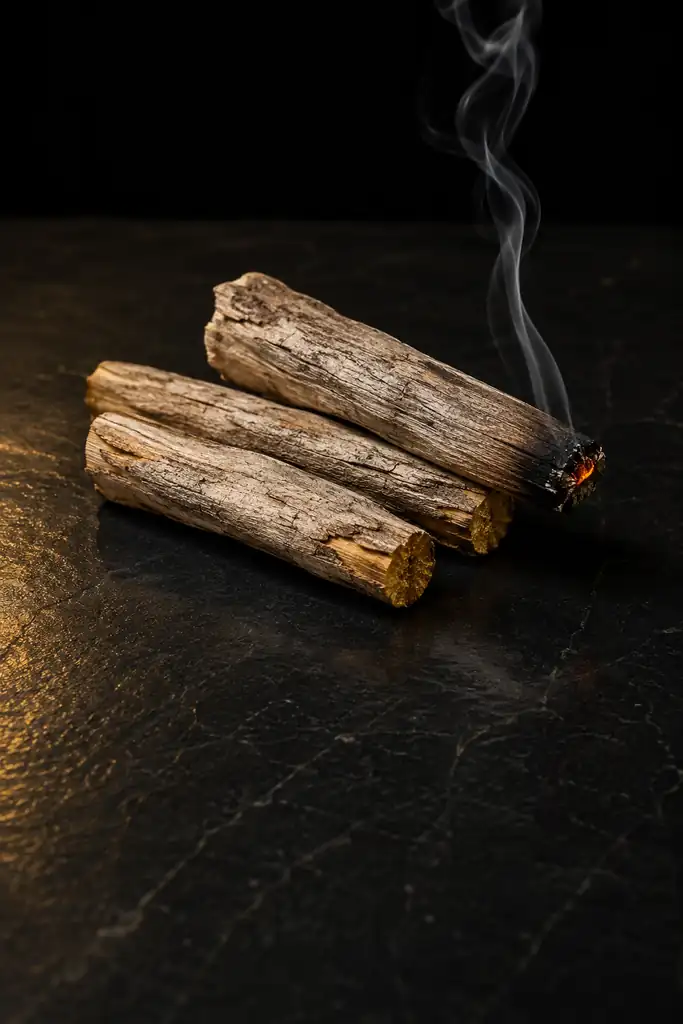
Seasonal rituals, especially at the turning points of the year, are well attested in European folk traditions: laying out incense in the house at Epiphany, attaching St John’s wort at St John’s Day, the smoking of the stable and living quarters on certain nights.
Moving-in rituals too, the protective acts performed when first occupying a new house, are widespread.
One of the most emphasized limits of home protection is hospitality: whoever is invited into the house comes under the protection of the house, but can also weaken it. In many traditions it is recommended not to bring objects of strong negative charge into the house and not to let visitors suspected of harmful intent cross the threshold.
These traditions explain why the threshold has a special symbolic significance in all documented cultures.
Home protection complements other means of protection in this category, especially the banishing formula, which can be spoken at the moving-in or during a cleansing, and charming, which is used when a house or its inhabitants have already suffered harm.
Literature (selection)
Related key terms: home protection threshold protection house blessing door protection.
iWell Guard and Protective Traditions
Home protection shows how intensely people worldwide have regarded the place of their life as worthy of protection and capable of being protected. The traditions that mark threshold, door and hearth as special points of protection reflect a worldview in which the outside is unsafe and the inside must be fortified.
The iWell Guard is a personal protective companion that carries the symbols of these traditions: as a worn sign, it is a mobile variant of the idea behind door god pictures, the mezuzah and the house blessing, the connection to a tradition that regards the person as worthy of protection and protection as attainable.
Personal experiences may vary. Not a medical device. No promise of healing.