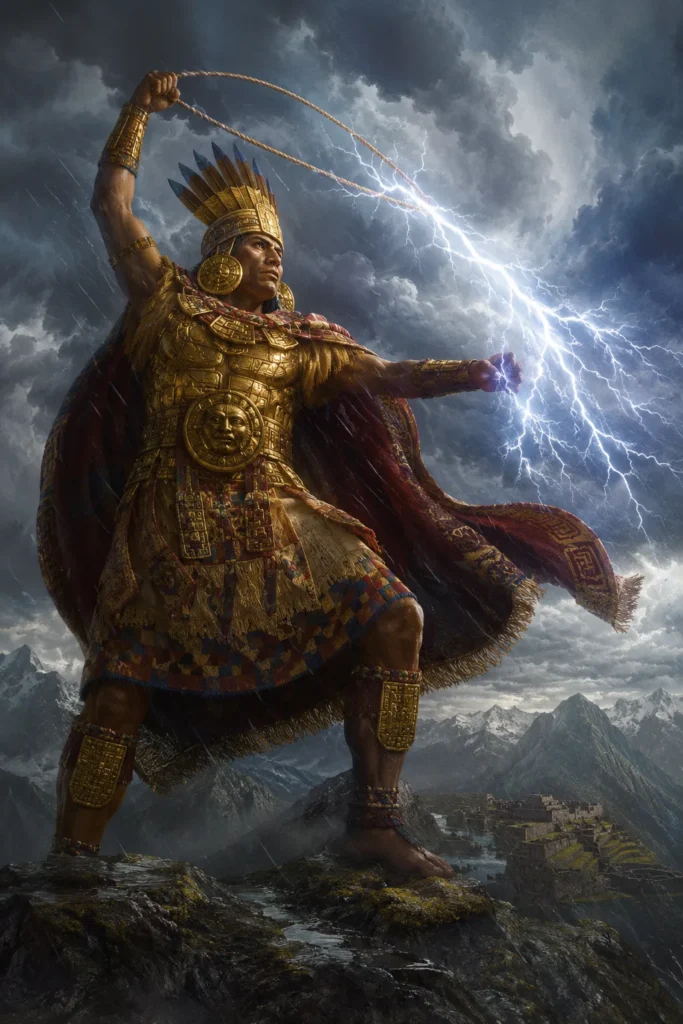
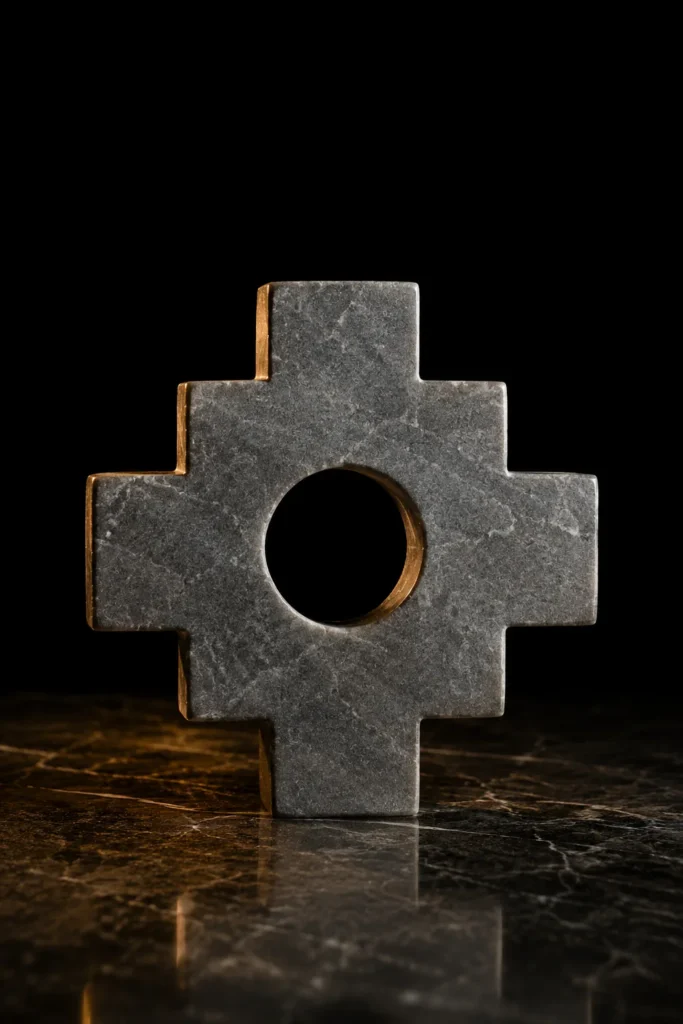
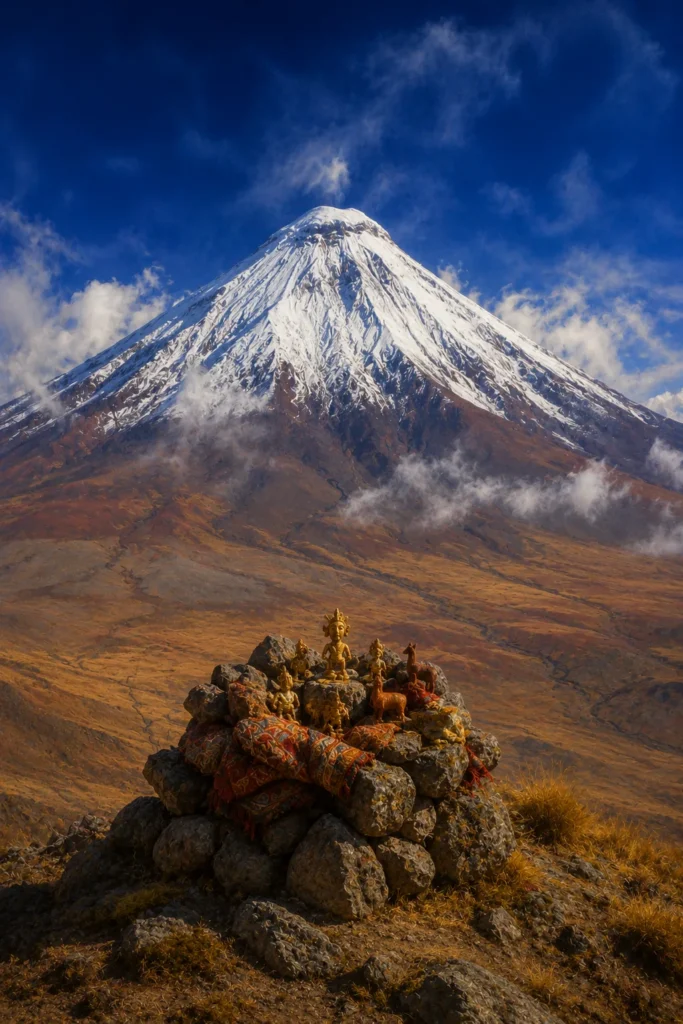
Mullu: the sacred Spondylus shell as protective and sacrificial material of the Andes
By Ralf Ittermann · last reviewed on
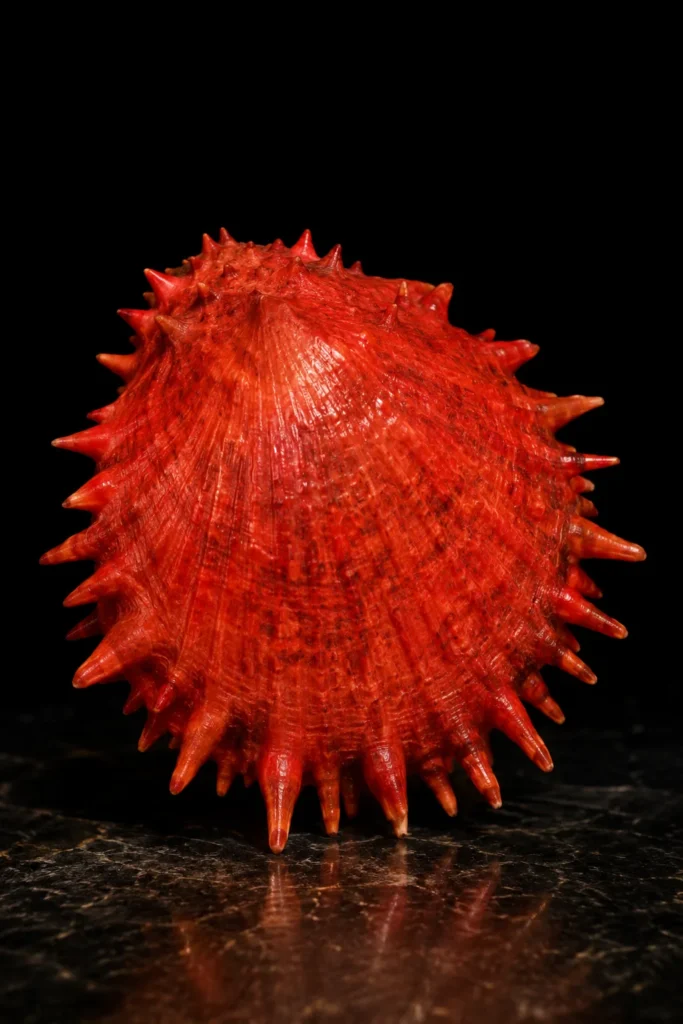
Mullu is the term used in the Andes for the shell of the thorny oysters of the genus Spondylus, a marine bivalve with a striking red and orange coloration. In the pre-Spanish cultures of the Andes, this shell was regarded as a sacred material of high religious standing.
It was presented as an offering, worked into jewellery and figures, and associated with water, fertility and the well-being of the community.
From the perspective of religious studies, Mullu is less a single protective object than a material to which a special power was attributed. This text describes its origin, its use and its meaning from an external perspective. This account traces Mullu’s role as sacrificial and protective material across Andean tradition.
Classification of Mullu
In the languages of the Andes, especially in Quechua, Mullu denotes the shell of the Spondylus mussel. This marine bivalve lives in the warm waters of the Pacific and stands out through its vivid red to orange coloration and its spiny shells.
In the pre-Spanish cultures of the Andes, Mullu was a material of high religious value. It was not regarded as an ordinary raw material, but as a sacred substance used in offerings, jewellery and ritual objects.
Unlike a finished amulet, Mullu is first of all a material. From it were made beads, pendants, small figures and inlay work. Unworked shells and fragments were also presented as offerings. The significance lay in the substance itself.
Appreciation of Mullu was widespread across a broad area encompassing the present-day countries of Peru, Ecuador, Bolivia and parts of Chile. Along long trade routes the shell reached far into the interior and into the highlands of the Andes.
In terms of religious studies, Mullu belongs to the wider context of protective symbols and sacred materials. It shows that not only individual objects, but also substances can be regarded as carriers of special power.
Important for a factual account is the depth of time. Mullu was significant over several thousand years and in many cultures of the Andes. Its history reaches from early coastal cultures to the empire of the Inca and beyond.
In this respect Mullu differs from finished, fully shaped protective objects. It is the substance to which meaning was attached, and not a fixed form. From this substance beads, figures and inlay work could be made, yet the appreciation was directed first of all at the material.
Origin and history
The appreciation of Mullu is very old in the Andes. Already in early coastal cultures the Spondylus mussel was worked and used in religious contexts. Finds attest to its significance over several millennia.
The mussel lives above all in the warm waters off the coast of present-day Ecuador. From there it reached the south and the highlands through trade networks. These trade routes connected widely separated cultures.
In the culture of the Moche on the north coast of Peru and in further pre-Spanish cultures, Mullu is attested in graves, sanctuaries and works of art. There it appears as a grave good of rank and as the material of precious objects.
In the empire of the Inca, the significance of Mullu reached a peak. The shell was presented as an offering to the deities and to sacred places. Special agents are said to have been responsible for procuring the shell.
The harvesting of the Spondylus mussel was demanding, since it had to be recovered by diving in deeper water. This effort contributed to its value. Mullu was thus also a sign of effort and devotion.
The diving grounds off the coast of present-day Ecuador lay far from the places of use in the highlands. The recovery of the shell was therefore bound up with danger and with long transport routes.
Archaeological finds of Spondylus at places deep within the Andean region show how far this material was traded and what standing it held in the exchange networks of the pre-Spanish period.
With the Spanish conquest, the central ritual role of Mullu declined, without disappearing entirely. In the folk religion of the Andes, notions remained alive that continued to attribute a special meaning to the shell.
Form, material and manufacture
The starting material of Mullu is the shell of the Spondylus mussel. It is thick, hard and covered with spines on the outer side. The outer side is often coloured vivid red or orange, the inner side predominantly white with a coloured rim.
From this material a variety of objects were made. Common were beads strung into necklaces, as well as pendants, small figures of people and animals, and platelets for inlay work.
The working required skill, since the hard shell had to be sawn, ground and drilled. Specialised craftsmen produced high-quality objects from Mullu that belonged among the prized goods of the Andes.
Besides the worked objects, unworked shells, ground shell powder and fragments were also used. Ground Mullu could be scattered or mixed into offerings. The form of use was varied.
The red colour of the shell was of great importance for its value. In the Andes, red was a colour of high symbolic standing. The combination of precious material and significant colour reinforced the religious appreciation.
This text describes the working of Mullu only in general terms. Instructions for reproduction would not be appropriate to the subject, since Mullu was a sacred material of a foreign religion and the Spondylus mussel is today also subject to species protection.
Religious and mythological background
In the religion of the Andes, Mullu was closely connected with water and with rain. Since the shell comes from the sea, it was regarded as a gift of the waters and as a material that stood in relation to moisture and fertility.
The Andes are shaped by the question of sufficient water for the fields. In this context Mullu gained a special significance. It was presented in order to ask for rain and for a good thriving of the harvest.
Mullu was also regarded as a welcome food or gift for the deities and the sacred places, called huaca in the Andes. It was laid down at mountain sanctuaries, at springs and in temples.
In the imagery of the pre-Spanish cultures, the Spondylus mussel appears frequently. It is depicted on vessels, textiles and reliefs, often in connection with deities, with water and with fertility.
Especially in the art of the Chimú and in earlier coastal cultures, the shell is depicted together with divers, boats and water birds. Such depictions connect the origin of Mullu from the sea with its ritual use.
They show that the significance of the material in the religion of the Andes was closely linked with notions about the sea and its gifts.
In terms of religious studies, Mullu can be understood as a sacred material whose power was derived from its origin, its colour and its connection to vital forces of nature. It was the carrier of a relationship between human being and world that was experienced as real.
Important is that Mullu did not act on its own, but within the framework of offerings, prayers and fixed actions. Its meaning was revealed only in the ritual context, not from the material alone.
Ritual use and bearers
The most important ritual use of Mullu consisted in its presentation as an offering. It was laid down at sanctuaries, scattered in fields, set into buildings or sacrificed together with other gifts.
In offerings for rain and fertility, Mullu held a prominent position. It was presented in order to dispose the deities of the waters and of the earth favourably and thus to secure the thriving of the harvest.
Mullu is also found in graves as a grave good. It accompanied deceased persons of rank and thereby points to its significance for notions about death and continued life.
The bearers of ritual practice were religious specialists, priests and agents of the ruling power. In the empire of the Inca, the procurement and use of Mullu was part of the state-directed religion.
Worked Mullu, such as bead necklaces and pendants, was also worn as jewellery. In this form it indicated the rank of its bearer and was at the same time connected with the religious significance of the material.
In the present-day folk religion of the Andes, notions persist that attribute a special meaning to the shell and its colour. These notions, however, are to be distinguished from pre-Spanish practice and differ regionally.
Regional variants and related forms
Appreciation of Mullu was widespread across the Andes, yet its precise use differed from culture to culture and from epoch to epoch. Early coastal cultures, the Moche, the Chimú and the Inca used Mullu each in their own way.
The Spondylus mussel was an important trade good. Specialised traders, above all from the coast of Ecuador, brought it into circulation over long distances. Mullu thereby connected coast and highland in an extensive network.
Related to Mullu in its significance are other precious materials of the Andes, such as certain stones, feathers and metals. They too were regarded as carriers of special power and were used in offerings and jewellery.
In terms of religious studies, Mullu can be compared with sacred materials of other cultures, for instance with materials that were regarded as special because of their colour or their origin. Such comparisons serve classification, but must not obscure the distinctive character of the Andes.
Within the field of protective symbols, Mullu is an example of a sacred material, in contrast to finished, fully shaped objects. The article on amulet and talisman explains the conceptual distinctions.
Objects made from Mullu, such as beads and figures, at the same time stand in a series with other worked protective and ornamental objects. Mullu thereby shows how a material and the objects made from it must be considered together.
Significance as a protective object
In the Andes, a protective and blessing significance was attributed to Mullu, above all in connection with water, fertility and the well-being of the community. The protection was often directed at the harvest and thereby at the basis of life.
The protection was not understood as a mechanical effect of the material, but as the consequence of a right relationship with the deities of the waters and of the earth. Mullu was the means by which this relationship was cultivated.
Worked Mullu on the body, for instance as a bead necklace, could at the same time be understood as a personal protective and rank sign. It connected the wearer with the power attributed to the material.
In terms of religious studies, the protective significance of Mullu can be described as part of a coping with uncertainty. In a world threatened by drought and crop failure, the presentation of Mullu offered an ordered action against worry.
This text makes no statements about actual effects. It describes only what meaning the cultures of the Andes attributed to the material. Healing promises and assurances of effect are expressly excluded.
It remains to be noted that the protective significance of Mullu was bound to the religion of the Andes. Outside this context, Mullu is an archaeological material and an object of species protection, not a self-acting amulet.
History of research, ethical questions and cultural appropriation
The study of Mullu is closely connected with the archaeology of the Andes. Finds in graves, sanctuaries and settlements made clear what standing the Spondylus mussel held over millennia. Colonial sources also report on its use.
Later research investigated the trade routes of the shell, its depiction in art and its role in religion. Mullu thus became an important subject for understanding the pre-Spanish Andes.
One ethical problem concerns the handling of archaeological finds. Grave robbery and the illegal trade in objects from the Andes have destroyed sites and obliterated knowledge. Mullu objects are also affected by this problem.
A second problem is species protection. The Spondylus mussel is today endangered in its populations and is subject to protective regulations. A commercial use of the shell as an esoteric object would therefore also be objectionable from an ecological point of view.
In esoteric literature, Mullu is at times promoted as a powerful healing or protective material. In terms of religious studies, this is a modern attribution that is to be distinguished from the pre-Spanish meaning and possesses no evidence of effect.
Since the late 20th century, archaeological research has investigated the trade routes of Mullu using scientific methods. Provenance analyses of shell finds make it possible to assign individual pieces to specific stretches of coast. This work has confirmed the picture of a far-reaching network of exchange that connected coast and highland over long periods.
A serious account describes Mullu as a sacred material of the pre-Spanish Andes, classifies the modern esotericism reception as a phenomenon in its own right, and points to species protection. It avoids any promotion of the shell as a commodity.
Present-day reception
In archaeology and religious studies, Mullu is a recognised subject. Finds are investigated, exhibited and placed in the context of Andean history. Museums in Peru, Ecuador and other countries display Mullu objects.
In the folk religion of the present-day Andes, notions persist that attach a special meaning to the shell and to the colour red. These notions differ regionally and stand within a long context of tradition.
In esoteric and craft reception, Mullu is at times offered as jewellery or as a supposedly powerful material. This use is to be separated from the historical meaning and is additionally problematic on account of species protection.
Species protection shapes the present-day handling of the Spondylus mussel. Since its populations are endangered, trade in it is restricted. Responsible suppliers refrain from using genuine shells for decorative purposes.
Artists of the Andes occasionally take up the meaning of Mullu in order to connect with the pre-Spanish history of their region. In this artistic use, Mullu becomes a sign of cultural origin.
For interested readers, a conscious approach is recommended. Acquiring knowledge about Mullu is legitimate, while the acquisition of genuine Spondylus shells is not advisable for reasons of species protection. Further protective objects are presented in the protective symbols section.
Literature (selection)
Related key terms: Mullu Spondylus shell Andes Inca Moche offering sacred material Quechua rain fertility huaca.
iWell Guard and protective traditions
iWell Guard stands in the cultural-historical line of wearable protective objects, to which Mullu also belongs. A modern companion for people who live with protective symbols: made in Germany, 41 layers of solid gold, platinum and silver, with a 30-day right of return.
Personal experiences may vary. Not a medical device. No healing promise.