iWell Guard

Isarnixe, the alluring voice of the Isar meadows

The Isarnixe is a spirit of the Alpine tradition.

Her song on the Isar is considered a deadly omen.

Table of Contents

Isarnixe - spirits from the alpine tradition, historically illustrative
Isarnixe

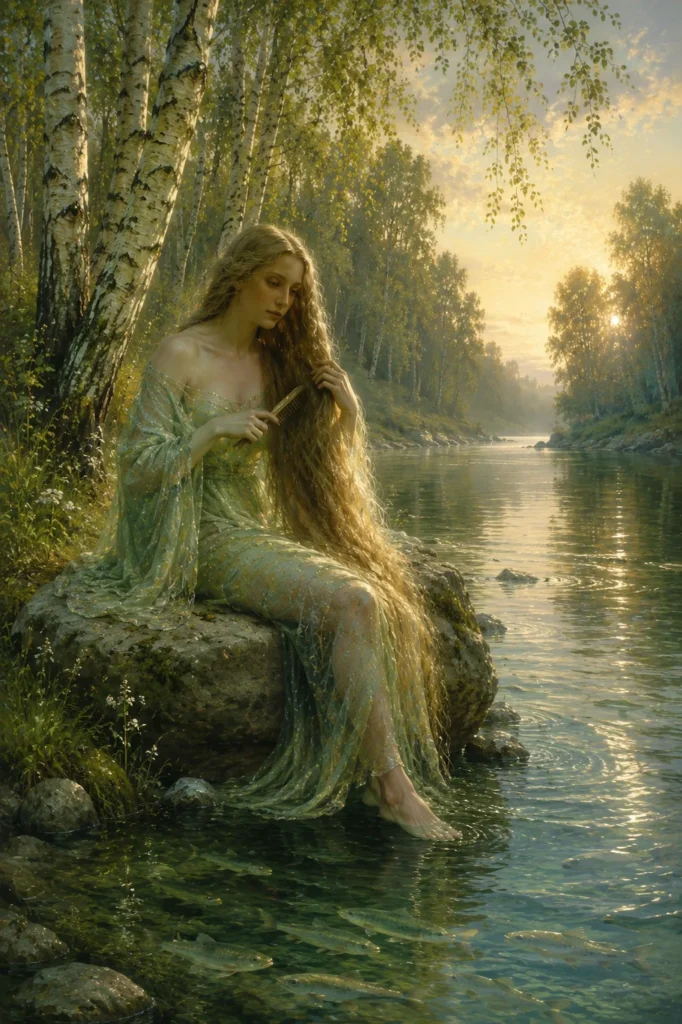
According to legend, the Isarnixe haunts the Isar meadows near Munich with seductive calls. Anyone who hears her song, so the warning goes, must soon drown; she is also said to lure wanderers away from safe paths with small will-o’-the-wisps during floods.

Unlike water spirits known beyond their region, the tradition surrounding the Isarnixe is narrow and closely tied to a specific place: the Thalkirchner rapids and the Marienklause at the Isar weir south of Munich’s old town.

At a glance: Isarnixe

Type: Water spirit with a deadly lure, bound to a specific place
Origin: oral legend, documented in writing since 1906
Texts: Altbayerische Sagen (1906), version by Willy Rett (1912)
Period: mainly late summer and during threatening floods, active at dusk and night
Appearance: invisible voice, perceptible only through song and calls

Source context

Period of the Texts

The legend has been documented in writing since 1906 in the collection Altbayerische Sagen and was reprinted in 1912 in a version by Willy Rett; an older, independent tradition cannot be verified.

Area of Diffusion

The legend is closely tied to Munich, particularly to the Isar meadows near Thalkirchen and the Marienklause at the Isar weir south of the old town.

Sources

The source material is sparse and strongly localised, essentially resting on a few collections of legends from the early 20th and 21st centuries.

Name and variants

Name: Isarnixe, composed of Isar, the river running through Munich, and Nixe, the general term for female water spirits. According to legend, the figure’s traditional call is Tutli-i-i-i.

Appearance and behaviour

Appearance

In the core legend, the Isarnixe herself remains invisible; she appears only as a voice, a coaxing call and a ghostly song said to be heard at the Thalkirchner rapids in late summer. The framing story of the drowned minstrel and the vanished noblewoman suggests that the nixie took a human being into her form.

Effect

Her call is considered a deadly omen, and following it means certain death in the water. During threatening floods, the Isarnixe is also said to flit through the meadows and lure lone wanderers away from safe paths with small flickering lights until they are caught by the rising water; a bright laughter is then said to reveal to the victims that they have fallen prey to the nixie.

Profile: Isarnixe

The key aspects of the water spirit at a glance.

Tradition

Local Munich river legend about a deadly, alluring water woman, documented in writing since 1906.

Relates To

Lone walkers, raftsmen and wanderers in the Isar meadows, especially in late summer and during floods.

Depiction

No fixed form: an invisible voice and song, hinted at in the framing story as a vanished noblewoman.

Sphere of Influence

A deadly call followed by drowning, as well as luring flood-threatened wanderers with small will-o’-the-wisps.

Conduct

Raftsmen passed the dangerous Isar weir while praying; wayside shrines along the weir commemorated drowned raftsmen.

Parallels

The Loreley on the Rhine as her closest relative, along with the plain Nix and the Slavic Rusalka.

The minstrel, the noblewoman and the call Tutli-i-i-i

The legend of the Isarnixe is preserved chiefly through a version published in 1906 in the collection Altbayerische Sagen and reprinted in 1912 in a version by Willy Rett. It tells the story of a foreign minstrel who came to Munich for the wedding of Duke Albert IV of Bavaria and Kunigunde of Austria in 1487 and enchanted a noblewoman with his bagpipe playing. Out of high spirits, the young woman threw her jewellery into the Isar and challenged the minstrel to retrieve it; he drowned in the flood, and three days later the noblewoman also vanished without a trace.

Since then, so the legend goes, the ghostly call Tutli-i-i-i has been heard at the Thalkirchner rapids. Until the 19th century, the Isar meadows south of Munich were a working area for raftsmen, who prayed as they passed the difficult stretch by the Isar weir near the Marienklause, to protect themselves from the nixie’s song. As a local explanation for real deaths from bathing, rafting or hiking in the flood-prone Isar valley, the legend is related to other river legends of the Alpine region.

Reception and classification

Compared with legends of the Rhine or Elbe, the Isarnixe remained a purely local Munich motif and did not find its way into the wider literature of the 19th century. In Munich itself, the legend survives in local history and folklore collections, such as that by Gisela Schinzel-Penth, as well as in city tours on the history of the Isar meadows and rafting.

From a religious-studies perspective, the Isarnixe can be read as a local expression of a widespread pattern for explaining the danger of drowning in rivers, similar to that found with the Loreley. Its close association with a specific place, the Thalkirchner rapids and the Marienklause, and with a verifiable historical setting, the 1487 wedding, shows how natural danger, local memory culture and narrative embellishment can combine into a local legend. Given the narrow source base, it cannot be determined with certainty whether the legend rests on an older, pre-Christian notion of a river spirit or whether it is essentially a product of the legend collections of the early 20th century.

The raftsmen's prayer

The narrow source material allows only a few reliable statements about traditional protective practices. What is documented is chiefly prayer: raftsmen passed the dangerous Isar weir near the Marienklause while praying, to guard themselves against the Isarnixe’s song. The numerous wayside shrines along the Isar weir, small image and cross posts commemorating drowned raftsmen, also point to a broader religious practice of blessing places and intercession at dangerous river spots, as was common at weirs and fords throughout the Alpine region. Objects or formulas explicitly documented as effective against the Isarnixe herself, beyond prayer, are not recorded in the available sources.

Loreley, Nix and Rusalka: related water women

The Isarnixe belongs to the widespread conception of deadly, alluring water women. Her closest relative is the Loreley on the Rhine, whose song likewise lures sailors to their doom, although the Loreley legend is far more elaborately developed in literature. The plain Nix and the Slavic Rusalka share with the Isarnixe the motif of the deadly water call and the association with a particular river or lake. The Alpine Salige Frau also shows structural similarities as an ambivalent female being bound to water and nature.

Frequently asked questions about the Isarnixe

Does the Isarnixe also appear in other collections of legends?

The legend can essentially be traced back to the collection Altbayerische Sagen of 1906 and its later retellings. A broad, independently transmitted tradition of legends, such as exists for the Rhine or the Elbe, cannot be verified for the Isarnixe.

Where exactly is the Isarnixe said to haunt?

The places named are the Thalkirchner rapids and the Isar weir near the Marienklause south of Munich’s old town, an area that was formerly a central working site for rafting.

What distinguishes the Isarnixe from the Loreley?

Both lure with song into death, but the Loreley became widely known through Romantic literature and was elaborated artistically to a much greater degree. The Isarnixe, by contrast, remained a locally confined Munich river legend without comparable literary treatment.

Further links

Recommended internal links:

Literature (selection)

A selection of key sources and studies:
  • Jugendschriften-Ausschuss des Bezirkslehrervereins München (ed.): Altbayerische Sagen. München 1906.
  • Rett, Willy: Die Isarnixe, in: Die Propyläen. Wochenschrift zur Münchener Zeitung. 1912.
  • Schinzel-Penth, Gisela: Sagen und Legenden von München. München 2015.

Further standard works in the bibliography.

The legend of the Isarnixe remains, as an Isar water spirit, closely tied to a single location: the Thalkirchner rapids, where a fatal siren call has been told for over a hundred years, warning of caution near the water.

Classification & Protection

IVLEVEL
The Protection Compass assigns this being to influence level IV, Severe influence.

Against its influence, cross-cultural tradition names these protective means:

Compare in the Protection Compass →

Recommended protective means

iWell Guard

The simplest protective means in this collection: 41 layers of fine gold 999, platinum, silver and silicon, manufactured in Ruhla, Thuringia. It requires no activation, is bound to no person, and is effective within a radius of around 50 meters, even without being worn.

All protective means at a glance →