iWell Guard

Baltic Gods: Perkūnas and the Mythology of Lithuania, Latvia

The Balts, Lithuanians and Latvians, spread across the present-day states of Lithuania and Latvia, preserved the longest pre-Christian religion in Europe, with Christianisation not completed until 1387, and in the Žemaitija region not until as late as 1413. The folk songs known as Dainas, the hearth-fire cult around the goddess Gabija and the veneration of the house snake Zaltys form a distinct, particularly archaic Indo-European religious layer.

The Baltic pantheon is closely tied to house, hearth and the powers of the landscape.

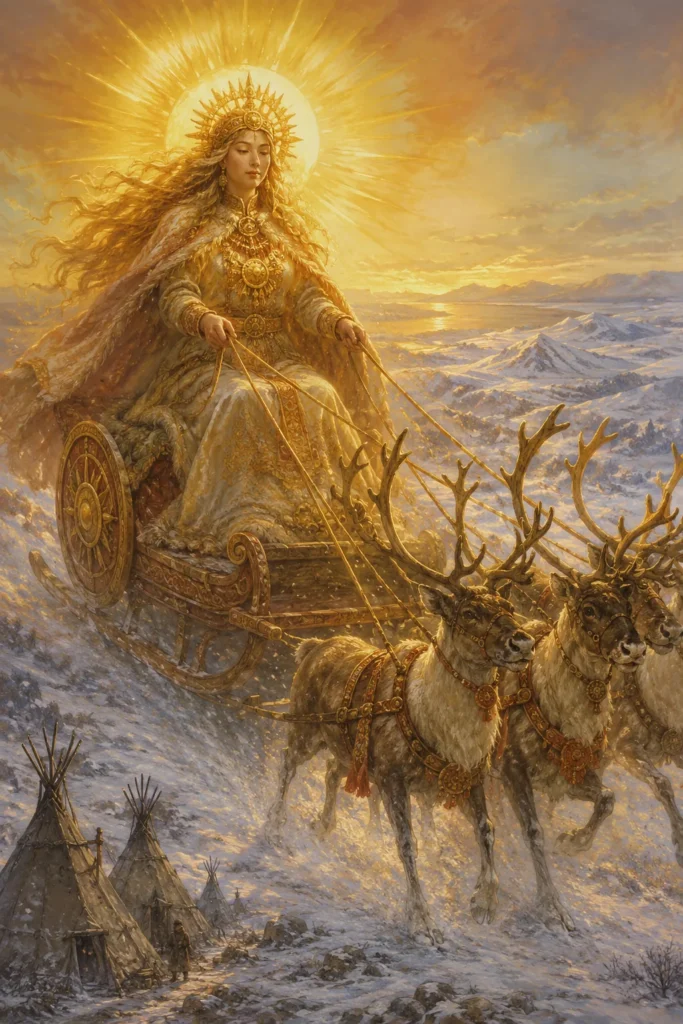
Beaivi: gods from the Sami tradition, historically illustrative
The Baltic Dainas tradition forms the backbone of the reconstruction of pre-Christian religion in the Baltic region.

The Baltic gods are divided into celestial and weather powers around the thunder god Perkūnas, house spirits such as Kaukas and Aitvaras, and a multitude of mother deities who rule over forest, fire and water. Motifs from this tradition are still cultivated in Lithuania and Latvia today.

The Balts: Language and Settlement Area

The Baltic language family, a distinct branch of the Indo-European languages, comprises the living languages Lithuanian and Latvian, as well as the West Baltic language of the Old Prussians, which became extinct in the 17th century. Linguistically, the Baltic languages are considered particularly archaic and therefore important for reconstructing Indo-European conditions.

The settlement area comprises the present-day states of Lithuania and Latvia on the Baltic Sea. The Christianisation of Lithuania officially took place only in 1387 under Grand Duke Jogaila; the Žemaitija region (Lower Lithuania) followed in 1413 as one of the last pagan regions of Europe. Reports of pre-Christian practices persist in isolated cases into the 18th century.

Sky and hearth order the pantheon of the Balts: above, the thunder god Perkūnas; in the house, the fire goddess Gabija; across the landscape, the numerous mother deities. The Dainas tradition of Lithuania and Latvia keeps this knowledge alive to this day.

Pantheon: Dievas, Perkūnas, Laima, Saulė

Dievas, Lithuanian, or Dievs, Latvian, denotes the sky god, a distant, ordering figure. Perkūnas, Lithuanian, and Pērkons, Latvian, is the thunder god, responsible for storms, fertility and justice. Laima is the goddess of fate and fortune, who watches over birth and life’s path; Saulė, Lithuanian, or Saule, Latvian, is the female sun deity. In Latvia, Māra additionally appears as an earth and mother deity alongside Dievs and Laima.

Velinas, Lithuanian, or Velns, Latvian, is an underworld and death figure who, after Christianisation, increasingly merged with the Christian devil. Alongside these major figures, the tradition knows deities of its own for individual domains, such as the wind god Vėjopatis or the Latvian house spirit Mājas gars, who watches over house and farmstead. The Latvian tradition also knows an extensive system of around seventy ‘mothers’ (mātes), personified rulers of individual natural domains such as forest, sea, wind or fire.

The Dainas as a Source for the History of Religion

Dainas are short, mostly four-line Lithuanian and Latvian folk songs that were passed down orally over generations and are regarded as a window into pre-Christian beliefs barely reshaped by Christianity. The Latvian lawyer and folklorist Krišjānis Barons collected close to 218,000 Dainas in six volumes between 1894 and 1915; the total Latvian corpus of all collectors is estimated at more than a million texts.

The Daina cabinet, made around 1880 to Barons’ design and holding more than 350,000 slips of paper, has been part of the UNESCO Memory of the World register since 2001 and is now kept at the National Library of Latvia. In Lithuania too, collected folk songs, fairy tales and place names form a central source for the reconstruction of religious history.

The Fire Cult of Gabija

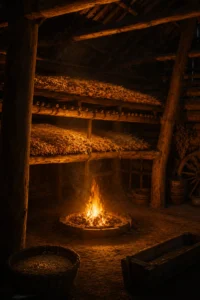
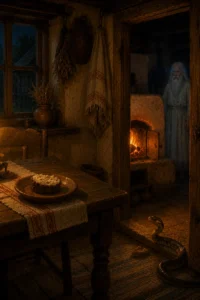
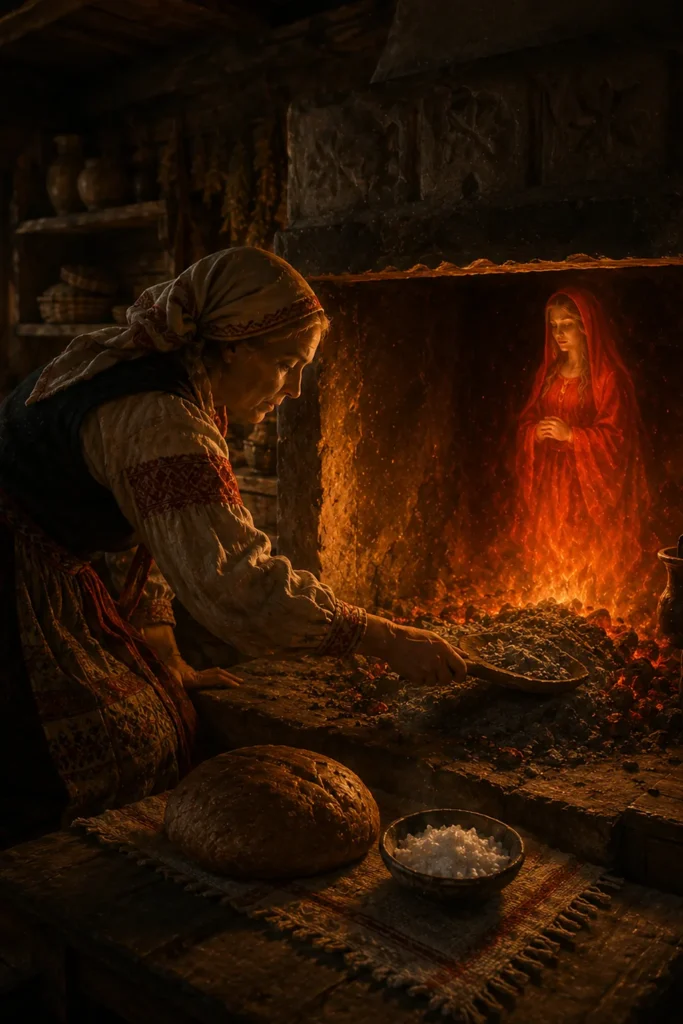
Gabija is the Lithuanian hearth-fire goddess, guardian of house and family, who was envisioned in zoomorphic form as a cat, stork or rooster, or as a woman dressed in red. Her cult required respectful treatment of fire: it was not to be spat on or trodden out; embers were carefully covered at night rather than extinguished, and bread and salt were considered fitting offerings.

The main source for this cult is the work De diis Samagitarum, published in 1615 by the Polish scholar Jan Łasicki. In Latvia, a related figure appears within the Latvian mother system: Uguns māte, the fire mother.

Frequently Asked Questions about Baltic Mythology

Who are the Balts?


The Balts include the Lithuanians and Latvians, as well as the Old Prussians, whose language became extinct in the 17th century. They speak languages of a distinct, particularly archaic branch of the Indo-European language family and settle in present-day Lithuania and Latvia on the Baltic Sea.

Why was Lithuania Christianised so late?


Lithuania officially adopted Christianity in 1387; the Žemaitija region (Lower Lithuania) followed only in 1413. This makes Lithuania the region of Europe that remained pre-Christian the longest, favoured by its political strength as a grand duchy and its peripheral location.

What are Dainas?


Dainas are short Lithuanian and Latvian folk songs that were transmitted orally and count among the most important sources of pre-Christian religion. Krišjānis Barons collected close to 218,000 of these songs in Latvia alone, preserved in the Daina cabinet of the National Library of Latvia.

What is the house snake Zaltys?


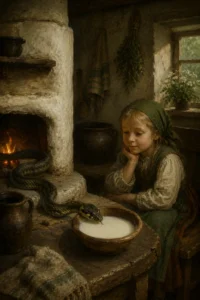
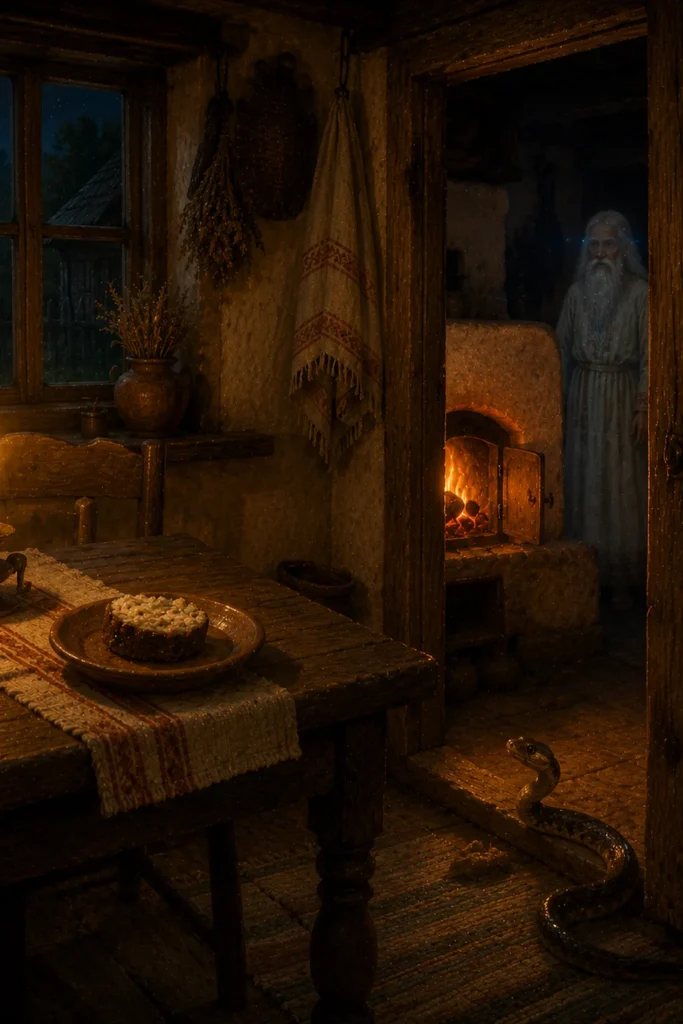
Zaltys, Lithuanian, or Zalktis, Latvian, is the grass snake, which as a sacred household animal was fed milk and was not to be killed. It was regarded as a protector of house and livestock and was sometimes associated with the Latvian milk mother, Piena māte.

The House Snake Zaltys and Its Veneration

Žaltys, Lithuanian, or Zalktis, Latvian, denotes the grass snake, which in Baltic tradition was regarded as a sacred, luck-bringing household animal. It was regularly fed milk, and its presence in the house or barn meant protection for the inhabitants and livestock; a widespread saying holds that the sun weeps at the sight of a dead Zaltys.

The taboo on killing grass snakes is ethnographically attested into the modern era, described among others by the religious scholars Jonas Balys and Haralds Biezais, as well as by Marija Gimbutas. Zaltys veneration is also occasionally attested among the Old Prussians.

Forest Mothers: Meža māte and Medeina

Meža māte, the Latvian forest mother, belongs to the extensive system of Latvian mother deities (mātes) and protects hunters, forest workers and herders; she is occasionally given a partner, Mežatēvs, a forest father. In Lithuania, Medeina fulfils a comparable role as ruler over forest and game, with the hare as her attribute animal.

As early as the Hypatian Chronicle of 1252, and later the Polish chronicler Jan Długosz in the 15th century, Medeina was compared to the Roman hunting goddess Diana. The Lithuanian-studies scholar Algirdas Julien Greimas interpreted her as a virginal, huntress-like figure, at times also envisioned as a she-wolf.

Forced Christianisation and Present-Day Reclamation

The Christianisation of the Balts was a particularly long and at times violent process. The monastic states of the Teutonic Order and the Livonian Brothers of the Sword conducted missionary campaigns under military pressure from the 13th century onward, while Lithuania, as an independent grand duchy, adopted baptism only in 1387 out of political calculation. Reports of forbidden offerings to fire, trees and snakes persist into the 18th century.

Since the end of the 20th century, intensified after the independence of Lithuania and Latvia in 1990 and 1991, a cultural reclamation has been taking place, visible in the neo-pagan movement Romuva in Lithuania and the Dievturība movement in Latvia, as well as in the cultivation of Dainas, folk-song festivals and customs surrounding house spirits such as Kaukas and Aitvaras. Standard works of religious studies come from Marija Gimbutas, Algirdas Julien Greimas, Haralds Biezais and Norbertas Vėlius.

Two Languages, One Cultural Area and Its Internal Differences

The Baltic cultural area includes the Lithuanians and Latvians, as well as the Old Prussians, who became extinct in the 17th century and whose language survives only in fragments. Lithuanian and Latvian are closely related but have long been distinct languages, and the religious beliefs of the two peoples also differ considerably in detail.

Particularly striking is the difference in the Latvian mother system, which, with an estimated seventy personified nature mothers (mātes), is far more elaborately differentiated than the Lithuanian tradition, where instead individual, clearly defined figures such as Medeina or Gabija take centre stage.

Customs also differed regionally, depending on landscape, coastal or inland location, and economic orientation, such as agriculture, fishing or forestry. Sweeping statements about ‘Baltic religion’ obscure this internal diversity both between and within the two peoples.

Common to both traditions is the central position of the thunder god, Lithuanian Perkūnas, Latvian Pērkons, the significance of the hearth fire, the veneration of the house snake Zaltys, and the Dainas as the most important genre of oral sources. Yet even these shared elements are attested differently from region to region.

Dainas, Mother Deities and the Powers of the Baltic Worldview

The best-known religious legacy of the Balts are the Dainas, short, mostly four-line folk songs that preserve religious beliefs in condensed, formulaic language. They sing of the everyday life of house, field and family as well as the great figures of the pantheon, and are considered comparatively little reshaped by Christianity.

The Latvian folklorist Krišjānis Barons collected close to 218,000 Dainas between 1894 and 1915 and arranged them in six volumes; his system still forms the basis of Latvian folk-song research today. The entire Latvian corpus, including later collections, is estimated at more than a million texts; comparably extensive collections exist in Lithuania.

The Baltic worldview knows a distant sky god, Dievas or Dievs, a central thunder god, Perkūnas or Pērkons, as well as deities of fate, sun and earth such as Laima, Saulė and, in Latvia, Māra. Alongside these, Latvia has an extensive system of around seventy mother deities who rule over individual domains of the landscape and of life, from the forest mother Meža māte to the fire mother Uguns māte to the sea mother Jūras māte.

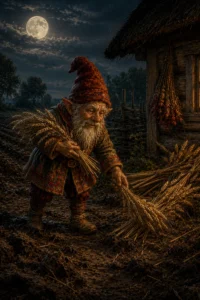
House and farmstead have their own protective powers: the fire goddess Gabija, the house snake Zaltys, and ambivalent house spirits such as Kaukas and the fiery Aitvaras, who bring wealth but also misfortune if disrespected. Further figures preside over individual natural domains, such as the Lithuanian wind god Vėjopatis, the Latvian house spirit Mājas gars, and the deity named in early modern sources, Jagaubis.

There is no complete scholarly agreement on the precise structure of this pantheon, because the early written sources come from the pens of Christian chroniclers and missionaries, and the later collection of folk songs did not begin until the 19th century. Marija Gimbutas, Algirdas Julien Greimas and Haralds Biezais have put forward differing, at times competing, interpretations of this material.

The Sources: Chronicles, Mission Reports and Folk-Song Collections

The earliest written tradition on Baltic religion comes from outside, chiefly from Christian chroniclers and missionaries in connection with the crusades of the Teutonic Order and the Livonian Brothers of the Sword in the Baltic region. Among the earliest sources are the Chronicle of Henry of Livonia from the years 1225 to 1227, as well as the Livonian Rhymed Chronicle.

In the 14th century, the Order’s chronicler Peter von Dusburg (1326) reported on the practices of the Old Prussians; in the 16th century followed Simon Grunau’s disputed records (1519 to 1529). One of the most important early modern sources is the work De diis Samagitarum, printed in 1615 by the Polish scholar Jan Łasicki, which lists numerous deities and rituals of Lithuania and Žemaitija, including mentions of a deity named Jagaubis, whose precise domain is not consistently recorded in the sources.

These early texts are rich in detail but deeply partisan, since their purpose was mostly to justify the mission or to combat customs regarded as pagan, not to describe them neutrally.

A second, more recent group of sources consists of the Dainas, fairy tales and place names collected in the 19th and early 20th centuries. The Latvian lawyer Krišjānis Barons, and later researchers such as Jonas Balys in Lithuania, thereby produced an extensive, predominantly orally rooted corpus that is far less shaped by Christian interpretive intent than the earlier chronicles.

In the 20th century, systematic scholarly analyses were added, for instance by Marija Gimbutas, who combined archaeological and linguistic findings, by Algirdas Julien Greimas, who analysed the myths structurally, and by Haralds Biezais, who, in Swedish exile, evaluated mainly Latvian material and critically examined matriarchy theories. Norbertas Vėlius laid an important foundation for further research with a multi-volume collection of sources.

Researchers generally emphasise that the source material on Baltic religion is inconsistent and scattered across centuries, which is why any comprehensive account must live with considerable uncertainties and regional gaps.

Forced Mission, Suppression and Present-Day Reclamation

The Christianisation of the Balts was a long, and in part violent, process. From the 13th century, the Teutonic Order and the Livonian Brothers of the Sword conducted missions among the Old Prussians and the inhabitants of Latvia and Estonia under military pressure, with considerable loss of life and independent culture; the language of the Old Prussians became extinct in the 17th century.

Lithuania, as an independent grand duchy, adopted Christianity in 1387 under Grand Duke Jogaila out of political calculation, in order to seal the union with Poland and remove the basis for the Teutonic Order’s crusades. The Žemaitija region (Lower Lithuania) followed only in 1413, after the victory over the Order at Tannenberg in 1410. Reports of ongoing offerings to fire, trees, snakes and other sacred objects persist in isolated cases into the 18th century.

In the 19th and 20th centuries, religious pressure combined with linguistic and cultural pressure; under Tsarist and later Soviet rule, Lithuanian and Latvian language and culture were at times severely restricted.

Since the end of the 20th century, especially after Lithuania and Latvia regained independence in 1990 and 1991, a new interest in pre-Christian tradition can be observed. It is evident in the neo-pagan movement Romuva in Lithuania, which underwent an official recognition procedure there in 2015, and in Latvia’s Dievturība movement, which arose as early as the interwar period.

This interest is also visible in the cultivation of the Dainas, in folk-song festivals that are included on the UNESCO Representative List of the Intangible Cultural Heritage of Humanity, and in a growing academic and artistic engagement with pre-Christian motifs.

However, one cannot speak of a broad revival of the old religion as a lived majority practice. Most Lithuanians and Latvians are Christian by confession, and engagement with the pre-Christian past is primarily a matter of cultural self-assurance and historical reappraisal.

The Lithuanian-Latvian Gabija fire cult combines hearth fire, offerings and purity requirements into a distinct protective practice for house and family, while the house snake Zaltys stood as a living protective animal for the prosperity and safety of farmstead and livestock.

Related key terms: Perkūnas Pērkons Dievas Dievs Laima Saulė Gabija Zaltys Dainas Lithuania Latvia.

Protective Objects in This Cultural Tradition

Baltic tradition knows the carefully tended hearth fire of Gabija, the milk-fed house snake Zaltys as a living protective animal, and ambivalent house spirits such as Kaukas and the fiery Aitvaras, who bring prosperity but also misfortune if disrespected; portable amulets are less often attested in the sources than these house- and farmstead-bound forms of protection, comparable at most to iron or protective pouches from other cultures. An overview of protective objects from various traditions is offered by the Protection Compass.

iWell Guard fits into this cultural-historical lineage of portable protective objects, in a contemporary material architecture, crafted in Germany. 41 layers, genuine gold, platinum, silver. 30-day right of return.

Personal experiences may vary. Not a medical device. No promise of healing.