Hantu Belief: Pontianak, Toyol and the Malay Spirit World
By Ralf Ittermann · last reviewed on
The Malay spirit world stands in a tense relationship with official Islam, which classifies spirit belief partly as superstition (khurafat) and partly integrates it into the Islamic concept of the jinn.
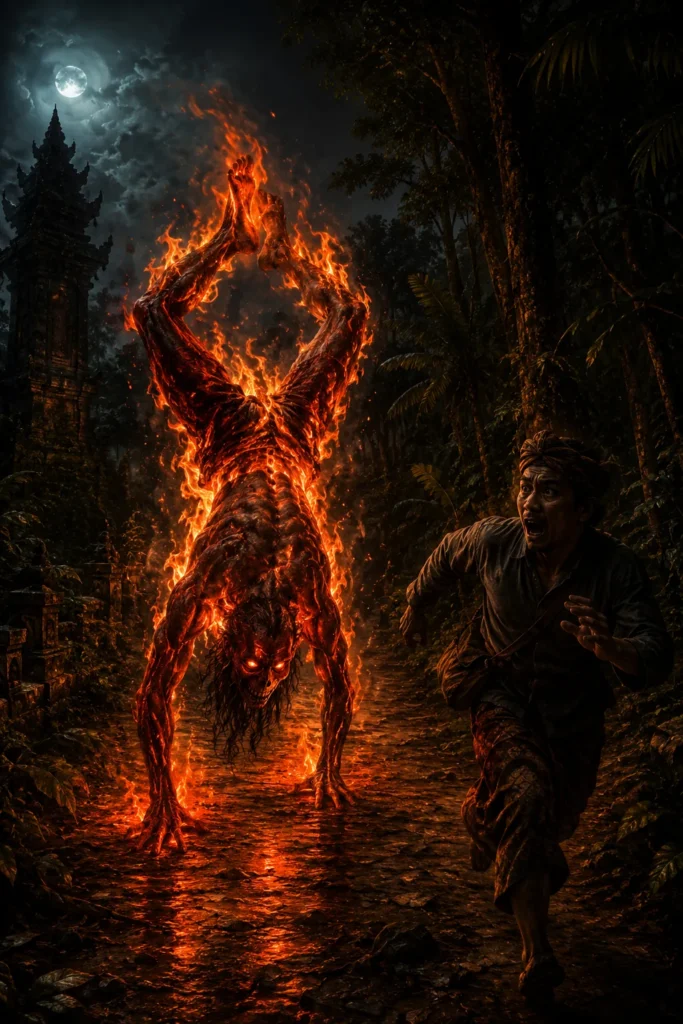
The Malay spirit world is divided into female vengeance spirits such as Pontianak and Langsuir, the child spirit Toyol, the flying head Penanggalan, and the hidden people known as Orang Bunian. These beliefs are still passed on today, orally and through the media, in Malaysia, Indonesia and Singapore.

Malaysia, Indonesia, Singapore: the Religious Landscape of the Malay World
The Malay Peninsula, Sumatra, Borneo and the offshore islands do not form a uniform narrative area; the names and characteristics of spirits vary considerably between Malaysia, Indonesia, Singapore and Brunei, as well as between individual regions and language groups.
The basic outlines of this tradition: a spirit belief centred on women who died during childbirth or pregnancy, a calendar of ritual protective measures for births and burials, and a coexistence of folk Islam with older, pre-Islamic beliefs.
Pontianak and Langsuir: Female Vengeance Spirits
Both figures are considered dangerous to newborns and women in confinement. As preventive protection, glass beads were traditionally placed in the mouth of the deceased, an egg in each armpit, and needles in the palms, so that they could neither cry out nor raise their arms in the grave.
Toyol: the Summoned Child Spirit
In everyday culture, the Toyol still serves today as an explanation for the unaccountable loss of money or jewellery, as well as a popular motif in Malaysian and Indonesian film and television.
Penanggalan: the Flying Head
Traditionally, houses with newborns were protected with thorny branches, such as those of the jeruju plant, placed at windows and doors, since the entrails of the Penanggalan are said to become entangled in them.
Frequently Asked Questions about the Malay Spirit World
What is a hantu?
Hantu is a Malay collective term for spirits, undead beings and nature spirits, combining pre-Islamic animist beliefs with later Hindu-Buddhist and Islamic influences.
What is the difference between Pontianak and Langsuir?
The Pontianak is considered the spirit of a girl or child who died in childbirth, while the Langsuir is considered the spirit of a mother who herself died during pregnancy or childbirth. Both appear as beautiful, dangerous female figures.
How does Islam regard hantu belief?
Official Islamic bodies in Malaysia and Indonesia generally reject spirit belief and practices such as the summoning of the Toyol as superstition (khurafat) or as association with other powers besides God (syirik), while some hantu beliefs are linked to the Quranic idea of the jinn.
What are Orang Bunian?
The Orang Bunian are considered an invisible, human-like hidden people living in a parallel world overlapping the visible one, who respond according to a principle of reciprocity to politeness or to breaches of taboo.
Orang Bunian: the Hidden People
In some interpretations, the Orang Bunian are linked to the jinn of the Islamic worldview, an example of the blending of pre-Islamic and Islamic conceptions in Malay culture.
Bomoh and Dukun: Ritual Protective Practice
Protective formulas (jampi, mantera) and consecrated objects form part of this practice, which varies considerably by region and by the training of the bomoh. Scholars generally describe this figure as a continuation of pre-Islamic, shamanically influenced practice under an Islamic guise, a classification not always shared by practising bomoh themselves.
Islam, the Jinn, and Dealing with Hantu Belief
Other elements, in particular the summoning of spirits for personal gain, as with the Toyol, or practices of black magic (ilmu hitam), are frequently rejected by official Islamic authorities as khurafat (superstition) or syirik (association with other powers besides God). Religious authorities such as JAKIM in Malaysia repeatedly publish fatwas and statements on the matter.
Hantu belief thus remains an example of a still-negotiated coexistence between folk Islam and official teaching, neither wholly rejected nor wholly integrated into religious practice.
One Language Area, Many Spirit Worlds
Names such as Pontianak, Kuntilanak (its Indonesian equivalent), Langsuir or Toyol appear in slightly varying forms and with different characteristics across regions. Even the assessment of which beings are considered especially dangerous, and which protective measures are customary, differs from village to village and island to island.
Added to this is the diversity of pre-Islamic substrates: Austronesian animism, Hindu-Buddhist influences from the era of the Srivijaya and Majapahit empires, and later Islamic interpretive patterns overlap to varying degrees. Blanket statements about hantu belief obscure this layering.
Birth, Death and the Calendar of Danger
Accordingly, traditional protective rites focused on this threshold situation: thorny branches at windows, amulets by the bed of the woman in confinement, and the avoidance of certain words and activities in the first weeks after birth. Special precautions were also taken at burials themselves, such as placing glass beads, eggs and needles with women who died under unfavourable circumstances.
This pattern links the Malay spirit world to a widespread motif in the history of religion, according to which transitional phases of life, birth, marriage, death, are considered especially permeable to supernatural influences.
Sources: Colonial Ethnography and Modern Research
Among the most influential works is Walter William Skeat’s study Malay Magic from 1900, which, despite its colonial perspective, remains to this day an important source for incantations, ritual practice and spirit classifications of the Malay Peninsula.
More recently, Malaysian and Indonesian researchers, working from religious-studies and Islamic-studies perspectives, have re-examined hantu belief, including with regard to its compatibility with Islamic teaching. These studies show that the treatment of hantu belief remains a matter of controversy within the Malay world itself, between rejection as religiously impermissible and toleration as cultural heritage.
Islam, the Jinn, and Dealing with Pre-Islamic Heritage
The Quran recognises the jinn as its own spirit beings created from fire, existing alongside humans, capable of acting for good or ill, and recognised as real under Islamic law. This concept offered a point of connection through which part of the older hantu belief could be integrated into an Islamic worldview, for instance by interpreting the Orang Bunian or certain hantu types as a form of jinn.
Other elements, in particular the summoning of spirits for personal gain, as with the Toyol, or practices of black magic, are clearly rejected by official Islamic authorities as syirik (association with other powers besides God) or khurafat (superstition). Religious authorities in Malaysia, such as JAKIM, repeatedly publish statements and fatwas on the matter.
Hantu belief thus remains an example of how tradition and official religion can stand in a tense relationship that produces neither complete rejection nor complete integration, but a still-negotiated coexistence.
Beings of this Tradition (5)

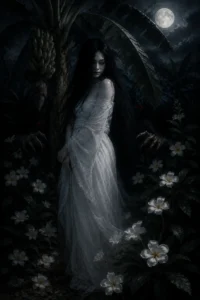
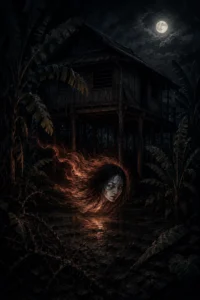

Malay hantu belief combines Pontianak, Langsuir, Toyol and the orang bunian into a distinct protective practice of thorny branches, amulets and ritual formulas, intended to safeguard families and newborns from spirits and nature beings.
Related key terms: Hantu Pontianak Langsuir Toyol Penanggalan Orang Bunian Bomoh Jinn Malaysia Indonesia.
Protective Objects in this Cultural Tradition
Personal experiences may vary. Not a medical device. No promise of healing.