


Yoruba Gods, Orisha and the Cult of West Africa
By Ralf Ittermann · last reviewed on
The Yoruba pantheon of the Orisha is closely linked to nature, the ancestors and the forces of everyday life.
The Yoruba Orisha are divided, according to oral tradition, into a scarcely countable multitude of deities surrounding the supreme being Olodumare, ranging from sea goddesses such as Yemoja and thunder gods such as Shango to the ancestors of the Egungun cult. They are still venerated today in Nigeria and in the American diaspora.
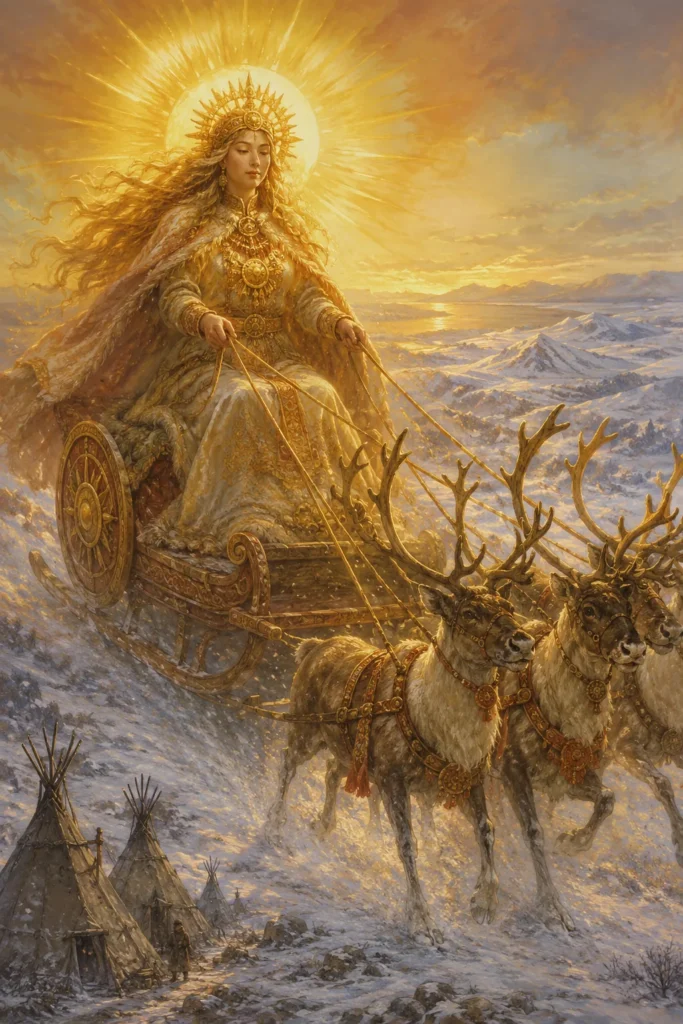
Yoruba Language, Kingdoms and Settlement Area
Historical centres included the Kingdom of Ife (approximately 1200 to 1420) as the oldest Yoruba state formation and the later Oyo Empire, which dominated the region militarily and economically from the 14th to the 19th century. In Yoruba cosmogony, Ile-Ife is considered the place of origin of creation and of humankind; its ruler still bears the title Ooni today. Close cultural and artistic ties exist with the neighbouring Kingdom of Benin.
Three forces order the Yoruba pantheon: the supreme being Olodumare, the mediating Orisha and the ancestors of the Egungun cult. The Ifa divination of the Babalawo keeps this knowledge alive to this day.
Pantheon: Olodumare, the Orisha and Their Number
Olodumare, also called Olorun, is regarded as the supreme being of Yoruba cosmology and the source of the life force Àṣẹ; the religious scholar Bolaji Idowu described this relationship as ‘diffuse monotheism’. The Orisha, also called Irunmọlẹ, are mediating deities sent by Olodumare, not autonomous creators. Their number is traditionally given in oral tradition as ‘four hundred and one’, an expression of the inexhaustibility of this knowledge; other counts name four hundred, seven hundred or more.
The Orisha are often distinguished into ‘cool’ and ‘hot’ temperaments, for example calm, bright figures as opposed to energetic deities such as Shango. Among the best known are the sea mother Yemoja, the river goddess Oshun, the thunder god Shango and the storm goddess Oya.
Ifa Divination and the Babalawo
Ifa is the divination system of the Yoruba, named after the deity Orunmila, who is responsible for wisdom and destiny. The Babalawo, ‘father of secrets’, consults the oracle with sixteen palm nuts (ikin) or a chain (opele) and thereby determines one of sixteen base Odu, which combine into a total of 256 Odu combinations. Each Odu is associated with numerous orally transmitted verses (ese Ifa), from which the Babalawo derives counsel, myth and recommended courses of action.
In 2005, UNESCO declared Ifa divination a Masterpiece of the Oral and Intangible Heritage of Humanity; in 2008 it was inscribed on the Representative List of the Intangible Cultural Heritage. The scholar Wande Abimbola, himself a Babalawo and long-serving Awise Agbaye, the supreme spokesperson of Ifa, is among the most important transmitters of this knowledge in the 20th and 21st centuries.
Egungun, the Ancestor Mask Cult
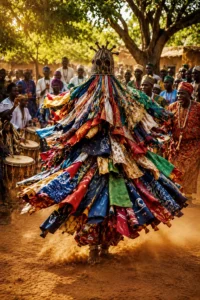
Egungun refers both to the masked dancers and to the collective power of the ancestors that returns through them into the community of the living. Elaborately layered robe masks completely conceal the wearer; his appearance is regarded as the immediate presence of the deceased.
The Egungun cult serves ritual purification, moral control and the transmission of messages and blessings from the ancestors; it is found chiefly in south-western Nigeria, for instance in Ibadan and Ogbomoso, but also occurs in the diaspora, prominently on the Brazilian island of Itaparica. In religious studies, Egungun is counted among the central ancestor cults of West Africa.
Frequently Asked Questions about the Yoruba Religion
Who are the Yoruba?
The Yoruba are one of the major peoples of West Africa, more than 40 million people living mainly in south-western Nigeria as well as in Benin and Togo. They speak Yoruba and trace their history back to the historical kingdoms of Ife and Oyo.
What is Ifa?
Ifa is the divination system of the Yoruba, named after the deity Orunmila. Babalawo priests consult the oracle with palm nuts or an opele chain and interpret the answer using sixteen base Odu and their verses. In 2008, Ifa was recognised by UNESCO as intangible cultural heritage.
What are Orisha?
Orisha are deities and deified ancestors who serve as mediators between the supreme being Olodumare and humankind. Among the best known are the sea mother Yemoja, the river goddess Oshun and the thunder god Shango.
How did the Orisha cult reach the Americas?
Through the transatlantic slave trade, the Orisha cult reached Cuba, Brazil and other parts of the Americas from the 16th century onward. There, under pressure from the colonial rulers, the Orisha became outwardly linked with Catholic saints, giving rise to Santería and Candomblé.
Diaspora: Santería and Candomblé
Through the transatlantic slave trade between the 16th and 19th centuries, millions of Yoruba were taken to the Americas and brought the Orisha cult with them. Under pressure from the Catholic colonial rulers, the Orisha became outwardly linked with Catholic saints: in Cuba as Santería (Regla de Ocha), in Brazil as Candomblé, and in Trinidad as its own Orisha religion.
Yemoja was equated with the Virgin of Regla, Oshun with the Virgen de la Caridad, Shango with Saint Barbara and Oya with Saint Teresa. The number of initiates in these traditions is now estimated at several hundred thousand; the art historian Robert Farris Thompson described their shared aesthetic as ‘Flash of the Spirit’.
Protective Objects, Bead Necklaces and Offerings
Colourful bead necklaces (ileke), whose colour combination is assigned to a particular Orisha, are among the most visible personal protective objects of the Yoruba tradition. Cowrie shells serve both as a means of payment and as an oracle and ornamental object, while the wooden Ifa board and the tapping staff Iroke are central instruments of Ifa divination.
Shrines for individual Orisha contain statues, vessels and tools, such as Shango’s double axe or the sea vessel of Olokun, who as lord of the ocean depths stands for wealth. Offerings of food, palm oil and animals are, according to tradition, meant to secure the goodwill of the deities; the elaborate Egungun robes are themselves regarded as bearers of ancestral protection.
Colonisation, Mission and Religious Present
From the 19th century onward, Christian and Islamic mission activity in Yorubaland intensified, and colonial administration and schooling pushed back the Orisha cult without extinguishing it. Many Yoruba today practise Christianity or Islam alongside, in parallel with, or mixed together with the veneration of individual Orisha and the ancestors.
Since the second half of the 20th century, scholars such as Wande Abimbola and William Bascom, as well as international festivals such as the annual Osun-Osogbo Festival in the Osogbo grove, which has been a UNESCO World Heritage site since 2005, have contributed to a visible revitalisation. In the American diaspora, Santería and Candomblé continue to grow to this day as independent, living religions.
One People with Several Kingdoms and Its Religious Diversity
The Yoruba live in south-western Nigeria as well as in adjoining areas of Benin and Togo; their core area is often referred to as Yorubaland. Politically, the Yoruba were historically never united in a single realm but were organised into a multitude of kingdoms, including Ife, Oyo, Ijebu, Egba, Ekiti and Ondo, each maintaining its own dynasties and local cult forms.
This political diversity is reflected in the religion. Although Ile-Ife is generally venerated as the place of origin of creation, which Orisha hold particular significance in which city or family varies considerably. Some towns are associated mainly with one deity, for example Osogbo with the river goddess Oshun, while others maintain a broader pantheon.
The custodianship of the cult also varies: much Orisha veneration is bound to particular lineages and priestly families who pass on knowledge and rituals across generations. Sweeping statements about ‘the’ Yoruba religion therefore obscure a considerable internal diversity between regions and lineages.
Common to most groups is the notion of a supreme, distant being named Olodumare, the veneration of mediating Orisha, the central role of Ifa divination and the significance of the ancestors in the Egungun cult. Even these shared elements are expressed differently from region to region and are unevenly well documented in the sources.
Ifa, the Orisha and Yoruba Cosmology
The best-known religious system of the Yoruba is Ifa, the divination procedure named after the deity Orunmila, who is responsible for wisdom, destiny and knowledge. It is based on a corpus of sixteen base signs (Odu Meji), which combine with one another into a total of 256 Odu.
The Babalawo, ‘father of secrets’, uses Ifa divination in two ways. On one hand, he casts sixteen palm nuts (ikin) or manipulates an eight-linked chain (opele) to determine one of the Odu. On the other hand, he recites orally transmitted verses (ese Ifa) matching that Odu, of which thousands exist and from which counsel, myth and recommended courses of action emerge.
Yoruba cosmology recognises the supreme being Olodumare, usually not invoked directly, as the source of the life force Àṣẹ. Between Olodumare and humankind mediate the Orisha, whose number oral tradition puts at ‘four hundred and one’, an expression of the inexhaustibility of this knowledge.
Attested among others are sea deities such as Yemoja and Olokun, the river goddess Oshun, weather deities such as Shango and Oya, wilderness and fire deities such as Aganju, as well as tree and forest spirits such as Iroko, Aroni and Aja. The concept of Abiku, recurrently dying spirit children, also belongs to this multi-layered pantheon, as do the dead and the ancestors, who have their own, publicly visible place in the Egungun cult.
There is no complete agreement in scholarship on the precise systematics of this pantheon, because oral tradition varies from region to region and written sources only begin with the colonial period. The surviving Ifa verses and the fieldwork of the 20th century are nonetheless a rich, if not conclusively interpreted, source.
The Sources: Oral Tradition, Colonial Ethnography and the Ifa Corpus
The written tradition concerning the Yoruba religion begins comparatively late and initially comes mostly from outside. In the 19th century, Christian missionaries, including the Anglican bishop Samuel Ajayi Crowther, who came from a freed slave family, wrote the first descriptions of the Yoruba language and culture, often with a missionary purpose.
In the 20th century, ethnographic field researchers joined in. The American anthropologist William Bascom systematically studied Ifa divination and its social structure in the 1930s and 1950s; his records remain among the most important sources today. In parallel, a Yoruba scholarship of its own developed, which complemented and corrected the outside perspective.
Central is Wande Abimbola, himself a trained Babalawo and long-serving Awise Agbaye, the supreme spokesperson of the Ifa tradition worldwide, who published extensive collections of Ifa verses (ese Ifa) in Yoruba and English translation. The theologian J. Omosade Awolalu also contributed significantly to the religious-studies understanding of the tradition through works on belief, sacrifice and ritual.
A source category of its own is the oral poetry itself, the Ifa verses, praise songs (oriki) and proverbs handed down through priestly lineages. They are not historically fixed in the strict sense but are renewed with each recitation, which complicates their historical analysis while also accounting for their vitality.
For the artistic and material side of the religion, art-historical research is important, such as the work of Robert Farris Thompson on the aesthetics of Orisha veneration in West Africa and in the American diaspora. Researchers generally caution that any comprehensive account of the Yoruba religion must take into account the regional and historical diversity of the sources.
Slavery, Mission and the Orisha Religion Today
The history of the Yoruba religion is closely linked to the transatlantic slave trade. Between the 16th and 19th centuries, millions of people from Yorubaland and neighbouring regions were taken to the Americas; many of them brought the Orisha cult, Ifa divination and Egungun veneration with them.
Under the constraints of the Catholic colonial order in Cuba, Brazil and other regions, the open practice of African religions was often forbidden. The enslaved therefore linked their Orisha outwardly with Catholic saints, for example Yemoja with the Virgin of Regla, Oshun with the Virgen de la Caridad, and Shango with Saint Barbara. In this way Santería (Regla de Ocha) arose in Cuba, Candomblé in Brazil, and related traditions in Trinidad and other regions.
In Yorubaland itself, intensive Christian and Islamic mission activity began in the 19th century, supported by the British colonial administration and its school system. Orisha veneration was pushed back in many places but survived, often alongside Christianity or Islam, in family and local cults.
In the 20th century, Nigerian scholars, above all Wande Abimbola, contributed to a scholarly and cultural revaluation of the Ifa tradition, including through its international recognition as UNESCO intangible cultural heritage in 2005.
In the American diaspora, Santería and Candomblé grew during the 20th and 21st centuries into independent religions actively practised in Cuba, Brazil, the USA and other countries, with presumably several million followers.
There can therefore be no talk of the disappearance of the Orisha religion. Today it is a living, evolving religious practice both in Nigeria, for instance at the annual Osun-Osogbo Festival, and in the worldwide diaspora, and ongoing research continues to reveal new facets of it.
Beings of This Tradition (11)






The West African Orisha cult combines ancestor veneration, offerings and Ifa divination into a distinctive protective practice for home and family, while the practice of the Babalawo known as Ifa divination is still sought today for guidance on matters of health, career and relationships.
Related key terms: Orisha Ifa Babalawo Olodumare Egungun Yemoja Shango Oshun Ile-Ife Santería Candomblé.
Protective Objects in This Cultural Tradition
The Yoruba tradition features colourful bead necklaces (ileke) for individual Orisha, cowrie shells as an oracle and ornamental object, the carved Ifa board of the Babalawo, and elaborately layered Egungun robes as visible bearers of ancestral protection; in the American diaspora, coloured beads and images of saints from Santería and Candomblé are added, comparable to the protective stones and censing of other cultures. An overview of protective objects from various traditions is offered by the Protection Compass.
iWell Guard fits into this cultural-historical lineage of wearable protective objects, in a contemporary material architecture, manufactured in Germany. 41 layers, genuine gold, platinum, silver. 30-day right of return.
Individual experiences may vary. Not a medical device. No promise of healing.


