Yarrow – protective herb, oracle plant and incense herb
By Ralf Ittermann · last reviewed on
Yarrow (Achillea millefolium) is one of the most versatile herbs in German folk tradition. Besides its reputation as a wound and women’s herb, it was also credited with magically protective power, especially when harvested at the summer solstice.
Burned as an incense herb, yarrow was believed to free rooms of harmful influences, while in a quite different culture, dried stalks also served divination, a use that reaches well beyond the European region.
In folk belief, yarrow is regarded as both a protective herb and an oracle plant.
Quick Overview
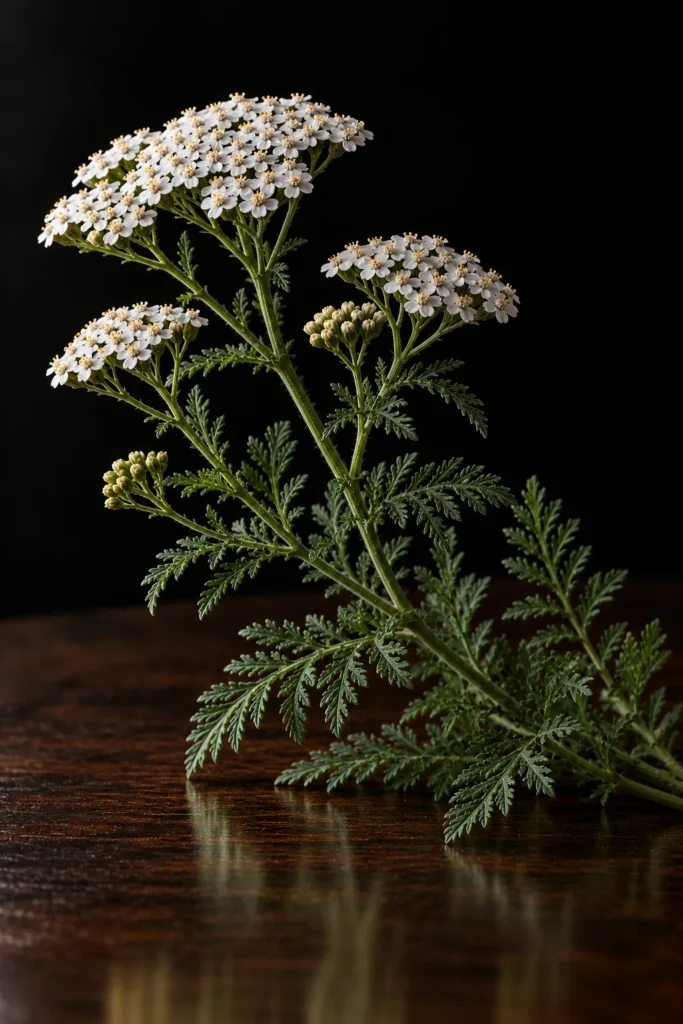
Yarrow (Achillea millefolium) is a perennial meadow plant native throughout Europe, with finely feathered foliage and white to pink flower clusters. Folk names such as stomach-ache herb, mother herb and soldier’s herb reflect its role in traditional wound care and women’s medicine.
It is also documented in legend and custom as a protective and oracle plant, its power in folk belief particularly tied to the summer solstice.
Origin and Tradition
The Latin genus name Achillea refers to the Greek hero Achilles, who, according to legend, used the herb to treat his warriors’ wounds. This ancient attribution as a wound herb persisted in European folk belief for centuries, though it remains pure tradition and carries no medical claim.
As a protective plant, yarrow appears chiefly in connection with the time of harvest: yarrow cut at the summer solstice, that is around Midsummer Day on 24 June, was considered especially potent and effective. The solstice itself was, in folk belief, counted among the times when plants were said to unfold particular power, similar to other solstice herbs.
Referred to in folk medicine as a women’s herb, yarrow was also associated with stages of female life and with the protection of mother and child, an attribution that remains within the realm of tradition.
Operating Principle According to Tradition
Yarrow harvested at the solstice was credited with a concentrated, as it were charged power that it was not supposed to possess at other times of the year. This idea follows the common pattern whereby the solstice days are regarded as threshold times, when the boundary between worlds is more permeable than usual.
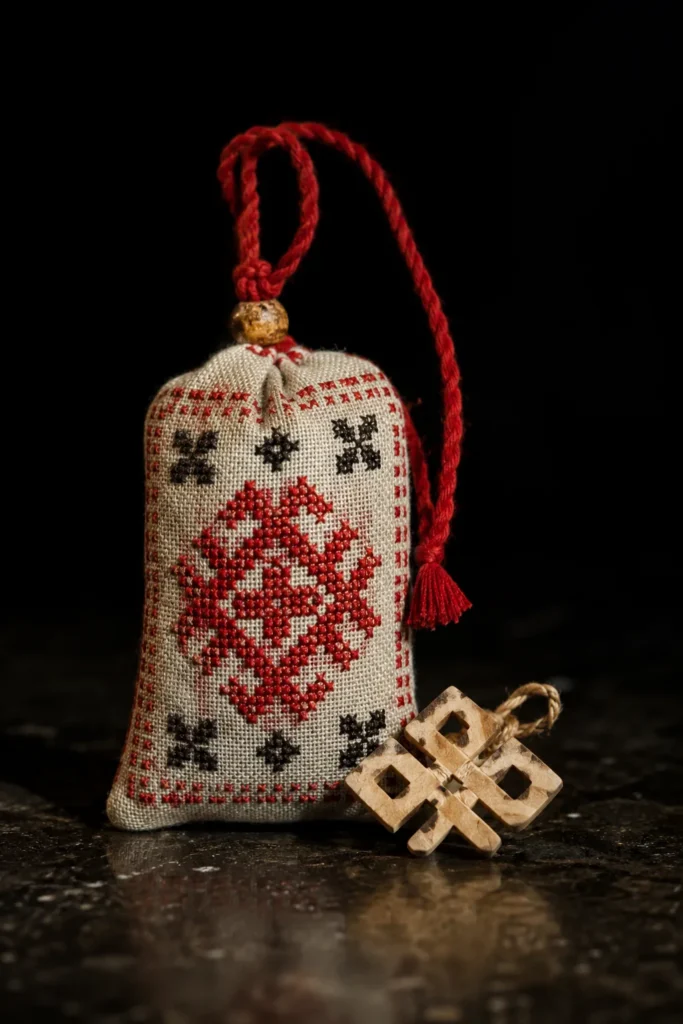
Burned as censing, the smoke of yarrow was believed to drive harmful energies from rooms, similar to other incense herbs. Carried dried in a small pouch, it was also credited with a protective effect for the wearer.
Cross-Cultural Distribution
Yarrow is known as a plant of magical significance far beyond Europe. Among the Anglo-Saxons, it was carried dried in the belt for protection against snakes. Similar protective and healing attributions are found in the Slavic and Celtic regions, often linked to Midsummer Day as the time of harvest.
Yarrow gained particular renown in China as an oracle plant: dried yarrow stalks traditionally served as a tool for consulting the I Ching, the Chinese Book of Changes. By counting and sorting the stalks, the hexagrams on which the divination was based were determined. This use arose independently of the European tradition, yet shows a remarkable cross-cultural parallel: the attribution of divinatory power to the same plant species.
What It Is Used Against
Tradition employs yarrow chiefly against harmful, invisible influences believed to burden house and residents. As an incense herb, it was considered effective against negative energies and bad moods in the home.
Carried on the body, it was believed to protect against spirits of illness and harmful magic. In some traditions, yarrow is also credited with a role in warding off the evil eye. The Protection Compass lists the individual attributions in detail.
Application and Limits
According to traditional practice, yarrow was cut a hand’s breadth above the ground, bundled upside down and dried in the shade. The time of harvest around the summer solstice was considered decisive for its attributed effectiveness.
Once dried, it was burned as incense or kept in small pouches on the body or in the house. For the oracle practice with the I Ching stalks, Chinese tradition requires a fixed number of dried stalks and a precisely defined counting procedure.
One limitation of the tradition is that folk-medical and magical attributions are historically closely intertwined. Where wound-healing and protective power merge in folk belief, it is not always possible, in retrospect, to separate what was regarded as medical experience from what was seen as pure superstition.
Literature (selection)
Related key terms: yarrow achillea solstice oracle herb.
iWell Guard and Protective Traditions
That yarrow stalks were used for divination and protection in two entirely independent cultural regions, the European and the Chinese, shows how widespread the need for tangible tools in dealing with uncertainty is. People at all times sought objects that could give them a sense of orientation and protection.
The iWell Guard takes up this need: a tangible, carried object as an expression of the wish for a reliable personal boundary, without any claim to yarrow’s former magical effect.
Personal experiences may vary. Not a medical device. No promise of healing.